We may earn a commission when you buy through links on this page, at no extra cost to you. How this works.
4-in-1 Stress, Sleep & Thyroid Test – Cortisol Test Kit at Home with DHEA-S, TSH, Cortisol/DHEA Ratio | Adrenal & Thyroid Hormone Panel | Clinical-Grade Accuracy | Painless Collection
Four cortisol kits compared for accuracy, sample timing, and total markers tested.
Cortisol rises and falls throughout the day, peaking in the morning and dropping by evening. An at-home cortisol test kit captures this rhythm by collecting samples at specific times, usually through saliva or dried blood spots. When the pattern looks flat or inverted, it signals how your body is managing prolonged stress.
Test kits differ in two dimensions: how many samples they require and what else they measure. A cortisol-only panel tracks the curve across four or five time points. Multi-hormone panels add DHEA, progesterone, or estradiol to show how stress hormones interact with reproductive and metabolic systems. Collection timing is the key variable. Four-point saliva tests deliver the most detailed rhythm data. Single-sample kits offer a snapshot but miss the full curve.
Lab certification matters. CLIA-certified labs meet federal quality standards; CAP accreditation adds peer review. Both appear on the lab report. Some kits include practitioner review; others return raw data and leave interpretation to you or your doctor.
This guide compares four at-home cortisol test kits by sample timing, additional markers, and lab credentials. The right choice depends on whether you need a simple curve or a broader hormonal picture.
What Cortisol Patterns Tell You About Stress Response
Cortisol follows a predictable daily rhythm in most people. Levels peak within an hour of waking, then gradually decline through the afternoon and reach their lowest point around midnight. This pattern exists because cortisol helps regulate energy, alertness, and the stress response throughout the day.
A single-point test captures cortisol at only one moment. That snapshot tells you almost nothing about whether your rhythm is intact. You might test at your natural morning peak and assume everything is fine, or catch a low afternoon reading and worry unnecessarily. Four-point testing samples cortisol at wake, midday, late afternoon, and bedtime. The pattern across those four points shows whether your curve is flat, inverted, or following the expected slope.
Many at-home test kits describe results in terms of 'adrenal fatigue' or 'HPA axis dysfunction.' These phrases are not medical diagnoses. They refer to patterns where the cortisol curve is flatter or lower than expected, which some practitioners interpret as a sign of chronic stress or burnout. The consumer wellness context treats these patterns as signals to adjust lifestyle, sleep, or stress management rather than as conditions requiring pharmaceutical treatment.
Without multiple time points, you cannot see whether your body is releasing cortisol at the right times or maintaining the rhythm that supports wakefulness in the morning and rest at night.
Key Factors to Consider When Choosing a Cortisol Test Kit
- Number of daily samples: four-point testing captures the full cortisol curve
- Additional hormone markers: DHEA-S, TSH, or melatonin add context to cortisol readings
- Lab certification: CLIA certification ensures standardized analysis
- Collection method: saliva is non-invasive and reflects free cortisol levels
- Result interpretation: clear reference ranges and actionable next steps
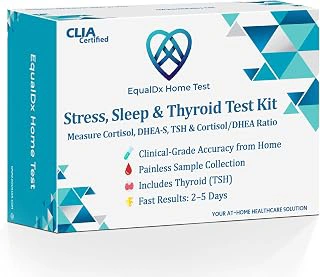
4-in-1 Stress, Sleep & Thyroid Test – Cortisol Test Kit at Home with DHEA-S, TSH, Cortisol/DHEA Ratio | Adrenal & Thyroid Hormone Panel | Clinical-Grade Accuracy | Painless Collection
This kit measures four markers in one panel: cortisol, DHEA-S, TSH, and the cortisol-to-DHEA ratio. You get both adrenal and thyroid context without ordering separate tests.
The $129.00 price covers more ground than single-hormone kits. TSH gives you a snapshot of thyroid function, which can overlap with fatigue and stress symptoms. DHEA-S pairs with cortisol to show whether your adrenal output is balanced or skewed. The ratio calculation makes it easier to spot patterns than reviewing raw numbers alone.
Collection is painless - no needle required. The kit claims clinical-grade accuracy, though independent lab certification details are not provided in the product listing. If you want a broader picture of hormone interactions, this panel delivers more data points than cortisol-only options.
The tradeoff is complexity. Four markers mean four result lines to interpret, and you may need guidance to understand how TSH and DHEA-S relate to your symptoms. The kit carries a 4.4 out of 5 rating, suggesting reliable performance but leaving room for occasional user frustration with instructions or turnaround time.
Choose this if you suspect both adrenal and thyroid factors are in play, or if you want the most comprehensive home snapshot available. For simple cortisol screening, a single-marker test may be clearer and cheaper.
- ✅ Four markers in one kit: cortisol, DHEA-S, TSH, and cortisol/DHEA ratio
- ✅ Covers both adrenal and thyroid hormone context
- ✅ Painless collection method
- ✅ Broader data set than single-hormone tests at $129.00
- ⚠️ Higher price point than cortisol-only kits
- ⚠️ More complex results require careful interpretation
- ⚠️ Independent lab certification details not specified in listing
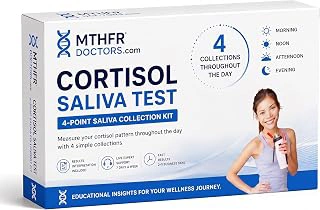
At-Home Cortisol Stress Saliva Test Kit (4X Day)
If you want to track cortisol rhythm without adding extra hormone panels, this four-point saliva kit focuses on stress At-Home Cortisol Stress Saliva Test Kit (4X Day) alone. You collect samples at waking, midday, evening, and bedtime to capture the natural cortisol curve across a full day.
The kit arrives with four labeled tubes and instructions for timing each collection. You swab or drool into the tube, seal it, and ship the batch back in the prepaid envelope. Results show how your cortisol levels rise and fall, which helps identify patterns like a blunted morning peak or elevated nighttime values.
At $129.00, this option sits in the mid-range for at-home hormone testing. The 4.5/5 rating reflects straightforward sample collection and clear result formatting. Because it measures only cortisol, you skip the cost and complexity of multi-hormone panels if stress tracking is your primary goal.
Four samples across the day give you more detail than a single-point test. Morning-only kits miss the afternoon drop and evening baseline, so this format works better when you need to see the full daily rhythm. The tradeoff is remembering to collect on schedule; missing a time window can skew the curve.
This kit does not include DHEA, sex hormones, or thyroid markers. If your symptoms suggest multiple endocrine issues, a broader panel might serve you better. But for users who want a focused look at cortisol fluctuation without extra data, the streamlined approach keeps interpretation simpler and cost lower.
- ✅ Four-point sampling captures full daily cortisol curve
- ✅ Cortisol-only focus keeps cost and complexity lower
- ✅ Labeled tubes and prepaid return envelope included
- ⚠️ Does not measure DHEA, sex hormones, or thyroid markers
- ⚠️ Requires precise timing across the day for accurate rhythm data
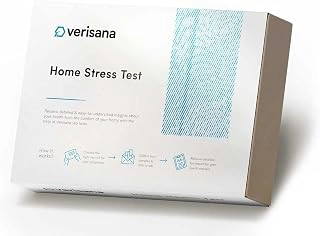
Home Stress Test – Saliva Test Kit for Daily Cortisol Levels – 4 Cortisol Levels Throughout the Day– CLIA Certified Lab – Verisana
Verisana's saliva kit targets four cortisol measurements across the day without adding other hormone markers. The CLIA certification means the lab meets federal quality standards for diagnostic testing. If you want a focused cortisol curve and value lab accreditation, this is the credential to watch.
The kit collects samples at wake, midday, evening, and bedtime to map your cortisol rhythm. You mail the tubes to the certified lab and receive a report showing each measurement against reference ranges. At $129.95, it sits in the same price bracket as multi-hormone panels but tests only cortisol.
The 4.3 rating reflects solid performance with occasional delays in result turnaround. Some users appreciate the narrower scope when cortisol is the only concern, while others wish the price included DHEA or testosterone for context. The CLIA badge offers confidence in test quality, but the single-hormone focus means you won't see how cortisol interacts with other markers unless you order a separate panel.
Choose this kit if lab certification matters more to you than a broad hormone profile. The four daily samples give you timing detail, and the CLIA credential adds a layer of regulatory oversight. If you want additional markers in one test, look at the multi-hormone options instead.
- ✅ CLIA-certified lab meets federal quality standards
- ✅ Four daily cortisol samples map the full diurnal curve
- ✅ Focused on cortisol without extra markers for simpler interpretation
- ⚠️ No additional hormones included at this price point
- ⚠️ Some reports of slower result delivery
- ⚠️ Single-hormone focus limits context on stress-hormone interactions
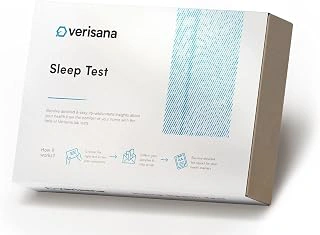
Sleep Test – Determines Cortisol and Melatonin Levels – Hormone Health Test for Sleeping Difficulty – Easily & Conveniently from Home – Analysis by CLIA-Certified Lab – Verisana
Verisana's Sleep Test pairs cortisol and melatonin analysis in one kit. If you're tracking insomnia or poor sleep quality, measuring both hormones together shows whether high nighttime cortisol or low melatonin is disrupting your rest. Most at-home cortisol kits stop at stress markers; this panel adds melatonin to give you a fuller picture of your sleep-wake cycle.
The kit arrives with saliva tubes for both hormones. You collect samples at timed intervals - cortisol to check your daily rhythm, melatonin to confirm evening production. All samples go to a CLIA-certified lab, and results explain whether your cortisol stays elevated when it should drop or if melatonin isn't rising on schedule.
At $249.00, it costs more than single-hormone kits. That reflects the dual-marker panel and the convenience of testing both sleep hormones in one order. The 5.0/5 rating suggests users find the sleep-specific framing and lab clarity worth the premium when standard cortisol tests don't explain their sleep trouble.
This test works best when you already suspect stress hormones and melatonin may both play a role. If you only need cortisol timing, a basic diurnal kit will cost less. But when sleep difficulty persists and you want to rule out both hormone imbalances at once, the combined panel reduces guesswork and extra orders.
- ✅ Tests both cortisol and melatonin in one kit
- ✅ CLIA-certified lab analysis
- ✅ Useful for tracking sleep-related hormone imbalances
- ⚠️ Higher price point at $249.00
- ⚠️ More comprehensive than needed if only cortisol rhythm is the concern
How to Collect Your Sample for Accurate Results
Collecting saliva at the right time is the single biggest factor in cortisol test accuracy. Most kits require your first sample within thirty minutes of waking, before you eat, drink, or brush your teeth. That morning window captures peak cortisol levels in healthy rhythms.
Many tests ask for additional samples throughout the day. A typical protocol includes midday, late afternoon, and bedtime collections to map how your cortisol drops from morning through night. Missing one window or collecting an hour late can shift your curve enough to suggest a pattern that isn't real.
Wait at least an hour after eating or drinking before you collect saliva. Residual food, caffeine, or sugar can dilute or contaminate the sample. If you take supplements or medications, check the kit instructions; some ask you to pause certain products for twelve to twenty-four hours.
Store samples according to the kit label. Some need refrigeration immediately, while others stay stable at room temperature until you mail the batch. Consistency matters more than perfection: collect at the same times each day if your kit spans multiple days, and note any unusual stressors or sleep disruptions on the test-day log so the lab can flag outliers.
Interpreting Your Results and Next Steps
Reference ranges on your lab report show typical cortisol levels for each sample time, usually measured in micrograms per deciliter or nanomoles per liter. Your results will plot against these ranges to reveal whether each sample falls within, above, or below the expected window.
A healthy cortisol rhythm starts high in the morning and drops steadily through the day, reaching its lowest point near bedtime. If your morning reading sits at the bottom of the range and your evening reading near the top, that's a reversed pattern. A flat curve shows little variation from morning to night, suggesting your adrenal glands are maintaining steady output instead of following the natural rise and fall.
Look for the shape of your curve, not just individual numbers. One elevated reading at bedtime may signal a late stressor, while four samples clustered in the low-normal zone could point to chronic under-production. Four high readings across the day suggest ongoing activation without recovery periods.
Share the full report with your healthcare provider before making changes. They can compare your results to symptoms, review medications that affect cortisol metabolism, and rule out conditions like Cushing's syndrome or Addison's disease that require medical management. An at-home test measures output; it does not explain why your rhythm shifted or whether an underlying disorder is present.
Use confirmed patterns to guide lifestyle adjustments. If your evening cortisol stays high, experiment with earlier cutoffs for caffeine and screen time. If morning levels lag, prioritize consistent wake times and morning light exposure. Track one variable at a time and retest after six to eight weeks to see whether the intervention moved your curve. Results inform daily habits, but diagnosis and treatment decisions belong with a qualified clinician.
Which Kit Fits Your Tracking Goals?
Your tracking goal drives which panel delivers the most useful data. If you suspect thyroid issues or hormone imbalance beyond stress, a multi-marker panel that measures cortisol alongside TSH, estradiol, and progesterone will give you the broadest picture. If your main concern is understanding how stress affects your energy and mood throughout the day, a cortisol-only kit with four-point saliva sampling offers focused results without extra markers you may not need.
Sleep disruption changes the decision. Kits that add melatonin and cortisone let you see whether high evening cortisol or low melatonin is interfering with rest. That insight matters if you wake frequently or struggle to fall asleep despite feeling tired. A stress-focused panel without sleep hormones will confirm daytime cortisol rhythm but leave nighttime questions unanswered.
Thyroid context is useful when fatigue, weight changes, or temperature sensitivity overlap with stress symptoms. A panel that includes free T3, free T4, and TPO antibodies helps distinguish adrenal patterns from thyroid dysfunction. If those symptoms are absent, the added thyroid data may feel like noise rather than clarity.
Match the scope to your primary concern. Broad panels cost more and take longer to interpret, but they reduce the need for follow-up testing when multiple systems feel off. Streamlined cortisol kits deliver faster answers and lower cost when stress rhythm is the isolated question. Choose the panel that addresses what you most need to understand, and skip markers that do not connect to your symptoms or goals.