We may earn a commission when you buy through links on this page, at no extra cost to you. How this works.
Gaiam Acupressure Mat and Pillow Set
Deep work builds mental strain. These mats help you unwind.
Hours of concentrated work tighten muscles you never meant to tense. Your shoulders creep toward your ears, your neck locks forward, and your back braces against the chair - all while your mind stays locked on the screen. When the session finally ends, that physical load remains, knotted and stubborn.
Acupressure mats offer a straightforward way to address this buildup. Thousands of plastic spikes distribute pressure across your back, neck, or legs, encouraging blood flow and prompting tense muscle fibers to release. You lie down, the mat does the work, and within ten to twenty minutes most users notice a shift from tight discomfort to looser calm.
We evaluated mats on four practical criteria. Spike density determines how much surface area makes contact with your body - higher density generally means broader, gentler pressure rather than sharp isolated points. Material durability matters because foam cores compress over time, and low-quality fabric can fray or smell after repeated use. Ease of setup includes whether the mat lies flat quickly, stays in place, and works on multiple surfaces without a dedicated yoga space. Finally, price-to-quality ratio separates mats that justify their cost from those that cut corners on construction or comfort.
The mats in this guide span different density profiles, size configurations, and budgets. Some include detachable neck pillows, others fold for travel, and a few prioritize eco-friendly materials. Each suits a slightly different recovery routine, but all share the same core function: turning passive rest into active muscle release without adding complexity to your day.
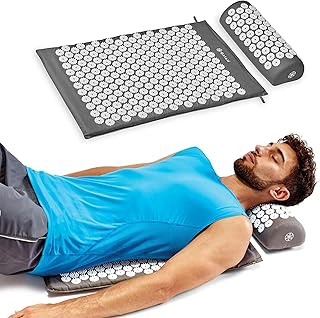
Gaiam Acupressure Mat and Pillow Set
The Gaiam Acupressure Mat and Pillow Set offers knowledge workers a practical entry point into acupressure recovery without stretching the budget. At $29.99, this combination delivers full-body coverage plus targeted neck support - two elements that matter when you're trying to unwind tension accumulated across hours at a desk.
The mat provides adequate spike contact across your back and legs, while the included pillow addresses the cervical area where screen-forward posture tends to build up tightness. This dual-surface approach means you can address multiple tension zones in one session, which is efficient when recovery time is limited between deep work blocks.
Build quality sits in the reliable middle ground: the materials handle regular use without feeling flimsy, though this set doesn't carry eco-certifications if that's a priority for you. The 4.5/5 rating reflects consistent user satisfaction, and in-stock availability means you won't wait weeks to start using it.
For knowledge workers balancing cost against functionality, this set solves the core problem - creating pressure stimulation across contact points - without requiring a significant upfront commitment. The tradeoff is straightforward: you get dependable performance and coverage at an accessible price, but not premium materials or sustainability credentials. If your main goal is releasing muscle tension after focused work sessions and the price-to-utility ratio matters, this combination handles that task well.
- ✅ Includes pillow for neck tension relief
- ✅ Full-body mat coverage at $29.99
- ✅ In stock and ready to ship
- ✅ Reliable build quality for regular use
- ⚠️ Not eco-certified
- ⚠️ Mid-range material quality
How Acupressure Mats Work to Release Muscle Tension
Acupressure mats use hundreds or thousands of small plastic spikes arranged across a foam or cushioned surface. When you lie on the mat, these spikes press into your skin and the tissue beneath, creating focused pressure across your back, shoulders, or other contact areas. That pressure stimulates blood flow to the region and can trigger the release of endorphins, the body's natural feel-good chemicals that help you relax.
The sensation is not subtle. Most people feel sharp discomfort for the first minute or two, especially if it's their first session. As circulation increases, the sharpness typically shifts to warmth or tingling. Some users describe it as pins and needles that gradually become soothing. A thin layer of clothing can soften the initial intensity while still allowing the spikes to do their work.
A session usually lasts 10 to 20 minutes. Shorter sessions work for beginners or sensitive skin; longer ones suit people who want deeper relaxation after hours of sitting or screen time. The mats are tools for muscle relaxation and temporary tension relief, not medical devices. They do not treat chronic pain conditions, heal injuries, or replace professional care. What they can offer is a way to interrupt the tightness that builds during deep work, giving your nervous system a chance to shift gears before you move on with your day.
Spike density and spacing determine how the pressure distributes. Mats with more spikes spread the load more evenly, which many users find easier to tolerate. Mats with fewer, more widely spaced spikes concentrate pressure, creating a more intense sensation that some people prefer once they're accustomed to the feel. Understanding this tradeoff helps you choose a mat that matches your comfort level and recovery goals.
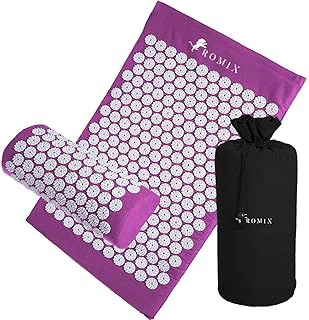
ROMIX Acupressure Mat and Pillow Set
The ROMIX Acupressure Mat and Pillow Set offers a straightforward entry point for anyone curious about acupressure but reluctant to spend heavily before knowing whether the sensation works for them. Priced at $28.49, it sits a few dollars below the Gaiam while delivering a similar design: thousands of plastic spikes arrayed across a foam-backed mat, plus a matching pillow that guides first-time users toward targeted neck use without guesswork.
Spike density and material construction closely mirror the Gaiam's approach, so the initial prickle and the way tension dissipates across your back will feel familiar. The pillow included in the set makes it easier to address neck stiffness after long focus sessions - lay it under your head, adjust placement until the spikes settle into the muscle grooves along the base of your skull, and let the pressure distribute. For beginners, this bundled guidance removes one common barrier: figuring out how to position a separate cushion or towel to reach the neck effectively.
The tradeoff centers on price versus brand recognition. You save a modest amount compared to Gaiam, but the functional differences in spike count, fabric durability, and foam thickness are minimal. User feedback clusters around a 4.5/5 rating, with most comments noting that the sensation takes two or three sessions to feel comfortable rather than just sharp. If you're testing acupressure for the first time and want to keep the financial commitment low while still receiving a complete mat-and-pillow package, the ROMIX set delivers that balance without cutting corners on the core design.
This option suits someone who values a lower barrier to experimentation over established brand reputation, especially if the included pillow simplifies the learning curve and your primary goal is releasing shoulder and neck tension after deep work rather than targeting lower-back or leg recovery.
See ROMIX Acupressure Mat and Pillow SetWhat to Look For in an Acupressure Mat
- Spike count and distribution: higher density creates more even pressure across contact areas
- Material quality: durable fabric and securely attached spike plates reduce wear over time
- Size and coverage: full-body mats (around 27 x 17 inches) cover more muscle groups than compact versions
- Pillow inclusion: neck support adds value for users with upper-body tension from desk work
- Portability: lightweight and rollable designs make storage and travel easier
- Additional features: heating elements or memory foam backing can enhance comfort but increase price
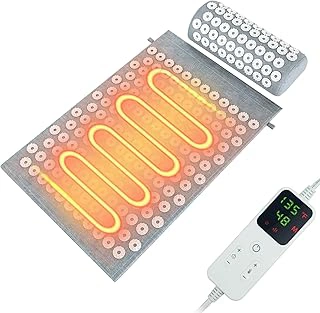
AICNLY Acupuncture Heating Mat – Acupressure & Heat Therapy Pad for Back Pain Relief, Muscle Relaxation, Stress Reduction & Improved Circulation
The AICNLY Acupuncture Heating Mat combines traditional acupressure stimulation with adjustable heat settings, creating a dual-mode recovery tool for users who want warmth alongside spike pressure. Priced at $39.99, this mat costs more than basic acupressure-only models, and that premium buys you integrated heating elements controlled via a power cord. The 4.3 out of 5 rating suggests reliable performance for users willing to manage the added setup.
Heat therapy works by increasing blood flow to tense muscle groups, which can make the initial acupressure sensation feel less sharp and allow longer sessions. If you find standard mats too intense on cold mornings or after hours of seated work, the warming function softens the contact and deepens the relaxation response. The tradeoff is portability and simplicity: you'll need an outlet nearby, and the controller adds a step before each use.
Material construction mirrors typical acupressure mats - fabric backing with plastic spike rosettes - but the embedded heating layer means you cannot fold or roll the mat as tightly. Storage requires a bit more closet space, and the cord must be handled carefully to avoid damage over time. For users who already stretch or meditate in one dedicated spot at home, these logistics rarely become friction points.
The heating element offers multiple temperature settings, letting you start with gentle warmth during your first few sessions and increase intensity as your tolerance builds. This adjustability makes the mat practical for both newcomers who need a softer introduction and experienced users who want deeper heat penetration after intense focus work. You control the session length and temperature, so the mat adapts to your recovery routine rather than dictating it.
Compared to non-heated acupressure mats, this model suits users who prioritize muscle relaxation over pure portability. If you plan to use the mat exclusively at home - on your office floor after a long coding sprint, or on the living room rug before bed - the heating function justifies the extra cost and setup. If you need a mat that travels easily to the office or fits into a gym bag, a simpler spike-only design will serve you better.
The $39.99 price sits in the middle tier of the acupressure mat market, higher than basic sets but below premium kits that bundle pillows and carry bags. You're paying specifically for the heating capability, so evaluate whether warmth will genuinely extend your session comfort or simply add complexity you won't use. For users with tight shoulders, lower back stiffness, or cold-sensitive muscles, the combination of acupressure and controlled heat creates a more complete recovery experience than spikes alone.
- ✅ Combines acupressure stimulation with adjustable heat for dual-mode recovery
- ✅ Multiple temperature settings let you customize warmth to your tolerance
- ✅ Heat function softens initial spike sensation and supports longer sessions
- ✅ Well-suited for dedicated home recovery routines after deep work
- ⚠️ Requires nearby outlet and power cord management
- ⚠️ Less portable than non-heated mats due to embedded heating layer
- ⚠️ Added setup step and bulkier storage compared to basic acupressure mats
- ⚠️ Higher price at $39.99 than spike-only alternatives
How to Use an Acupressure Mat After Deep Work
Timing matters when you're using an acupressure mat to manage post-work tension. The most effective window is within 15 minutes of finishing a deep work session, when muscle tightness is still acute and your nervous system is transitioning out of focused arousal. Lying down immediately helps signal the shift from mental exertion to physical recovery. If you prefer evening use, placing the mat on your bed 30 minutes before sleep can double as a pre-rest ritual that prepares your body for deeper relaxation.
Start with 10-minute sessions if you've never used spike pressure before. The sensation is intense at first - your skin will feel prickly, and you may notice warmth or slight discomfort as circulation increases. Wearing a thin cotton shirt or placing a lightweight towel over the mat softens initial contact without eliminating the pressure effect. Most users adapt within three to five sessions and can extend to 20 minutes as tolerance builds. Longer durations don't necessarily improve results; consistency matters more than session length.
Position yourself flat on your back with the mat covering your shoulder blades, mid-back, and lower spine. Distribute your weight evenly so the spikes make full contact across the surface. Avoid propping your head up with pillows during the session, as this can create uneven pressure and reduce the mat's effectiveness along the upper back. If lower back tension is your primary concern, you can also sit on the mat in a chair or place it beneath your hips while lying down, though prone positioning typically delivers broader muscle release.
The key advantage here is passivity. You don't need to stretch, focus, or move - just lie still and let the pressure do the work. This makes acupressure mats useful for people who find foam rolling or stretching routines cognitively demanding after hours of concentration. Pair the mat with breathing exercises if you want a structured wind-down, but it's equally effective if you simply close your eyes and let your mind wander. The mat handles the physical input while you recover mental bandwidth.
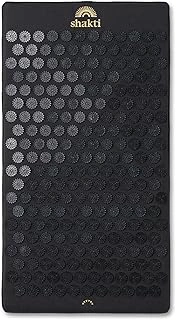
ShaktiMat Acupressure Mat
The ShaktiMat Acupressure Mat sits at the premium end of the market at $119.00, and its 4.7 out of 5 rating reflects the kind of user satisfaction that comes from solid construction and long-term use. This is the mat for someone who views acupressure as a daily practice rather than an occasional experiment, and who wants a product that feels intentional in both design and durability.
The price difference here is significant compared to budget options, but it buys you materials and build quality that should hold up session after session without losing shape or developing uneven pressure points. If you're planning to use your mat every evening after deep work or as part of a structured recovery routine, the investment makes more sense than if you're just testing the waters.
At this price point, you're also paying for brand reputation - ShaktiMat has established itself in the acupressure space, and the rating suggests users find the balance of firmness, coverage, and comfort dialed in well. The mat should feel more refined under your back and shoulders, with consistent spike density that distributes pressure evenly across larger muscle groups.
The tradeoff is straightforward: you pay considerably more upfront, but you likely avoid the frustration of a mat that flattens, tears, or feels cheap after a few months. This is the choice for committed users who value craftsmanship and plan to make acupressure a regular part of their post-session wind-down.
- ✅ Premium materials and construction for long-term durability
- ✅ Strong 4.7/5 user rating suggests consistent satisfaction
- ✅ Refined design with even spike distribution
- ✅ Well-suited for daily use and committed recovery routines
- ⚠️ $119.00 price is a significant investment compared to other mats
- ⚠️ Premium cost may not justify itself for occasional users
Integrating Acupressure into Your Post-Work Routine
Acupressure mat sessions work best when they become part of a consistent post-work routine rather than an isolated experiment. After a long focus session, fifteen to twenty minutes on the mat can help mark the boundary between concentrated work and physical recovery, especially when paired with slow, deliberate breathing or a short walk immediately afterward.
Track your response over the first two weeks. Notice whether neck tension eases, shoulder tightness shifts, or general restlessness fades. If twenty minutes feels too intense, start with ten and extend as your tolerance builds. If you feel little change, consider whether your session timing, mat placement, or body alignment needs adjustment before concluding the approach isn't useful for you.
An acupressure mat is a low-barrier recovery tool, not a replacement for movement breaks during work or an ergonomic desk setup. It fits into a broader recovery routine alongside adequate sleep, consistent hydration, and regular mobility work. Think of it as one input in a stack of habits that support physical recovery, not a standalone fix for chronic tension or postural strain.
If you're sitting for extended periods, the mat can help you shift your nervous system out of high-alert mode, but it won't address the root cause of tension that accumulates from poor chair support or prolonged static postures. Use it as a bridge between deep work and evening downtime, and adjust session length based on how your body responds rather than following a rigid protocol.