We may earn a commission when you buy through links on this page, at no extra cost to you. How this works.
Orange Blue Light Blocking Reading Glasses (+1.0 to +2.5) for Sleep & Migraine Relief
Four tested blue light glasses that address eye strain, glare, and comfort during extended screen sessions.
Choosing blue light blocking glasses for long work days requires balancing blocking strength, visual clarity, and all-day comfort. We selected these four pairs based on lens tint intensity - ranging from clear coatings to amber lenses - magnification availability for those who need reading support, frame weight for extended wear, and user feedback on screen fatigue relief during full workdays.
Amber-tinted lenses block a higher percentage of blue light but introduce color distortion, which can interfere with design work, photo editing, or video calls where color accuracy matters. Clear or lightly tinted lenses preserve natural color perception but offer lighter blue light filtration, making them better suited for tasks requiring color fidelity. Frame weight and temple pressure become critical after four to six hours of wear, so we prioritized designs under 30 grams and adjustable nose pads where available.
We also considered magnification options for users over 40 who spend hours reviewing documents or spreadsheets, and frame styles that fit comfortably over or under headsets. Each product in this comparison addresses a different work scenario - whether you prioritize maximum blocking for coding marathons, color accuracy for creative tasks, or lightweight comfort for all-day meetings - so you can match the glasses to your specific screen time needs and visual demands.
Choosing the Right Blue Light Glasses for Your Work Setup
- Match lens tint to your primary work hours: amber or orange for evening sessions, clear for all-day
- Identify whether you need vision correction: select magnification range if you require reading glasses
- Consider frame weight and fit for 8+ hour wear sessions: lightweight designs reduce pressure points
- Assess your work task mix: design and video editing favor clear lenses; data entry and coding tolerate amber
- Check return policies if you're unsure about tint tolerance - adaptation varies by individual
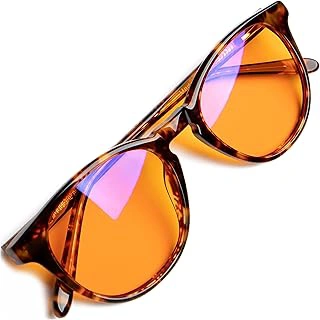
Orange Blue Light Blocking Reading Glasses (+1.0 to +2.5) for Sleep & Migraine Relief
Orange-tinted blue light blocking reading glasses combine prescription magnification with high-intensity blue light filtering, suited for readers who need vision correction during evening screen time. This option offers magnification strengths from +1.0 to +2.5 diopters alongside its orange lens coating, letting users who require reading correction address both needs with one pair of glasses.
The orange tint provides stronger blue light blocking than clear or yellow-tinted alternatives, which may support wind-down routines before sleep by filtering short-wavelength light. Users looking to reduce screen exposure in the hours before bed often prefer this deeper tint level. However, the same orange coating creates noticeable color distortion - whites appear amber, blues shift toward gray, and color accuracy is significantly altered. This tradeoff makes these glasses unsuitable for tasks requiring true color perception, such as photo editing, graphic design, or video production work.
The magnification range accommodates presbyopia or mild farsightedness, allowing users to read text clearly on screens or printed materials without switching between blue light glasses and reading glasses. If you already use reading glasses in the +1.0 to +2.5 range, this product consolidates two functions. Choose your usual magnification strength to maintain comfortable reading distance and clarity.
At $39.90 with a 5.0 rating, these glasses deliver straightforward dual functionality for evening reading sessions on digital devices. They work best for users who prioritize strong blue light filtering and need magnification, and who are willing to accept significant color shift as part of that tradeoff. For daytime work requiring accurate color judgment, a clear or lightly tinted option remains the better choice.
- ✅ Combines magnification (+1.0 to +2.5) with blue light blocking
- ✅ Orange tint offers stronger blue light filtering than lighter tints
- ✅ May support evening wind-down routines before sleep
- ✅ Single pair addresses reading correction and blue light concerns
- ⚠️ Significant color distortion makes them unsuitable for design or video work
- ⚠️ Orange tint alters whites, blues, and overall color accuracy
- ⚠️ Limited to users who need +1.0 to +2.5 magnification
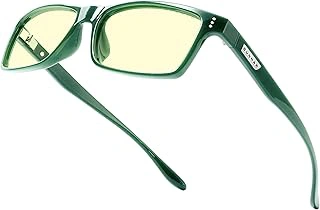
GUNNAR Gaming Glasses - Vertex Moss Amber Lens - Blue Light Blocking Relieve Dry Eye
Gaming sessions and long work days both demand glasses that stay secure during movement while filtering blue light without turning the screen into a color puzzle. The GUNNAR Gaming Glasses with Vertex Moss frame and amber lenses address that balance with a design built for users who need to track visual details accurately across extended screen time.
The amber tint sits between clear lenses that offer minimal blocking and deeply tinted orange options that shift color perception noticeably. This middle-ground approach filters blue light while preserving enough color fidelity for tasks where distinguishing between interface elements, spreadsheet highlights, or in-game indicators matters. Gamers who rely on quick visual reads and office workers managing color-coded documents will find the amber lens less disruptive than darker alternatives, though the yellow cast remains visible on white backgrounds.
The Vertex frame geometry prioritizes a secure fit during head movement. The wraparound profile and temple grip keep the glasses stable whether you're leaning forward during a competitive match or shifting posture through back-to-back video calls. This stability also helps maintain consistent lens positioning, so the blue light filtering effect stays centered over your line of sight rather than sliding during use.
At $39.46 with a 4.6 rating, these glasses deliver a practical option for users who value fit security and moderate tint over maximum blue light blocking or invisible lens appearance. The amber color will be noticeable in your peripheral vision and on-screen, but that tradeoff buys better color accuracy than heavily tinted models while still addressing blue light exposure during the hours that matter most.
- ✅ Amber tint balances blue light filtering with better color fidelity than orange lenses
- ✅ Vertex frame design keeps glasses secure during head movement
- ✅ Wraparound profile maintains consistent lens positioning over extended wear
- ✅ Priced at $39.46 for gaming and work use
- ⚠️ Amber tint remains visible on screens and in peripheral vision
- ⚠️ Less blue light blocking than darker tinted options
- ⚠️ Color cast may interfere with tasks requiring exact color matching
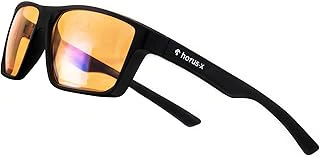
Horus X Blue Light Blocking Glasses for Screen Use, Anti-Fatigue & Migraine Relief
The Horus X Blue Light Blocking Glasses are designed for screen users who spend 8+ hours in front of monitors and need a balance between blue light filtering and color accuracy. Priced at $36.90 with a 4.5/5 rating, these glasses represent the most accessible entry point in this comparison for professionals who move between focused screen work and client-facing video calls or presentations.
The lens tint on the Horus X glasses is engineered to reduce blue light exposure without the heavy amber or yellow color shift found in higher-filtration options. This means you can wear them throughout a full workday without needing to remove them when accurate color perception matters - whether you're reviewing design mockups, sharing slides, or joining video meetings where you want to appear without tinted lenses in your reflection.
For all-day wearability, the frame design prioritizes comfort during extended sessions. The lightweight construction reduces pressure on the nose bridge and temples, which becomes important during the second half of a long workday when even minor irritation can compound. The fit is suited to users who need consistent blue light reduction rather than intermittent protection, making these a practical option for remote workers, developers, writers, or analysts whose roles involve sustained screen time.
The anti-fatigue positioning addresses the accumulated strain that builds during continuous computer use. While these glasses won't eliminate all sources of digital eye strain - posture, screen brightness, and break frequency still matter - the blue light filtering targets one contributing factor. Users who experience end-of-day eye fatigue or difficulty unwinding after screen-heavy workdays may find the tint helpful for moderating exposure without requiring a major workflow adjustment.
The migraine relief aspect relates to blue light sensitivity, which some users identify as a trigger during prolonged screen exposure. The Horus X tint reduces the intensity of blue wavelengths that can contribute to discomfort in light-sensitive individuals, though results will vary based on individual migraine patterns and other environmental factors. This is a comfort and usability feature rather than a therapeutic claim.
Compared to clear-lens computer glasses, the Horus X provides more noticeable blue light reduction. Compared to high-tint gaming or evening glasses, it trades maximum filtration for better color neutrality. That tradeoff makes these glasses particularly suitable for hybrid work environments where you need one pair that works across focused tasks, collaborative meetings, and video calls without constant switching.
At $36.90, the Horus X glasses cost less than prescription computer glasses or premium gaming eyewear, while offering more blue light protection than basic anti-reflective coatings. For professionals seeking reliable all-day eye strain support during long work sessions without heavy color distortion, this is a practical middle option.
- ✅ Balanced tint allows all-day wear without heavy color shift
- ✅ Lightweight frame design reduces pressure during 8+ hour sessions
- ✅ Accessible $36.90 price point for full-day screen workers
- ✅ Suitable for video calls and presentations without needing removal
- ⚠️ Less blue light filtration than high-tint gaming or evening glasses
- ⚠️ No magnification option for users who need reading support
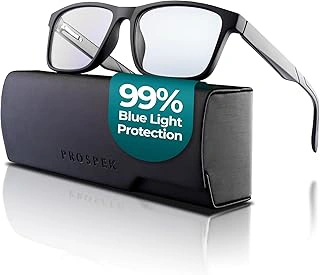
Prospek Clear Lens Blue Light Reading Glasses (0 to +3.0 Diopters) for Computer Use
Users who need both blue light filtering and vision correction often face a choice between function and color accuracy. The Prospek Clear Lens Blue Light Reading Glasses offer a magnification range from 0 to +3.0 diopters, covering non-prescription users through those requiring stronger reading support. This wide range makes them suitable for extended computer work when vision correction is part of the equation.
The clear lens design blocks less blue light than amber or orange-tinted alternatives, but it preserves color fidelity for tasks where accurate color perception matters - design work, photo editing, video production, or any role that depends on seeing true hues on screen. If your work involves color-critical decisions, the tradeoff favors clarity over maximum filtration.
At $39.95 with a 4.5 rating, these glasses balance affordability with the flexibility of choosing your exact diopter strength. The frames are designed for all-day wear at a desk, and the clear lenses mean you can wear them in meetings or on video calls without the yellow or orange tint that signals "I'm filtering blue light."
This option works best when you need reading magnification during long screen sessions and prefer minimal color shift. If you don't require vision correction or if you prioritize stronger blue light blocking over color accuracy, an amber or orange lens may serve you better.
- ✅ Magnification range from 0 to +3.0 diopters accommodates a wide spectrum of vision correction needs
- ✅ Clear lenses preserve color accuracy for design, photo, video, and other color-critical tasks
- ✅ No visible tint makes them suitable for video calls and professional settings
- ✅ Priced at $39.95, accessible for users needing both blue light filtering and reading support
- ⚠️ Clear lenses block less blue light than amber or orange-tinted alternatives
- ⚠️ Users seeking maximum blue light filtration may prefer a stronger tint
Quick Comparison: The Four Shortlisted Picks
The four glasses reviewed here fall into distinct categories based on lens tint, magnification options, and intended use context. Clear lenses preserve color accuracy for design work and daytime tasks, while amber-tinted lenses block more of the blue spectrum and are better suited for evening use when stronger filtering may support natural wind-down routines. Magnification availability ranges from plano (non-magnified) strength for users without reading prescriptions to low-power options that combine blue light filtering with close-up magnification for reading or detail work.
Frame design also divides along professional and casual lines. Lightweight acetate and metal frames offer a traditional office aesthetic, while wraparound or gaming-specific styles prioritize peripheral coverage and extended wearing comfort during multi-hour sessions. Price points span budget-friendly single-pair purchases to mid-range options with case and cloth bundles. Understanding these differentiators helps match each pair to specific work environments: clear lenses for color-critical tasks and client-facing roles, amber for late shifts or post-work screen time, reading magnification for document review, and gaming frames for uninterrupted focus without pressure points.
The comparison that follows highlights lens tint type, typical retail price, magnification strengths offered, and the primary scenario each pair addresses, making it easier to identify which combination aligns with your daily screen habits and workspace needs.
Understanding Lens Tint Tradeoffs: Blocking Strength vs. Color Accuracy
Blue light blocking glasses use lens tints that range from clear to yellow, amber, and orange, each offering a different balance between blocking strength and color accuracy. Clear lenses filter roughly 20 - 40% of blue light in the 400 - 450 nanometer range, preserving natural color perception for tasks that demand precise color judgment - graphic design, photo editing, or video production. Yellow and amber tints block approximately 50 - 80% of blue wavelengths, introducing a warm color cast that softens whites and shifts blues toward green. Orange lenses block the most blue light, often exceeding 90%, but they distort color significantly, making them unsuitable for work that relies on accurate color representation.
This spectrum is not a hierarchy of quality but a set of use-case tradeoffs. Clear lenses are the practical choice for daytime office work where you need to see spreadsheets, presentations, and screens without color distortion, while still reducing some blue light exposure. Amber lenses suit late-afternoon sessions when color fidelity matters less and you want stronger filtering as natural light fades. Orange lenses are best reserved for evening wind-down periods - reading, browsing, or watching video - when your priority is maximizing melatonin protection rather than maintaining color accuracy.
The key decision factor is whether your work depends on true color rendering. If you regularly compare design proofs, adjust image saturation, or present color-coded data, even a subtle amber tint can introduce errors that require you to remove the glasses repeatedly. If your tasks are text-heavy or involve monochrome interfaces, a stronger tint may reduce eye strain without compromising usability. Understanding this tradeoff helps you match lens tint to your specific workflow rather than defaulting to the highest blocking percentage available.
Magnification and Blue Light Filtering: When You Need Both
Readers over 40 or anyone with presbyopia often need both magnification for close-up work and blue light filtering for screen comfort. Two of the glasses reviewed here - the Orange Transparent and Prospek Anti-Blue-Light models - offer built-in magnification in diopter strengths ranging from +1.0 to +3.0, allowing you to read documents and view screens clearly without switching between pairs. The other two options are plano lenses, meaning they carry no magnification and are suited for users with normal near vision or those who already wear contact lenses for distance or reading correction.
If you have an existing eyeglass prescription for astigmatism or other refractive errors, plano blue light glasses worn over contacts can be a practical choice. For those who prefer a single pair that handles both near-focus tasks and digital glare, selecting a magnification strength that matches your usual reading power ensures comfort during extended document review, spreadsheet work, or email sessions. Keep in mind that higher diopter strengths narrow the comfortable viewing distance, so a +1.0 or +1.5 lens typically works well for laptop and desktop distances, while +2.0 and above are better reserved for closer handheld reading.
Choosing between magnified and non-magnified blue light glasses depends on your current vision needs and whether you want a dedicated screen pair or an all-in-one solution for reading and computer use.
Frame Fit and All-Day Comfort: What to Look For
Frame fit determines whether blue light blocking glasses become a tool you reach for every day or an uncomfortable reminder sitting on your desk. During long work sessions, even minor pressure points at the nose bridge or temples can escalate into distraction, headaches, or the urge to remove the glasses entirely.
Lightweight materials - typically polycarbonate or TR-90 polymer frames - distribute weight more evenly and reduce the fatigue that heavier acetate or metal designs can cause over eight-plus-hour days. Adjustable nose pads allow you to fine-tune the sitting height and distribute load across a larger contact area, which is especially helpful if you alternate between looking at screens and reading printed material at different angles.
Temple pressure is another common fit issue: arms that grip too tightly behind the ears create soreness, while loose temples let the glasses slide forward, forcing you to push them up repeatedly. Look for temples with gentle flex or rubberized tips that maintain position without excessive clamping force.
Frame width matters more than many buyers expect. Glasses that are too narrow pinch at the sides of your head; frames that are too wide slide down your nose and misalign the optical center of the lenses with your pupils, reducing clarity and comfort. Most product pages list frame width in millimeters - compare that measurement to a pair of everyday glasses or sunglasses you already find comfortable.
User ratings across the four products in this guide range from 4.5 to 5.0 stars, indicating broad satisfaction, but individual face shapes, head widths, and sensitivity to contact pressure vary widely. What feels unnoticeable to one person may press uncomfortably on another within an hour. For that reason, confirm the seller's return policy before purchase so you can test fit during an actual work session and return or exchange if the frames don't suit your proportions.
Prioritize adjustability and material flexibility over style alone, especially if you plan to wear the glasses for most of your waking hours. A frame that disappears on your face is the one you'll actually use.
When to Wear Blue Light Glasses During Your Workday
Wearing blue light blocking glasses at the right times maximizes their usefulness without interfering with daytime alertness or color perception. Clear or lightly tinted lenses work well for all-day wear during continuous screen work, filtering a moderate percentage of blue light while maintaining color accuracy for tasks like photo editing, design, or video calls. These lenses support comfort without signaling your body to wind down prematurely.
Amber-tinted lenses become more appropriate in the afternoon and evening, especially during the two to three hours before your intended bedtime. This timing aligns with your natural circadian rhythm, as reducing blue light exposure in the evening helps your body prepare for rest. If your workday extends into evening hours or you transition directly from work screens to personal device use, switching to amber lenses around sunset can create a more gradual shift toward sleep readiness.
High-intensity orange or red-tinted lenses are typically reserved for the final hour or two before sleep, particularly if you need to use screens late into the night. These lenses block a higher percentage of blue wavelengths but also distort color significantly, making them impractical for most work tasks. They are best suited for passive activities like reading, light browsing, or winding down after work is complete.
Context matters: if you work near windows with ample natural daylight, your eyes receive blue light from the sun throughout the day, which supports alertness and mood. In this scenario, blue light glasses are less critical during morning and midday hours. However, if you work in a windowless office or during evening shifts under artificial lighting, wearing blue light glasses consistently can help reduce the cumulative strain from prolonged screen exposure combined with indoor light sources.
The takeaway is to match lens tint and blocking strength to your schedule and light environment, using lighter filters during active work hours and stronger tints as you approach sleep.
Limitations: What Blue Light Glasses Won't Fix
Blue light blocking glasses can reduce glare discomfort and subjective eye strain during extended screen use, but they won't eliminate every source of digital fatigue. They filter a portion of blue light wavelengths, which may ease the visual load on your eyes, yet they do not address posture, blink rate, or the accommodative demand your eyes experience when focusing at a fixed distance for hours.
Following the 20-20-20 rule - every 20 minutes, look at something 20 feet away for at least 20 seconds - remains essential. This brief shift in focus gives your eye muscles a chance to relax and helps maintain tear film stability. Blue light glasses worn continuously cannot replace that regular break. Similarly, screen ergonomics matter: positioning your monitor at arm's length and slightly below eye level reduces neck strain and minimizes the surface area of your eyes exposed to dry air.
Adequate task lighting also plays a role. Overly bright or poorly positioned lamps create additional glare, forcing your pupils to constrict and adding to the sensation of strain. Blue light glasses filter some wavelengths, but they cannot compensate for a workspace flooded with reflections or deep shadows that require constant focus adjustments.
Treat blue light blocking glasses as one tool in a broader strategy. Combine them with frequent visual breaks, proper monitor placement, and balanced ambient lighting to address the full range of factors that contribute to screen-related discomfort during long work days.
Final Recommendation: Match Lens Tint to Your Work Context
Choosing the right blue light blocking glasses depends less on budget - all four options reviewed fall between $36.90 and $39.95 - and more on matching lens tint to your specific work environment and schedule. Clear lenses, like those in the Prospek Elite, work best when you need accurate color perception for design, photo editing, or video production, and the magnification options support close-up tasks without disrupting your ability to see true hues on screen. Amber lenses, found in both the GUNNAR Intercept and Horus X Gaming, deliver broader versatility for all-day computer use, balancing noticeable blue light filtration with functional color rendering across office applications, spreadsheets, and casual browsing.
If your longest screen sessions happen in the evening or you toggle between work and gaming after sunset, amber tint provides a practical middle ground without the dramatic color shift of orange lenses. The GUNNAR Intercept offers a wraparound fit and spring-hinge durability for active users, while the Horus X provides a lighter frame and wider field of view suited to extended wear. For users who work standard daylight hours and want minimal tint during meetings or video calls, the Prospek Elite's clear lens keeps your appearance natural while still filtering a portion of high-energy visible light.
Orange lenses deliver the highest level of blue light blocking but are best reserved for evening-only use when color accuracy is no longer critical and you want maximum support for melatonin production before bed. The narrow price spread means you can prioritize fit, tint preference, and magnification needs without compromise. If you need a single pair to cover multiple scenarios, the Horus X Gaming in amber offers the widest use-case range - daytime office work, evening gaming, and general browsing - at $36.90, making it the most versatile starting point for first-time buyers.