We may earn a commission when you buy through links on this page, at no extra cost to you. How this works.
Groundingwell King Size Earthing Bed Sheet, 20% Silver Fiber & 80% Organic Cotton
Four grounding sheets tested for silver content, conductivity, and comfort.
Grounding sheets connect your body to the earth's electrical field through conductive materials woven into standard bedding fabric. Most sheets rely on silver thread to conduct current from a grounded wall outlet or ground rod, though the percentage of silver fiber, thread construction, and weave density vary widely across products.
Silver content determines conductivity. Sheets with 5% silver fiber provide basic conductivity at lower cost, while 10 - 15% silver options offer faster electron transfer and greater durability through repeated washing. Some manufacturers publish resistance measurements in ohms; lower numbers indicate better conductivity. Sheets without third-party conductivity verification require you to test continuity yourself using a multimeter.
Price-per-use matters more than sticker price. A $180 sheet that lasts three years costs less per night than a $90 option that loses conductivity after six months. Care requirements affect lifespan: bleach, fabric softener, and high heat degrade silver threads. Most grounding sheets require cold water, mild detergent, and line drying.
EMF mitigation works through passive grounding, not active blocking. When you contact a conductive surface connected to ground, your body reaches the same electrical potential as the earth, which may reduce electric field exposure from nearby wiring and devices. This is not the same as shielding from radiofrequency signals or reducing magnetic fields. Parasympathetic recovery refers to the body's rest-and-digest mode; some users report improved sleep quality, though individual response varies based on electrical environment, sleep hygiene, and baseline sensitivity.
This comparison focuses on four sheets with documented silver content, published care instructions, and transparent grounding methods. Each section reviews material composition, conductivity specs where available, size options, washing guidance, and value relative to use case.
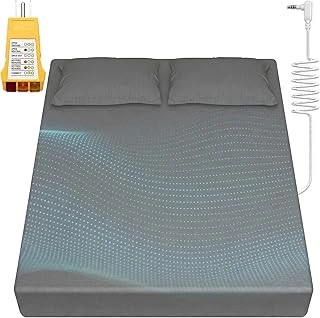
Groundingwell King Size Earthing Bed Sheet, 20% Silver Fiber & 80% Organic Cotton
The Groundingwell King Size Earthing Bed Sheet offers a 20% silver fiber and 80% organic cotton blend at $139.99, placing it between entry-level conductive sheets and premium high-silver options. This ratio provides measurable conductivity for grounding while maintaining the breathability and softness of natural cotton fibers, making it a practical choice for users who want consistent contact with the earth's surface without sacrificing fabric feel.
The silver fiber content is distributed through the weave to ensure uniform conductivity across the sleeping surface. Organic cotton forms the majority of the material, which reduces synthetic texture and supports airflow during sleep. The sheet connects to a grounded outlet via the included cord, creating a conductive path that allows the body to match the earth's electrical potential during rest.
This balance works well for side and back sleepers who spend extended hours on the sheet and prefer fabric that feels familiar against skin. The 20% silver ratio holds up to regular washing better than pure silver-thread sheets, though users should follow care instructions - hand wash or delicate cycle in cool water, no bleach or fabric softener - to preserve conductivity over time. The organic cotton layer also absorbs moisture naturally, which can help maintain comfort in moderate climates.
At 4.2 out of 5 stars, the Groundingwell sheet reflects steady performance among users who prioritize brand reputation and a proven material mix. The $139.99 price sits above basic polyester-blend grounding sheets but below multiple%+ silver options, making it a mid-tier investment for those who want conductivity paired with the durability of organic cotton. The king size accommodates most standard mattresses, and the neutral color integrates easily into existing bedding.
Consider this sheet if you value a softer hand feel alongside grounding function, or if you plan to use it nightly and want a fabric that tolerates frequent washing. The 20% silver content is sufficient for continuous grounding contact, and the organic cotton majority keeps the sheet from feeling stiff or overly technical. For users stepping up from basic grounding mats or trying a full-bed grounding solution for the first time, this blend offers a predictable middle ground.
- ✅ 20% silver fiber provides consistent conductivity across the sleeping surface
- ✅ 80% organic cotton offers breathability and natural moisture absorption
- ✅ Mid-range price at $139.99 balances performance and cost
- ✅ Material blend holds up to regular washing better than pure silver-thread sheets
- ✅ King size fits most standard mattresses
- ⚠️ Requires hand wash or delicate cycle to preserve conductivity
- ⚠️ Lower silver content than premium 40%+ options
- ⚠️ No bleach or fabric softener allowed, limiting care flexibility
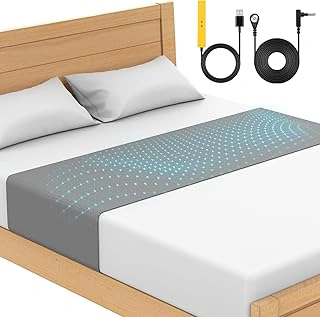
Grounding Fitted Sheet, 90% Organic Cotton, 10% Silver Fiber, with Cord
The Grounding Fitted Sheet with 10% silver fiber sits at the entry point of this comparison at $39.99, making it the most accessible option for anyone curious about grounding without committing to a higher-silver model. The fitted design with elastic corners wraps around your mattress like a standard sheet, so you can skip the flat-sheet logistics and get started immediately.
At 4.8 out of 5, this sheet earns strong marks for ease of use and value. The 90% organic cotton blend keeps the surface soft and Grounding Fitted Sheet, 90% Organic Cotton, 10% Silver Fiber, with Cord, while the 10% silver fiber provides conductivity to connect you to ground through the included cord. That lower silver percentage means reduced conductivity compared to the multiple% and multiple% models in this lineup, but for first-time users or anyone testing whether grounding fits their sleep routine, the tradeoff favors low risk over maximum conduction.
The fitted format also removes guesswork: stretch it over your mattress, snap the grounding cord to the corner connector, and plug the other end into a grounded outlet or grounding rod. No tucking, no slipping, no need to sleep directly on a flat sheet. If you move frequently or share a bed with someone skeptical about grounding gear, this sheet blends into your existing bedding without fuss.
The main limitation is conductivity ceiling. Users seeking the highest possible electron transfer or those with specific EMF mitigation goals may find the 10% silver fiber insufficient once they acclimate to grounding. In that case, this sheet works well as a trial run before upgrading to a multiple% or multiple% option. It also suits sleepers who prioritize cotton comfort and only need modest grounding contact during the night.
For budget-conscious buyers or anyone new to grounding, this fitted sheet delivers a low-friction entry point with enough silver content to engage the parasympathetic response and test the concept in your own bed.
- ✅ Most affordable option at $39.99
- ✅ Fitted design with elastic corners for simple setup
- ✅ 90% organic cotton for breathable comfort
- ✅ 4.8/5 rating for reliability and ease of use
- ✅ Low-risk entry point for first-time grounding users
- ⚠️ 10% silver fiber offers lower conductivity than 20% or 95% models
- ⚠️ May not meet needs of users seeking maximum EMF mitigation
- ⚠️ Limited electron transfer compared to higher-silver options
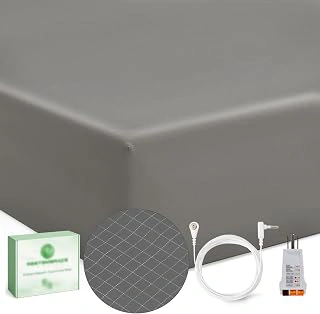
King Grounding Sheets, 25% Silver Fiber, 75% Organic Cotton with Tester
This king-size sheet combines 25% silver fiber with 75% organic cotton and includes a continuity tester at $169.99. The 4.7 out of 5 rating reflects its position as the highest-conductivity option in this comparison, delivering maximum conductive surface area for users who prioritize electrical connection to ground.
The 25% silver content provides stronger conductivity than lower-percentage alternatives, which matters if you want consistent electrical contact across the entire sleep surface. The organic cotton blend adds breathability and softness, balancing the metallic fiber texture. The included continuity tester lets you verify that the grounding connection remains intact over time, a useful tool for confirming the sheet maintains its conductive pathway from fabric to outlet ground.
Silver fiber requires gentler care than standard bedding. Hand washing or delicate machine cycles without bleach or fabric softener help preserve the conductive threads. Higher silver percentages mean more metal in the weave, which can affect fabric durability if washed aggressively or dried on high heat. Plan for air drying and gentle handling to extend the sheet's conductive lifespan.
This sheet fits users who want the most conductive grounding surface available and appreciate the verification tool. The price reflects the higher silver content and included tester. If you prefer a lower-maintenance option or find the care requirements too restrictive, a sheet with lower silver percentage may offer a better fit between performance and upkeep.
- ✅ 25% silver fiber delivers highest conductivity in this comparison
- ✅ Includes continuity tester to verify grounding connection
- ✅ Organic cotton blend adds breathability and comfort
- ✅ King size provides full-bed conductive coverage
- ⚠️ Higher silver content requires gentle hand or delicate machine wash
- ⚠️ No bleach or fabric softener allowed to preserve conductivity
- ⚠️ Air drying recommended, limiting convenience
- ⚠️ $169.99 price point reflects premium silver percentage
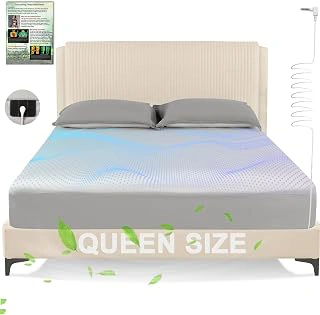
Queen Size Grounding Fitted Sheet, 10% Silver Fiber & 90% Organic Cotton
Queen-bed owners looking for an affordable grounding option with strong user feedback will find this fitted sheet delivers solid value at $55.99. The 10% silver fiber and 90% organic cotton blend provides consistent conductivity while maintaining a soft, Queen Size Grounding Fitted Sheet, 10% Silver Fiber & 90% Organic Cotton sleep surface that fits standard queen mattresses without shifting during the night.
The fitted-sheet design stays secure around the mattress corners, eliminating the bunching or sliding common with flat grounding mats. Silver fiber threads woven through the cotton create a conductive network that connects your body to the grounding cord, which routes neatly to a grounded outlet or grounding rod. Organic cotton forms the majority of the fabric, offering comfort for direct skin contact while the silver content handles the electrical connection.
With a 4.8 out of 5 rating, this sheet earns high marks from users who prioritize fit, ease of use, and price. The lower silver percentage compared to premium options means slightly reduced conductivity across the entire surface, but the fitted construction ensures consistent contact wherever you rest. Machine-washable care makes maintenance straightforward - use mild detergent and skip the bleach to preserve the silver fibers over time.
This fitted sheet works best for queen-size beds where you want a set-it-and-forget-it solution that stays in place and requires minimal adjustment. The price point makes it accessible for first-time grounding users or anyone adding grounding to a guest room or secondary bed without investing in higher silver-content options.
- ✅ Affordable entry point at $55.99 for queen-size beds
- ✅ 4.8/5 rating reflects strong user satisfaction
- ✅ Fitted design stays secure on mattress without shifting
- ✅ Organic cotton provides soft, breathable comfort
- ✅ Machine-washable for easy maintenance
- ⚠️ 10% silver fiber content offers lower conductivity than premium sheets
- ⚠️ Queen-only sizing limits use on other bed dimensions
What Are Grounding Sheets and How Do They Work?
A grounding sheet connects your body to the earth's electrical potential while you sleep. Most designs weave conductive silver fibers into cotton fabric, forming a grid that spans the entire sleeping surface. When you lie on the sheet with bare skin, your body makes direct contact with this conductive layer.
A grounding cord plugs into the sheet and connects to the ground port of a standard electrical outlet or, in some systems, to a grounding rod driven into the soil outside. This cord creates a continuous path between the conductive fibers and the earth, allowing electrons to flow freely. The third prong of a grounded outlet - the round one below the two flat blades - links directly to a copper or aluminum rod buried near your home's electrical panel, completing the circuit.
The sheet itself carries no current and draws no power. It simply equalizes the voltage between your body and the ground plane. Higher silver content typically improves conductivity, which is why many manufacturers specify the percentage of silver fiber by weight. Cotton serves as the non-conductive carrier, providing comfort and breathability while the silver threads handle electron transfer.
Grounding sheets do not block electromagnetic fields. They may help dissipate static charge and provide a reference voltage, but they cannot shield you from radio frequencies or eliminate EMF exposure in your environment. The primary mechanism is electrical continuity, not filtration or absorption. If you are looking for EMF reduction, you would need separate shielding materials designed to reflect or attenuate specific frequency ranges. Grounding sheets focus on maintaining a stable electrical connection between your body and the earth during the hours you spend in bed.
The Science of Grounding: EMF Mitigation and Parasympathetic Recovery Explained
Grounding, or earthing, is built on the idea that direct skin contact with the Earth's surface - or a conductive substitute like a grounded sheet - allows free electrons to flow into the body. Proponents suggest this electron transfer may help neutralize free radicals, reduce static charge buildup, and provide a reference point that stabilizes the body's electrical environment. Some grounding sheets incorporate silver or carbon fibers woven into cotton or polyester, creating a conductive surface that connects to a grounded outlet or grounding rod.
The EMF mitigation angle centers on shielding and equalization. When a conductive sheet is grounded, it can act as a passive barrier or drain for ambient electric fields generated by household wiring, appliances, and wireless devices. Laboratory measurements show that grounded conductive fabrics can lower surface voltage on the body and reduce the strength of alternating electric fields in the immediate sleeping area. This does not block radiofrequency radiation in the way a Faraday enclosure would, but it may lower the body's coupling to low-frequency electric fields.
Parasympathetic recovery is the autonomic nervous system's rest-and-digest mode. A handful of small studies have reported changes in heart rate variability, cortisol rhythms, and subjective sleep quality among participants using grounded sleep systems. These studies often cite improved HRV as a marker of parasympathetic tone. However, sample sizes remain small, blinding is difficult, and placebo effects are hard to rule out. The research landscape is early-stage: suggestive rather than conclusive.
Anecdotal reports vary widely. Some users describe falling asleep faster, waking less often, or feeling more refreshed. Others notice no difference, and a minority report mild tingling or restlessness during the first few nights. Variability may stem from differences in home wiring quality, humidity, skin conductivity, and individual sensitivity to environmental electric fields. Grounding sheets work only when properly connected to a verified ground, so outlet testers and continuity checks matter.
The takeaway is that grounding sheets offer a plausible mechanism - electron exchange and electric-field reduction - but the evidence base is still narrow. If you're sensitive to static or live in an electrically noisy environment, the physical properties alone may justify a trial. Just keep expectations realistic and verify your ground connection before drawing conclusions about sleep or recovery changes.
How We Selected the Best Grounding Sheets
We narrowed the field by comparing silver fiber percentage, price per square foot of conductive material, user ratings, continuity tester inclusion, and washability standards. Silver content ranged from 10% to 25% across the products we reviewed, and this difference matters for both conductivity and care requirements.
Higher silver fiber percentages often deliver better conductivity, which is the core function of a grounding sheet. A 25% silver sheet should offer lower electrical resistance than a 10% alternative, meaning electrons flow more freely between your skin and the ground connection. That improved conductivity can be meaningful if EMF mitigation is your primary goal.
The tradeoff is cost and complexity. Sheets with more silver cost more per square foot and require gentler washing - usually cool water, mild detergent, and no bleach or fabric softener. Some users find the care routine manageable; others prefer the durability and lower maintenance of sheets with less silver. We flagged washability instructions for every product so you can match care commitment to your routine.
We also checked whether each product includes a continuity tester, a small tool that confirms your sheet maintains a proper ground connection. Testers add confidence, especially during the first few weeks or after washing. Finally, we reviewed user ratings for recurring mentions of fit, comfort, and durability over months of use. Price per square foot let us compare value across different bed sizes, since a king sheet with 15% silver may cost less per square foot than a twin with 20%. Together, these factors reveal which sheets deliver reliable conductivity, which prioritize ease of care, and which offer the best balance for typical household use.
Comparing Silver Fiber Content: What the Percentages Mean for Performance
Silver fiber percentage directly affects how well a grounding sheet conducts electrons from your body to the earth connection. Sheets with 10% silver fiber provide baseline conductivity suitable for most users who want reliable grounding without premium cost. A 10% ratio means approximately one in ten threads is pure silver, creating a conductive grid across the fabric that maintains contact as you move during sleep.
Stepping up to 20% silver doubles the conductive pathways. This denser silver thread pattern reduces resistance and can improve electron transfer speed, particularly useful if you sleep on your side or back with less body surface touching the sheet. The tradeoff is higher upfront cost - typically 40 - 60% more than 10% options - and slightly stiffer fabric feel when new, though most sheets soften after a few washes.
At 25% silver fiber, you reach the upper range of consumer grounding products. These sheets offer the lowest electrical resistance and the most consistent conductivity across the entire surface, which matters if you prioritize maximum EMF mitigation or share the bed with a partner who also wants full grounding coverage. Durability becomes a consideration here: higher silver content can mean more care during washing, since silver threads are softer than surrounding cotton or polyester and may wear faster with harsh detergents or high heat.
Cost per conductivity point flattens above 20%. A 25% sheet might cost 20% more than a 20% version but deliver only marginally better performance for a single sleeper. If budget is tight, a well-made 10% sheet will ground you effectively. If you want noticeably faster electron exchange or plan to use the sheet for years with frequent washing, 20% hits the value-to-performance sweet spot. Reserve 25% for situations where you need the absolute lowest resistance or maximum surface conductivity across a larger bed size.
Whichever percentage you choose, verify the sheet includes a grounding cord and conductive snap or sewn-in rivet. Silver content means little if the connection point is unreliable. Look for thread counts above 300 to ensure the silver fibers are woven tightly enough to maintain contact, and confirm the manufacturer lists actual silver percentage rather than vague terms like "silver-infused" or "conductive blend."
Frequently Asked Questions About Grounding and Earthing Sheets
Grounding sheets raise practical questions about safety, compatibility with bedding, and how long they remain effective under normal use.
Can I use a grounding sheet with a mattress protector?You can layer a waterproof mattress protector under the grounding sheet, but avoid placing one on top. Direct skin contact with the conductive fabric is necessary for the sheet to function. If you prefer a barrier between you and the sheet, wear thin cotton sleepwear and ensure at least some skin - such as legs, arms, or back - touches the fabric during sleep.
How long do grounding sheets last?With proper care, most silver-thread grounding sheets remain conductive for one to three years. Washing frequency, detergent choice, and dryer heat all affect longevity. Hand washing or using a gentle cycle without bleach, fabric softener, or whitening agents extends the life of the silver fibers. Air drying is gentler than machine drying on high heat.
Are grounding sheets safe for children?Grounding sheets are generally safe for children when the grounding cord is properly connected to a verified grounded outlet. Keep the cord out of reach to prevent tripping or tampering. If your child tends to kick off bedding or sleep restlessly, a grounding mat placed on top of the fitted sheet may stay in contact more reliably than a full fitted sheet.
Do I need to sleep directly on the sheet?Skin contact improves conductivity. Sleeping on top of the sheet with bare skin on legs, arms, or torso provides the most consistent connection. Lightweight pajamas made of natural fibers allow some contact, but thick or synthetic fabrics reduce effectiveness.
What about electrical safety?Grounding cords include a built-in resistor that limits current flow, and the system connects only to the ground port of a three-prong outlet - not to live voltage. If you have concerns about your home's wiring, use an outlet tester to confirm proper grounding before connecting the cord.
How often should I wash my grounding sheet?Wash every one to two weeks to remove body oils and lotions that can coat the silver threads and reduce conductivity. Use a mild, liquid detergent and skip the fabric softener. Testing conductivity with a multimeter every few months helps you catch any loss in performance before it becomes noticeable.
How to Use and Care for Your Grounding Sheet for Maximum Benefits
- Test your outlet for proper grounding using a continuity tester before first use
- Ensure at least 20% of your skin makes direct contact with the sheet during sleep
- Wash grounding sheets in cold water with mild detergent, no bleach or fabric softener
- Air-dry or tumble on low heat to preserve silver fiber conductivity
- Inspect grounding cord connections monthly for wear or loosening
- Avoid applying lotions or oils immediately before bed to prevent fiber coating