We may earn a commission when you buy through links on this page, at no extra cost to you. How this works.
Choosing mouth tape for overnight nasal breathing comes down to three interconnected attributes: adhesive strength that stays put through the night without pulling or irritating skin, material flexibility that moves with your jaw and facial expressions during sleep, and removal ease that won't leave residue or cause redness in the morning. The best choice depends on how you balance security against comfort - stronger adhesives offer confidence for active sleepers but demand more care during removal, while gentler options reduce morning skin stress but may lift if you shift positions frequently or sleep on your side.
Traditional mouth tape works by creating a physical barrier that encourages nasal breathing, but the products reviewed in this guide take alternative approaches to the same goal. Instead of adhesive strips placed directly over the lips, you'll find nasal strips designed to open airway passages and chin support devices that gently discourage mouth opening through mechanical positioning. These alternatives address nasal breathing from a structural angle rather than a restrictive one, which may suit users concerned about adhesive contact with sensitive facial skin or those who prefer adjustable, reusable solutions.
When evaluating options, consider your sleep habits and skin sensitivity alongside the product's design. A side sleeper needs adhesive or support that resists pillow friction, while someone with reactive skin should prioritize hypoallergenic materials and test a small area first. The right product will feel secure enough that you forget it's there, yet remove cleanly without tugging or leaving tackiness behind.
What Mouth Taping Claims to Do for Sleep Quality
Mouth taping during sleep is designed to keep the lips closed, which shifts breathing from the mouth to the nose throughout the night. Many people who tape report less snoring, fewer instances of waking with a dry mouth, and a more rested feeling in the morning. The basic idea is straightforward: when your mouth stays closed, you breathe through your nose, and nasal breathing tends to be quieter and more efficient than mouth breathing.
Nasal passages warm, filter, and humidify air before it reaches the lungs, while mouth breathing bypasses those steps. By encouraging the nasal route, mouth tape may help reduce the throat dryness and irritation that often follow a night of open-mouth breathing. Some users also notice that they wake less frequently, though individual results vary widely depending on nasal congestion, sleep position, and other factors.
Mouth tape is not a standalone solution for sleep-disordered breathing or snoring with an underlying cause. If you suspect sleep apnea or have difficulty breathing through your nose due to structural issues or chronic congestion, consult a healthcare provider before relying on tape. For people with clear nasal passages who simply fall into mouth-breathing habits at night, tape serves as a passive reminder to keep the mouth closed.
Other methods to support nasal breathing include positional therapy, nasal strips, saline rinses, and addressing allergens in the bedroom. Mouth tape fits into that broader toolkit as a low-cost, low-tech option that requires no power source or complicated setup. The key tradeoff is comfort: adhesive strength must be enough to last through the night but gentle enough to remove without skin irritation in the morning.
Three Features That Define a Usable Mouth Tape
Adhesive strength sits at the center of every mouth tape decision. You need enough hold to keep the tape in place through six to eight hours of sleep, including movement, facial pressure against a pillow, and natural skin oils that accumulate overnight. Too weak, and the tape peels away within an hour. Too aggressive, and removal pulls at delicate lip skin or leaves residue that requires scrubbing. Medical-grade adhesives designed for facial use strike this balance by creating secure contact without bonding to the deeper skin layers, allowing you to peel the tape away gently in the morning without discomfort.
Material flexibility matters because your face moves constantly during sleep. Stiff tape cracks or lifts at the edges when you shift position, talk in your sleep, or adjust your jaw. this product materials like cotton or rayon blends flex with natural facial movement and allow moisture vapor to escape, preventing the clammy buildup that wakes you at 3 a.m. Fully occlusive materials like solid plastic trap heat and perspiration, creating an uncomfortable microclimate that disrupts sleep quality even when the tape stays attached.
Hypoallergenic construction protects the thin, reactive skin around your mouth. Latex, strong solvents, and certain synthetic adhesives trigger contact dermatitis in a significant portion of users, showing up as redness, itching, or small bumps that persist for days after a single night of use. Tapes certified as hypoallergenic or designed for sensitive skin use gentler bonding agents and avoid common irritants, though individual reactions vary. Testing a small piece on your inner wrist for ten minutes before applying it to your face helps identify sensitivity before you commit to overnight wear. The tradeoff is straightforward: stronger industrial adhesives may offer superior hold but carry higher irritation risk, while gentler formulations prioritize skin comfort at the cost of slightly reduced adhesion in humid or oily conditions.
How to Apply and Remove Mouth Tape Without Skin Irritation
Applying mouth tape correctly starts with clean, dry skin. Wash your face and let the area around your mouth dry completely - moisture and oils reduce adhesive contact and increase the chance of overnight lifting. Once dry, position the tape gently over your lips without stretching it. Press from the center outward to eliminate air pockets and ensure even contact with the skin. Stretching the adhesive before application creates tension that can pull at your skin during the night and make removal uncomfortable.
Removal technique matters as much as application. Peel slowly from one corner, holding your skin taut with the opposite hand to reduce pulling. If you feel resistance, dampen the tape with warm water or apply a small amount of coconut or olive oil along the edge - this loosens the adhesive bond and lets the tape release without tugging. Rushing the removal process is the most common cause of redness and irritation, especially for users with sensitive skin or those new to mouth taping.
For people who experience persistent irritation despite careful technique, a chin strap offers a non-adhesive alternative. Chin straps use adjustable fabric bands to encourage mouth closure through gentle upward pressure rather than sticking directly to skin. They take longer to adjust for a comfortable fit, but they eliminate adhesive contact entirely. If you've tried proper application and removal steps and still see redness or discomfort after a few nights, switching to a strap-based solution may be the better long-term choice.
Comparing Adhesive Strips, Nasal Strips, and Chin Straps
Mouth tape, nasal strips, and chin straps each address nighttime mouth breathing through different mechanisms, and understanding these differences helps you choose the right tool for your breathing pattern.
Traditional mouth tape uses medical-grade adhesive applied directly to the lips to create a physical seal that encourages nasal breathing throughout the night. The tape keeps your mouth closed, forcing air through your nasal passages. This approach works well for people whose mouths fall open during sleep but who have clear nasal airways.
Nasal strips take a different approach entirely. These adhesive bands sit across the bridge of your nose and use spring-like tension to gently lift and open your nasal passages from the outside. While they can improve airflow through your nose, they do nothing to prevent your mouth from opening. If nasal congestion is your primary obstacle to nose breathing, strips address the airway itself rather than controlling lip position.
Chin straps offer mechanical jaw stabilization through fabric or elastic bands that wrap around your head and under your chin. They apply upward pressure to keep your jaw closed without placing adhesive on your skin. This method suits people who prefer reusable options or who have sensitive facial skin that reacts to tape adhesives.
The choice depends on where your breathing challenge originates. If your nasal passages are clear but your mouth drifts open, tape or a chin strap makes sense. If sinus congestion or a deviated septum restricts nasal airflow, opening those passages with a strip becomes the priority. Some people find that combining approaches - using both a nasal strip and a chin strap, for example - provides more complete support than either method alone.
Consider your comfort threshold as well. Adhesive products require nightly application and morning removal, which some users find tedious. Chin straps eliminate that routine but add bulk and may shift during the night. Testing each category helps reveal which tradeoffs you're willing to accept for consistent nasal breathing.
Who Should Avoid Mouth Taping and Why
Mouth taping is not appropriate for everyone. Individuals with obstructive sleep apnea should never use tape without explicit approval from their sleep physician, because blocking oral airflow when nasal passages may also collapse during sleep creates a dangerous situation. If you have chronic nasal congestion, a deviated septum, active sinus infection, or any structural issue that limits airflow through your nose, mouth taping removes your backup breathing route and can lead to oxygen desaturation or panic during the night.
People with certain skin conditions - eczema, psoriasis, or very fragile skin - may experience irritation, tearing, or wounds from even gentle adhesive. Anyone who has experienced claustrophobia or anxiety around restricted breathing should approach mouth taping with caution or avoid it entirely, since the sensation of a sealed mouth can trigger distress that disrupts sleep rather than improving it.
Mouth tape is a this product tool intended to encourage nasal breathing in people whose airways are already open and functional. It does not treat, cure, or manage any diagnosed sleep or respiratory disorder. If you snore loudly, wake gasping for air, or suspect a breathing problem during sleep, the first step is a professional evaluation - either a home sleep test or an in-lab study - rather than self-managing with tape. Children should not use mouth tape unless under the direct guidance of a pediatric sleep specialist or airway-focused dentist.
When in doubt, verify that you can breathe comfortably through your nose for several minutes with your mouth closed before attempting overnight taping. If nasal breathing feels strained or you need to open your mouth for relief, address the underlying airway issue first.
Frequently Asked Questions About Mouth Taping for Sleep
Starting with mouth tape often raises practical questions that aren't covered in product descriptions. Understanding what to expect during the adjustment period and how to handle common nighttime scenarios helps you prepare realistically rather than abandon the practice after one uncomfortable attempt.
Most people need three to seven nights to feel comfortable breathing through their nose all night with tape in place. The first night may feel restrictive or trigger mild anxiety, which is normal when your breathing pattern shifts. Start by wearing tape for 20 to 30 minutes while awake and relaxed, then progress to short naps before committing to a full night. If you wake up and the tape is gone, that's common early on - your body may remove it unconsciously as it adjusts to the new sensation.
You cannot talk clearly with tape on, and drinking water requires peeling back one edge or removing the tape entirely. Keep a small glass of water on your nightstand and be prepared to reapply if you need to hydrate mid-sleep. If you need to cough, sneeze, or clear your throat, the force will either break the seal or you can quickly pull the tape off. This is not dangerous - your body's reflexes remain active, and the tape is designed to release under pressure or with deliberate removal.
Adhesive residue sometimes remains on the skin after removal, especially with stronger tapes. Wipe the area gently with a damp cloth, a mild oil like coconut or jojoba, or a residue remover designed for sensitive skin. Do not scrub aggressively, as the skin around your mouth is thin and can become irritated with repeated friction.
Side and stomach sleepers can use mouth tape safely, but pillow contact may reduce adhesive hold or cause the tape to shift during the night. Choose a tape with reliable edge-to-edge stick if you move frequently, and consider a contoured shape that sits closer to the lip line to minimize contact with bedding. If you wake on your stomach with the tape partially peeled, that's feedback to try a different adhesive strength or shape rather than a sign that taping won't work for your sleep position.
Nasal congestion is the most common reason people struggle with mouth tape. If your nose feels blocked, address that first with saline rinse, a humidifier, or allergy management before relying on tape to force nasal breathing. Tape works best when your nasal passages are already clear enough to handle your full breathing volume without strain.
Final Thoughts: Matching the Right Product to Your Breathing Pattern
Choosing the right product to support nasal breathing at night depends on understanding where your challenge begins. If your nose struggles to pull enough air during sleep, external nasal dilators that widen the airway may offer the most direct benefit. For sleepers whose mouths fall open despite clear nasal passages, a mechanical solution like a chin strap provides reusable, adjustable support without adhesive contact on sensitive skin. Traditional adhesive mouth tape, designed to seal the lips directly, remains the most common option for those seeking a simple barrier that encourages nasal breathing without added hardware.
Test one approach at a time rather than combining methods immediately. Wear your chosen product for three to five nights, then evaluate how you feel each morning: check for dry mouth, jaw tension, skin irritation, and overall restfulness. If discomfort outweighs progress, switch to a different category rather than forcing adaptation. A nasal strip that feels invisible may work better for you than a chin strap that shifts during sleep, or vice versa.
Sustainable use comes down to balancing effectiveness with daily ease. A product that improves your breathing but leaves red marks or requires ten minutes of cleanup every morning will eventually end up in a drawer. Look for the option that integrates into your routine with minimal friction, delivers noticeable improvement in sleep quality, and respects your skin and comfort preferences. The right match supports your breathing pattern without becoming another source of nighttime stress.
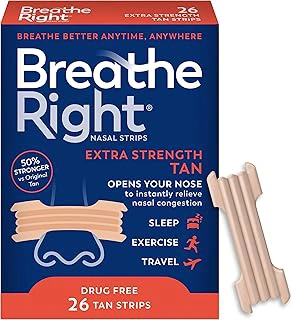
Breathe Right Extra Strength Tan Nasal Strips, 26ct
Some people discover that their nasal breathing struggle at night comes from restricted airflow inside the nose rather than a habit of mouth breathing. Breathe Right Extra Strength Tan Nasal Strips take a structural approach: spring-like bands lift the sides of the nose from the outside, widening the nasal passages to encourage airflow without sealing the mouth.
Each strip uses an extra-strength adhesive designed to stay in place through the night. At $11.99 for 26 strips, the cost per night is roughly the listed amount. The 4.3 out of 5 rating reflects steady performance for users dealing with congestion, a deviated septum, or narrow nasal anatomy. Application is straightforward - clean and dry the nose, center the strip across the bridge, and press the adhesive tabs along each side.
The advantage here is mechanical support for nasal breathing when the airway itself is the limiting factor. Wear time is predictable, and removal in the morning is gentle if you dampen the adhesive first. The tradeoff is clear: these strips do not prevent the mouth from opening during sleep. If your challenge is primarily mouth breathing out of habit or position, a strip that opens the nose may help you breathe more easily through it, but it will not physically close your lips the way mouth tape does.
Consider this option when nasal congestion or structural narrowing makes it hard to sustain airflow through your nose, even when your mouth is closed. It pairs well with mouth tape if you need both nasal passage support and a reminder to keep your lips together, though most users find one approach sufficient depending on the root cause.
- ✅ Mechanically widens nasal passages to improve airflow
- ✅ Extra-strength adhesive holds through the night
- ✅ Simple application on clean, dry skin
- ✅ Useful for congestion or narrow nasal anatomy
- ⚠️ Does not prevent mouth opening during sleep
- ⚠️ Less effective if mouth breathing is the primary habit
- ⚠️ Adhesive removal requires dampening to avoid discomfort
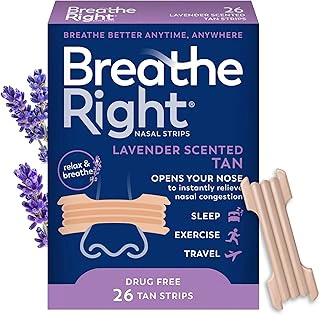
Breathe Right Lavender Scent Extra Strength Nasal Strips, 26 Ct
If you respond well to aromatherapy cues at bedtime, the Breathe Right Lavender Scent Extra Strength Nasal Strips offer the same nasal passage lift as the standard tan version with a subtle lavender scent. Priced at $11.49 for 26 strips and rated 4.3 out of 5, these strips use the same strong adhesive and spring-like band to widen nasal passages, supporting airflow through the nose rather than sealing the mouth.
The lavender scent is mild and intended to complement a wind-down routine. Scent sensitivity varies widely; some users find it calming, while others prefer the unscented tan strips to avoid any fragrance near the nose during sleep. The adhesive strength and structural support remain identical across both variants, so your choice hinges entirely on whether you want that gentle lavender note or a neutral experience.
These strips address nasal breathing by opening the passages, not by preventing mouth breathing. If your goal is to keep your mouth closed overnight, you will still need mouth tape in addition to nasal strips. For users who already breathe comfortably through the nose but want the scent variation, this lavender option delivers the same mechanical support with a sensory addition that may suit evening routines centered on relaxation.
- ✅ Same extra-strength adhesive and nasal lift as the standard tan strips
- ✅ Subtle lavender scent may support bedtime relaxation routines
- ✅ $11.49 for 26 strips offers consistent value
- ⚠️ Scent sensitivity is individual; some users prefer unscented options
- ⚠️ Opens nasal passages but does not seal the mouth
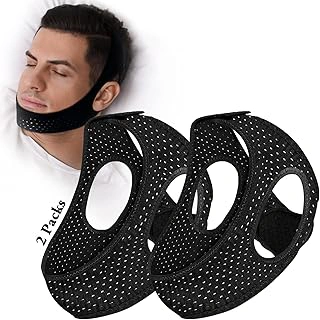
2 Pack Anti Snore Chin Strap for Sleeping
Users concerned about adhesive irritation or nightly removal cleanup can consider a mechanical alternative. The 2 Pack Anti Snore Chin Strap for Sleeping uses an adjustable elastic band that wraps around the head and cradles the jaw, physically holding the mouth closed without any adhesive contact on facial skin. Priced at $24.99 for two straps and rated 4.8 out of 5, this option appeals to sleepers who prefer reusable gear and customizable tension.
The strap's adjustable design lets you dial in the right level of support for your jaw, and because it's fabric-based, you can hand-wash and reuse it night after night. There's no morning ritual of peeling tape off sensitive lip or cheek skin, and no worry about residue or running out of single-use strips. For users who rotate between two straps while laundering, the 2-pack format adds convenience.
The tradeoff is presence. A chin strap is more noticeable during sleep than a small strip of tape - some users find the band shifts if they move frequently, and the fabric may feel warm or bulky compared to a minimalist adhesive patch. Sleepers who change positions often or prefer a lighter touch on the face may need a few nights to adapt. Side sleepers in particular should check that the strap stays centered and doesn't bunch against the pillow.
This chin strap fits best for users prioritizing long-term reusability, adjustable jaw support, and complete avoidance of facial adhesives. If you value mechanical simplicity and don't mind a more visible sleep accessory, it delivers consistent performance without the consumable cost of tape.
- ✅ No adhesive contact with facial skin
- ✅ Adjustable tension to fit individual jaw support needs
- ✅ Reusable and washable for long-term use
- ✅ 2-pack allows rotation while laundering
- ⚠️ More noticeable during sleep than adhesive tape
- ⚠️ May shift or require adjustment for active sleepers
- ⚠️ Fabric band can feel warmer or bulkier than minimalist tape options
Key Considerations Before You Commit to Mouth Taping
- Confirm you can breathe comfortably through your nose while awake before attempting overnight use
- Start with shorter wear periods during waking hours to test adhesive tolerance and fit
- Keep the tape or strap easily removable in case of discomfort or nasal congestion during the night
- Monitor for skin irritation, especially around the lip area or jawline, and adjust product choice if needed
- Avoid mouth taping if you have active nasal congestion, sleep apnea, or respiratory conditions without professional guidance