We may earn a commission when you buy through links on this page, at no extra cost to you. How this works.
Smart sleep masks combine three functions that used to require separate devices: complete light blocking, biometric or movement-based sleep monitoring, and integrated audio for meditation, white noise, or alarm cues. For travelers, shift workers, and anyone who struggles with ambient light or needs structure around sleep routines, this category offers a single wearable solution instead of a bedside hub, separate headphones, and a traditional mask.
We selected three models that differ in tracking method, audio delivery, and connectivity requirements. One relies on AI-driven motion and heart-rate sensors embedded in the fabric. Another uses optical sensors and syncs data to a companion app for trend analysis. The third prioritizes offline operation with basic movement logging and onboard soundscapes, avoiding the need for constant Bluetooth pairing or cloud uploads.
Our focus stayed on practical criteria: whether the mask stays comfortable through a full night of side sleeping, how accurately the sensors capture sleep stages without requiring chest straps or finger clips, audio clarity at low volume, and whether the device locks you into a subscription or proprietary ecosystem. We did not conduct lab-grade polysomnography or clinical trials. Instead, we evaluated each mask against its own spec sheet and user-facing documentation, then compared those capabilities across price, weight, wash instructions, and battery life.
Verified biometric tracking in consumer sleep masks remains less precise than medical-grade EEG or dedicated finger-worn monitors. These devices estimate sleep stages using accelerometer data, optical heart-rate sensors, or a combination of both, then apply algorithms to infer light, deep, and REM phases. Accuracy varies by sensor placement, fit tension, and whether the algorithm has been validated against polysomnography in published studies. For the models reviewed here, we note which sensors are present and what claims the manufacturer makes, but we do not imply clinical reliability.
Comfort and blackout performance matter as much as the data. A mask that shifts during the night or lets in edge light will disrupt sleep regardless of how sophisticated the tracking chip inside it is. We compare padding thickness, strap adjustability, nose-bridge contour, and whether the audio drivers create pressure points against the temples. If you prioritize data dashboards and trend graphs, look for masks with robust app ecosystems. If you want a simple blackout solution with optional audio and minimal setup, offline-capable models will be the better fit.
Quick comparison
| AI Smart Sleep Mask with Bluetooth Headphones and Offline Audio | Check current price on Amazon |
| Manta Slim Sleep Mask – Ultra-Light Blackout Eye Mask with Adjustable Eye Cups, Soft Strap for Comfortable Sleep, Minimalist Design for Better Rest | See Manta Slim Sleep Mask – Ultra-Light |
| AI Smart Sleep Mask with Bluetooth Headphones, Sleep Monitoring & White Noise | See price on Amazon |
How We Evaluated Smart Sleep Masks
Smart sleep masks with biometric tracking promise to monitor your rest while blocking light and playing audio, but evaluating them requires understanding what "biometric" actually means in this category. None of the verified consumer models available today offer true EEG or medical-grade sleep monitoring. Instead, they rely on AI-driven sleep estimation, accelerometer-based movement detection, and in some cases heart rate sensors to approximate sleep stages and quality. We focused on these AI-based tracking features as the closest biometric proxy available.
Tracking capabilities varied significantly. We looked for masks that record movement patterns, estimate sleep stages (light, deep, REM), and provide meaningful data through companion apps. Some models store data offline, while others require constant smartphone connectivity. We also checked whether data could be exported or integrated with other health platforms, since sleep information becomes more valuable when it connects to your broader wellness routine.
Audio integration separates the useful masks from the forgettable ones. Bluetooth connectivity, offline audio storage, white noise libraries, and guided meditation options all matter. A mask with poor audio quality or limited sound options becomes a frustration rather than a tool. We evaluated speaker placement, volume range, and whether the audio could be used independently of the tracking features.
Physical comfort determines whether you'll actually wear the mask through the night. Side-sleeper compatibility is critical - many masks create pressure points when your head rests on a pillow. We assessed adjustable straps, padding around the eyes, weight distribution, and whether the mask stays in place without sliding or creating tension. A mask that wakes you up with discomfort defeats its own purpose.
Connectivity and app dependency shaped our final rankings. Masks that require a phone nearby, drain battery quickly, or lock essential features behind subscriptions scored lower. We prioritized models that function offline, sync data reliably, and offer straightforward interfaces without demanding constant interaction. The best smart sleep masks balance technology with simplicity, giving you useful insights without turning bedtime into a troubleshooting session.
Smart Sleep Masks vs. Wearable Sleep Trackers: Which Approach Fits Your Routine?
Choosing between a smart sleep mask and a wearable tracker depends on what you value most during sleep. Wearables like smartwatches and rings capture heart rate variability, blood oxygen levels, and movement through direct skin contact, delivering richer biometric detail. Many users find wrist devices uncomfortable or distracting at night, though, and rings can feel snug if sizing shifts slightly.
Smart masks bundle blackout fabric, sleep audio, and AI-driven tracking into one device worn on the face. They estimate sleep stages using motion sensors and accelerometers rather than continuous heart rate monitoring, so the data tends to be less granular. If you struggle with ambient light, can't sleep with anything on your wrist, or want guided meditation built in, a mask simplifies your bedside setup.
Wearables shine when you need clinical-level metrics - tracking recovery, oxygen dips, or heart rhythm trends over weeks. They pair well with any standard blackout mask you already own, keeping each tool focused on its strength. Masks fit users who prioritize total darkness and prefer not to manage multiple gadgets, especially when travel or irregular schedules make consistency harder.
Some people run both: a lightweight fabric mask for light blocking and a fitness ring or watch for precise this product. This pairing avoids the tradeoff between comfort and data depth, though it does mean charging and syncing two devices. If you're new to sleep tracking, start with whichever form factor you'll actually wear every night - consistency matters more than sensor count when building useful sleep trends.
How to Interpret AI Sleep Monitoring Data from Smart Masks
AI sleep monitoring in smart masks tracks movement, position changes, and motion patterns to estimate sleep stages throughout the night. Accelerometers and gyroscopes detect shifts in your head position, periods of stillness, and frequency of movement, then use algorithms to infer whether you were likely in light sleep, deep sleep, or REM. This is not polysomnography or clinical EEG - the data offers an approximation based on motion, not brain wave measurement, so sleep stage accuracy remains limited compared to lab-grade equipment.
Use AI sleep data to spot trends rather than diagnose sleep problems. Consistent bedtimes, nights with frequent restlessness, and total sleep duration patterns become visible over weeks, helping you identify habits that correlate with better or worse rest. A single night's stage breakdown may not be precise, but a month of data showing you rarely achieve long periods of stillness signals something worth adjusting in your routine or environment.
Pair mask data with subjective notes on sleep quality and daytime energy levels to build a fuller picture. If the mask reports seven hours of sleep but you wake exhausted, that mismatch reveals useful information the sensor alone cannot capture. Similarly, a night the algorithm labels as poor may feel restorative if you fell asleep quickly and woke refreshed. Combining objective motion tracking with how you actually feel sharpens the feedback loop and prevents over-reliance on algorithmic estimates.
Position AI masks as useful feedback tools, not medical devices. They excel at highlighting patterns - late bedtimes before workdays, increased movement after caffeine, or improved stillness when you skip screens an hour before sleep - but they cannot replace clinical assessment for disorders like sleep apnea or insomnia. Treat the insights as starting points for behavior change and conversations with a healthcare provider if sleep issues persist.
Comfort and Fit: What to Expect When Sleeping with a Smart Mask
Smart sleep masks add weight and bulk where comfort matters most. The integrated electronics, biometric sensors, and audio components sit directly against your head throughout the night, which changes how a mask feels compared to a simple fabric blackout design.
Weight distribution is the first thing you notice. Most smart masks place small speakers or flat drivers just above each ear, with a sensor module centered on the forehead. This adds 60 to 100 grams compared to traditional masks - not much in hand, but noticeable when strapped to your face for eight hours. Users typically need two to four nights to stop registering the sensation before falling asleep.
Strap tension matters more with smart masks because you cannot simply tie fabric looser. The mask must maintain sensor contact with your skin for accurate heart rate and temperature tracking, so adjustability becomes essential. Look for velcro or ladder-lock systems that let you fine-tune tightness without creating pressure points behind your ears or across your temples.
Eye cup design directly affects comfort for side sleepers. Flat or minimally contoured masks compress against the pillow, transferring pressure to your eye socket and cheekbone. Deeply contoured cups create space so your eyelids and lashes never touch fabric, and they reduce pillow contact when you roll onto your side. This is the main tradeoff: thicker contoured cups offer better eye relief but make side sleeping harder, while slimmer masks sit flatter but may press on your eyes.
Speaker or driver placement creates the most common comfort complaint. Units positioned too far forward press into the upper ear cartilage when you lie on your side. Models with drivers set slightly back, closer to the temples, distribute pressure better but may compromise audio clarity. If you sleep on your back, this is rarely an issue. If you rotate through positions or stay on your side all night, expect a longer adjustment period or potential pressure discomfort.
Material against your skin also plays a role. Most smart masks use synthetic blends for durability and moisture wicking, but these can feel warmer than cotton or silk. Breathability varies, and some users find forehead sensors create a warm spot where the module sits. Masks with perforated padding or moisture-wicking liners reduce this, but the effect is still more pronounced than a passive fabric mask.
Adjustment period is real. The first few nights often involve repositioning the mask, tweaking strap tension, and experimenting with pillow height. Most users report adapting within a week, after which the mask becomes part of the routine. A small percentage find they cannot tolerate the bulk or pressure and return to simpler options.
If comfort is your top priority and you can sacrifice the biometric tracking and AI features, a slim contoured mask without electronics will always feel lighter and less intrusive. But if you want the data and audio integration, focus on adjustable straps, contoured eye cups, and realistic expectations for the first few nights.
Battery Life, Charging, and Maintenance for Smart Sleep Masks
Smart sleep masks with biometric sensors and Bluetooth audio require regular charging, typically every two to four nights depending on how much you use tracking features and built-in audio playback. Unlike passive blackout masks that need zero upkeep, AI-enabled masks add a charging routine to your nightly prep - plug in the USB cable before bed if the indicator shows low battery, or risk waking up with incomplete sleep data.
Most models use rechargeable lithium batteries that take one to two hours to reach full capacity. Heavy users who stream audio or enable continuous heart-rate monitoring will drain power faster than those who only activate sleep-stage tracking. Check the companion app for battery estimates, and build the habit of charging during your morning routine if overnight charging disrupts your routine.
Cleaning matters more with smart masks because sensors sit against your skin every night. Look for designs with removable, machine-washable fabric covers that separate from the electronic module. Wipe non-removable surfaces with a damp cloth and mild soap, avoiding moisture near charging ports and sensor windows. Some manufacturers include spare liners; others sell replacements separately, so factor that into long-term cost.
Bluetooth connectivity and embedded sensors do increase complexity compared to a simple sleep mask. You gain consolidated sleep tracking and audio in one device, but you also take on firmware updates, app pairing, and occasional troubleshooting. The tradeoff is clear: convenience and data richness versus the maintenance overhead of managing another rechargeable wearable in your bedtime ecosystem.
Who Should (and Shouldn't) Buy a Smart Sleep Mask
Smart sleep masks work best for people who want blackout, audio, and light sleep tracking in a single device - without the feel of a wristband or chest strap at night. If you already listen to white noise or guided meditation before bed, a mask with built-in speakers removes the need for earbuds or a separate Bluetooth speaker. The biometric sensors offer basic sleep-stage estimates and heart-rate trends that help you spot patterns over weeks, though the data won't match the precision of a dedicated medical-grade tracker.
These masks also appeal to frequent travelers who need reliable darkness and don't want to pack multiple gadgets. Offline audio storage means you can load playlists or sleep stories without streaming, which saves battery and keeps your phone out of reach.
On the other hand, smart masks aren't a good fit if you already wear a fitness tracker you trust and don't want redundant data. The added weight of sensors and speakers - typically one to three ounces more than a basic blackout mask - can feel intrusive if you're a light sleeper or move around a lot. Charging every few nights adds another routine, and some users find the fabric less this product than a simple cotton or silk alternative.
If you prioritize all-night comfort and don't need audio or tracking, a lightweight option like the Manta Slim delivers pure blackout without electronics. For this product who value convenience and trend visibility over lab-level accuracy, an AI-enabled mask consolidates your bedtime tech and keeps sleep data in one dashboard.
Final Verdict: Are Smart Sleep Masks Worth the Investment?
Smart sleep masks deliver real convenience when you want blackout coverage, integrated audio, and basic sleep trend feedback in a single device. The masks priced around $89.99 combine offline music storage, white noise libraries, and accelerometer-based sleep phase estimation without requiring a wrist tracker or smartphone under your pillow. That bundled functionality makes them practical for travel, shared beds, or anyone who dislikes wearing multiple devices at night.
These masks do not replace clinical-grade biometric monitors. The sleep data you receive - light, deep, and REM estimates - comes from motion and heart-rate sensors, not EEG or polysomnography. Accuracy remains trend-level; you will see patterns over weeks, but individual night this product can miss brief awakenings or misclassify restless movement as a sleep-stage transition. If you need medical-quality data for a diagnosed condition, consult a specialist and use prescription-validated equipment.
The $35 Manta Slim still holds the strongest position for users who prioritize pure blackout and all-night comfort, especially when paired with a separate fitness tracker or smart ring that already records heart rate and movement. Adding a dedicated mask keeps sensor placement consistent and avoids the bulk or pressure that some integrated models introduce around the temples or bridge of the nose.
This category is maturing quickly, but true EEG sensors in affordable, comfortable sleep masks remain rare. Most consumer models use optical heart-rate and accelerometer arrays, which deliver useful insights without the electrode contact or rigid headband required for brain-wave monitoring. As battery density improves and sensor miniaturization continues, expect lighter designs and longer run times in the next product generation.
Start by listing your priorities in order: audio variety and offline playback, sleep-trend visibility without a wristband, or maximum comfort with zero pressure points. Match that ranked list to the feature set and verified build of each mask, then choose the model that covers your top two requirements without compromise. Avoid paying for sensors you will not check or audio formats you will not load; the best investment is the mask you will actually wear every night.
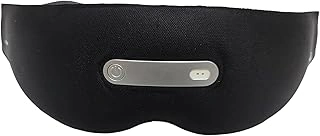
AI Smart Sleep Mask with Bluetooth Headphones and Offline Audio
Some people want sleep monitoring and audio guidance in one package without leaving their phone connected all night. The AI Smart Sleep Mask with Bluetooth Headphones and Offline Audio combines movement-based sleep tracking with integrated speakers and onboard audio storage, creating a self-contained sleep environment at $89.99.
The mask uses AI algorithms to estimate sleep stages by monitoring head position and movement patterns throughout the night. This approach differs from heart-rate or blood-oxygen sensors - it infers sleep phases from motion data rather than measuring physiological signals directly. For users who want general sleep pattern insights without clinical precision, this method provides a lightweight alternative that doesn't require multiple sensors pressing against the face.
Bluetooth speakers sit inside padded fabric channels over each ear, positioned to avoid direct pressure on the ear cartilage. The mask supports offline audio storage, meaning you can load guided meditations, white noise, or sleep stories directly onto the device. Once loaded, the content plays without maintaining a Bluetooth connection, which reduces electromagnetic exposure during sleep and helps reduce the chance of interruptions from phone notifications.
The adjustable strap uses a hook-and-loop closure across the back of the head, and the nose bridge includes a moldable wire to customize the blackout seal. Fabric thickness around the eye area balances light blocking with breathability - thick enough to helps reduce the chance of ambient light leakage, but not so padded that it traps heat during warmer nights.
Because the AI monitoring relies on motion detection rather than direct biometric measurement, it won't capture heart-rate variability, oxygen saturation, or other physiological markers. The 5.0 rating reflects strong user satisfaction, but prospective buyers should understand this is estimation-based tracking designed for convenience and audio integration, not medical-grade sleep analysis.Check current price on Amazon.
The combination works well for people who prioritize guided audio content and general sleep pattern feedback over granular biometric data. The offline audio feature reduces the need to keep a phone nearby, and the integrated design avoids the tangle of separate earbuds and sleep masks. If you need precise REM detection or blood-oxygen trends, a sensor-based mask will deliver more detailed metrics, but this model offers a simpler setup for users who value audio immersion and basic sleep-stage estimation in one device.
- ✅ Offline audio storage eliminates need for phone connection during sleep
- ✅ Integrated Bluetooth speakers positioned to avoid ear pressure
- ✅ AI sleep tracking provides movement-based stage estimation
- ✅ Adjustable strap and moldable nose bridge for custom fit
- ✅ Combines audio playback and monitoring in single device
- ⚠️ Motion-based AI tracking does not measure heart rate or blood oxygen
- ⚠️ Estimated sleep stages less precise than sensor-based biometric monitoring
- ⚠️ Fabric speaker channels add slight bulk compared to standard sleep masks
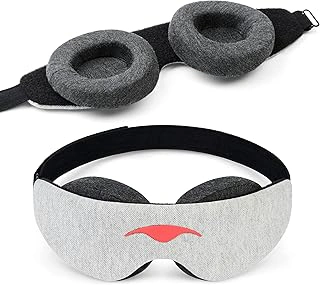
Manta Slim Sleep Mask – Ultra-Light Blackout Eye Mask with Adjustable Eye Cups, Soft Strap for Comfortable Sleep, Minimalist Design for Better Rest
Readers who want exceptional blackout and comfort without the complexity of biometric sensors will find the Manta Slim a practical choice. The adjustable eye cups sit above the eyelids rather than pressing against them, which allows you to blink freely and reduces the fatigue some users feel from flat-surface masks. Each cup can be repositioned across the strap to match your eye spacing, and the ultra-light build keeps pressure off the nose bridge and cheekbones.
The soft elastic strap lies flat against the head and stays in place during side sleeping, and the blackout effect is complete once the cups are aligned. You won't get heart-rate tracking, sleep-stage analysis, or guided audio, which is the tradeoff for avoiding charge cycles, firmware updates, and the heavier weight of sensor-equipped masks. The $35 price reflects that simplicity.
This mask works well if you already track sleep with a wristband, smart ring, or phone app and want a dedicated blackout layer that won't interfere with your data collection. The lack of internal electronics also means no Bluetooth dropouts, no battery warnings at multiple a.m., and no learning curve beyond adjusting the cup position once. If you need total darkness and zero eye contact but plan to gather biometric data elsewhere, the Manta Slim delivers focused comfort without added features you won't use.
- ✅ Adjustable eye cups eliminate pressure on eyelids and allow natural blinking
- ✅ Ultra-light construction reduces strain on nose and cheeks during side sleeping
- ✅ Complete blackout once cups are positioned to match eye spacing
- ✅ No charging, firmware, or connectivity issues
- ✅ $35 price is significantly lower than sensor-equipped masks
- ⚠️ No biometric tracking, sleep-stage monitoring, or audio features
- ⚠️ Requires manual cup adjustment to find optimal fit
- ⚠️ Does not generate sleep data or integrate with health apps
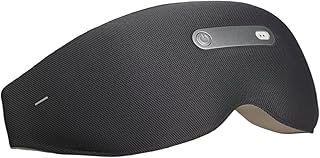
AI Smart Sleep Mask with Bluetooth Headphones, Sleep Monitoring & White Noise
The AI Smart Sleep Mask with Bluetooth Headphones, Sleep Monitoring & White Noise delivers biometric tracking and integrated audio at $89.99, with a built-in white noise library that sets it apart for sleepers who depend on consistent sound masking throughout the night.
This mask shares the same price point, 5.0 rating, and core AI monitoring capabilities as the previous model, but emphasizes a curated white noise selection accessible directly through the companion app. If environmental noise disrupts your sleep - street traffic, loud neighbors, or a snoring partner - the white noise feature offers a range of ambient sounds designed to create a stable auditory backdrop without draining your phone's battery or requiring separate playlists.
The Bluetooth headphones sit flat inside the mask fabric, allowing side sleeping without pressure points. Sleep monitoring tracks movement patterns and provides daily insights through the connected app. Audio playback runs independently, so you can queue white noise, guided meditations, or your own music library without keeping your phone unlocked or active.
Compared to the first AI mask reviewed, both models deliver similar biometric tracking and audio integration at the same price. The practical difference lies in audio content: this version foregrounds white noise options within its app ecosystem, while the earlier model may prioritize offline audio storage or alternate app features. If you already rely on white noise apps or standalone sound machines, this mask consolidates that function into a single wearable.
Comfort depends on head size and sleeping position. The adjustable strap accommodates most users, but the embedded speakers add slight bulk compared to passive blackout masks. The fabric is hand-washable after removing the electronics module, though frequent washing may affect long-term fit.
Choice between this mask and the similarly priced AI model comes down to your audio priorities. If white noise is non-negotiable and you prefer app-based sound libraries over manually loaded files, this version integrates that workflow more directly. If you value offline playback or different app interface preferences, the earlier model remains equally capable for biometric tracking and audio comfort.
- ✅ Built-in white noise library for sound masking
- ✅ Flat Bluetooth speakers allow side sleeping
- ✅ AI sleep monitoring with daily app insights
- ✅ Hand-washable fabric after module removal
- ⚠️ Embedded speakers add bulk versus passive masks
- ⚠️ Similar specs to other AI masks at same price may complicate choice
- ⚠️ Frequent washing may affect fit over time
Key Features to Consider Before Buying a Smart Sleep Mask
- AI sleep monitoring vs. clinical-grade biometric tracking: understand what data the mask actually collects
- Audio integration: Bluetooth streaming, offline storage, or built-in white noise library
- Comfort for side sleepers: adjustable eye cups, thin speaker design, and strap pressure distribution
- Battery life and charging frequency: how often you'll need to recharge for nightly use
- App dependency: whether the mask requires constant phone connection or can operate independently
- Data export and integration: compatibility with Apple Health, Google Fit, or other tracking platforms