We may earn a commission when you buy through links on this page, at no extra cost to you. How this works.
Ceremonial grade matcha promises smooth, sustained energy, but quality varies so widely that most buyers struggle to identify what truly delivers calm focus instead of jitters or a mid-afternoon crash. Unlike commodity green tea powders, authentic ceremonial matcha depends on a precise combination of shade-growing duration, stone-grinding method, harvest timing, and origin standards - factors that directly influence both L-theanine content and caffeine balance.
This guide walks through the key selection criteria that separate high-performance ceremonial matcha from overpriced or mislabeled alternatives. You'll learn how to evaluate shade-growing periods, recognize legitimate stone-grinding, decode harvest timing, verify origin certifications, and assess the L-theanine to caffeine ratio that supports calm energy without the crash. By the end, you'll have a practical decision framework grounded in observable quality markers rather than marketing language.
The goal is simple: choose ceremonial matcha that fits your energy needs and budget, using criteria you can verify before you buy.
Key Selection Criteria for Calm, Sustained Energy
- Shade-grown for at least 20 days before harvest to boost L-theanine and chlorophyll
- Stone-ground processing to preserve particle fineness and bioactive compounds
- First harvest (spring) leaves for higher amino acid content and smoother flavor
- Japanese origin with transparent sourcing, ideally from Uji, Kagoshima, or Nishio regions
- Bright, vibrant green color indicating freshness and proper storage
- Fine, talc-like texture that dissolves smoothly without clumping
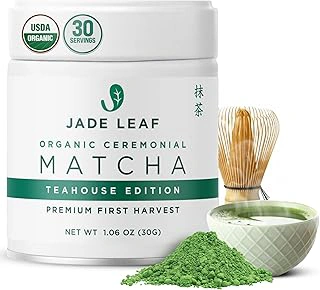
Jade Leaf Matcha Organic Ceremonial Grade Green Tea Powder, 30g Tin
Jade Leaf Matcha Organic Ceremonial Grade Green Tea Powder offers an accessible starting point for anyone exploring ceremonial-grade matcha without committing to a large container. This 30g tin is USDA organic and sourced from shade-grown tea leaves, which naturally increases L-theanine content - the amino acid that promotes calm focus. The $24.99 price makes it easier to test whether ceremonial matcha suits your daily routine before investing in larger quantities.
Shade-growing is a key quality marker in ceremonial matcha: leaves develop deeper chlorophyll and a sweeter, less astringent flavor profile. Jade Leaf's certification ensures no synthetic pesticides or fertilizers, which matters when you're consuming the entire leaf in powdered form. The ceremonial designation means this matcha is fine enough for whisking into a smooth tea without grittiness, and its vibrant green color signals fresh milling.
At 4.5 out of 5, this product balances approachability with quality. The 30g size yields roughly the listed amount servings when prepared traditionally, giving you enough experience to notice how the energy curve feels - sustained alertness without the sharp spike and crash common to coffee. First-time buyers often appreciate the smaller commitment, especially when learning to whisk matcha correctly and adjusting to its vegetal, umami-forward taste.
This option works well if you're sensitive to caffeine but still want functional energy. The combination of moderate caffeine and high L-theanine supports focus without jitters. The tin format protects the powder from light and air better than resealable bags, though you'll still want to store it in a cool, dark place and use it within a few weeks of opening to preserve peak flavor and nutrient density.
If you're stepping up from culinary-grade matcha or switching from coffee, Jade Leaf's ceremonial grade provides a noticeable difference in smoothness and aftertaste. The price per gram sits in the mid-range for ceremonial matcha, making it a practical choice for daily use without the premium cost of ultra-exclusive single-origin tins. The organic certification and shade-grown sourcing align with the core selection criteria for calm, crash-free energy.
- ✅ USDA organic certification ensures no synthetic pesticides
- ✅ 30g starter size at $24.99 allows low-risk trial
- ✅ Shade-grown leaves increase L-theanine for calm focus
- ✅ Ceremonial grade fineness whisks smoothly without grittiness
- ✅ Tin packaging protects powder from light and air
- ⚠️ Smaller tin requires repurchasing more frequently for daily use
- ⚠️ Must be stored carefully and used within weeks of opening
- ⚠️ Mid-range price per gram may not suit budget-conscious buyers
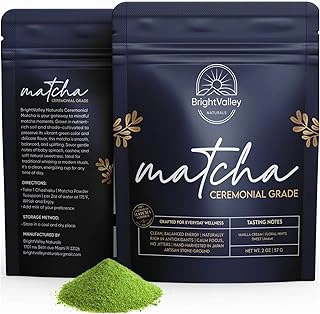
Ceremonial Grade Premium Matcha Powder– 100% Japanese Premium Matcha Powder, Shade-Grown & Stone-Ground, Smooth Flavor, Energy & Focus Without Jitters, Perfect for Lattes & Daily Wellness – 2 oz - By BrightValley Naturals
Ceremonial grade matcha should deliver smooth energy without the jitters that come from coffee or lower-grade tea powders. The BrightValley Naturals Ceremonial Grade Premium Matcha Powder is a 2 oz option marketed as 100% Japanese, shade-grown, and stone-ground - three markers that typically indicate higher L-theanine content and finer particle size, both of which contribute to the calm-alert feeling many people seek.
This powder is positioned for daily wellness routines and latte preparation. Shade-growing increases chlorophyll and amino acid concentration, which supports the smooth flavor profile and steady energy release. Stone-grinding preserves the delicate leaf structure and keeps the powder fine enough to whisk cleanly without clumping. At $29.99 for 2 oz, this product sits in the premium range, reflecting the labor-intensive cultivation and processing methods.
With a 4.8/5 rating, user feedback suggests consistent quality and palatability. The smaller 2 oz size works well for those testing ceremonial grade for the first time or who use matcha occasionally rather than multiple times per day. For latte preparation, the smooth flavor means less bitterness even when blended with milk or plant-based alternatives, making it accessible for those new to matcha's naturally grassy, umami taste.
If you prioritize energy and focus without the crash, look for the combination of shade-grown sourcing and ceremonial grade designation - both present here. This product is best suited for someone building a daily matcha habit who values flavor and wants a reliable option that integrates easily into morning routines or mid-afternoon pick-me-ups.
- ✅ 4.8/5 rating indicates strong user satisfaction
- ✅ Shade-grown and stone-ground processing supports smooth flavor and fine texture
- ✅ 2 oz size suitable for new users or occasional consumption
- ✅ Marketed for jitter-free energy and focus, aligning with ceremonial grade benefits
- ⚠️ $29.99 for 2 oz places it in the premium price range
- ⚠️ Smaller quantity may require frequent reordering for daily users
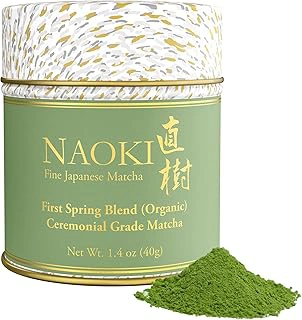
Naoki Matcha Organic Ceremonial First Spring Blend – Authentic Japanese First Harvest Ceremonial Grade Matcha Green Tea Powder from Kagoshima, Japan (40g / 1.4oz)
Naoki Matcha Organic Ceremonial First Spring Blend sources its powder from Kagoshima, Japan, one of the country's respected tea-growing regions. This 40g ceremonial grade matcha is harvested during the first spring flush, a timing that typically yields younger leaves with a sweeter, less astringent flavor profile and higher concentrations of L-theanine - the amino acid associated with calm, focused energy.
The product carries USDA organic certification and specifies its regional origin, which provides transparency often absent in generic matcha blends. First-harvest timing matters because spring leaves accumulate nutrients over winter dormancy, delivering a smoother taste and the balanced energy many users seek without the sharp spike and crash common to lower-grade or later-harvest powders.
At $25.99 for 40 grams, this matcha sits in the mid-range pricing tier for ceremonial grade options. The value proposition centers on traceable Japanese sourcing, organic credentials, and first-spring harvest - ideal if you prioritize knowing exactly where and when your matcha was grown. The 40g size offers roughly the listed amount servings when whisked traditionally with 2 grams per cup, making it practical for daily use or initial sampling without committing to bulk quantities.
Because Naoki emphasizes regional sourcing and harvest timing rather than shade duration or cultivar detail, this blend suits those who want straightforward authenticity and organic assurance. If you're comparing ceremonial options, weigh this against products that disclose shade period or specific cultivar names - those details can signal additional quality layers, though this blend's first-spring harvest and Kagoshima origin already indicate careful production standards.
- ✅ First spring harvest from Kagoshima, Japan with transparent regional sourcing
- ✅ USDA organic certification
- ✅ Ceremonial grade suitable for traditional whisking
- ✅ 40g size practical for daily use or trial without bulk commitment
- ⚠️ Does not specify shade duration or tea cultivar
- ⚠️ Mid-range pricing may not suit budget-focused buyers
- ⚠️ Smaller tin size requires more frequent reordering for heavy users
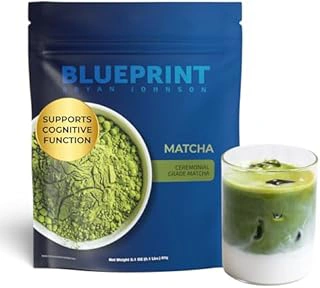
Blueprint Bryan Johnson Matcha Powder – Ceremonial Grade Japanese Matcha – Green Tea for Energy & Focus – Natural Caffeine, Antioxidant-Rich – 30mg L-Theanine- 30 Servings
Blueprint Bryan Johnson Matcha Powder delivers ceremonial grade Japanese matcha with a clear focus on cognitive performance and sustained energy. Priced at $35.00 for 30 servings, this option stands out for its explicit 30mg L-theanine labeling - a specification that helps readers evaluate the calm-energy ratio directly rather than guessing at amino acid content. The biohacker-branded formulation targets users who prioritize transparent bioactive disclosure and optimization-focused supplementation over traditional tea ceremony aesthetics.
The 30-serving container offers approximately one month of daily use at the standard single-serving size, making cost-per-use straightforward to calculate. With a 4.3 out of 5 rating, the product reflects consistent user experience, though individual taste and texture preference will vary as with any ceremonial matcha. The natural caffeine content works synergistically with the stated L-theanine dose to support focus without the abrupt energy drop common to coffee or lower-grade green teas.
This matcha fits readers who value quantified nutrition data and want a ceremonial grade powder engineered for daily cognitive support rather than occasional ritual use. The antioxidant-rich profile typical of ceremonial grade remains intact, while the packaging and branding signal performance over tradition. If you prefer matcha selected for measurable bioactives and don't need artisan sourcing stories, this formula provides a clear benchmark with its L-theanine specification and consistent 30-day supply format.
- ✅ Explicit 30mg L-theanine labeling per serving for transparent calm-energy evaluation
- ✅ 30-serving container simplifies monthly budgeting and routine consistency
- ✅ Ceremonial grade quality with optimization-focused formulation
- ✅ Natural caffeine and L-theanine work together for sustained focus without crash
- ⚠️ Biohacker branding may not appeal to traditional matcha enthusiasts
- ⚠️ Higher price point at $35.00 compared to bulk ceremonial options
- ⚠️ Limited sourcing detail for readers prioritizing regional provenance stories
Who This Guide Is For
This guide is written for knowledge workers, wellness enthusiasts, and biohackers who want clean, sustained energy without the jitters or afternoon crash that often follow coffee. If you're looking to optimize focus during deep work, support calm alertness through long meetings, or simply replace a coffee habit that leaves you anxious or fatigued, ceremonial grade matcha offers a different metabolic experience worth understanding.
We focus exclusively on ceremonial grade matcha - the highest quality tier, stone-ground from young tea leaves and designed for whisking with water alone. This is distinct from culinary grade matcha, which is coarser, more astringent, and intended for lattes, smoothies, or baking. Ceremonial grade typically delivers smoother flavor, finer texture, and a more balanced caffeine-to-L-theanine ratio, which is central to the calm energy profile many people seek.
If your priority is cognitive performance, mood stability, or a gentler stimulant curve compared to coffee, the selection criteria in this guide will help you evaluate origin, harvest timing, processing transparency, and sensory markers that indicate quality. This is not a guide for bulk powder or budget blends; it assumes you're willing to invest in verified ceremonial grade and want to understand what separates effective products from marketing noise.
What Makes Ceremonial Matcha Different from Culinary Grade
Ceremonial grade matcha uses only the youngest tea leaves from the first spring harvest, picked at peak chlorophyll and amino acid concentration, while culinary grades typically blend later pickings with more developed, tougher leaves. The distinction begins weeks before harvest: ceremonial leaves are shade-grown for 20 to 30 days, forcing the plant to boost L-theanine and chlorophyll production to capture diminished light, whereas many culinary grades receive shorter shade periods or none at all.
Traditional stone-grinding produces ceremonial matcha at roughly 40 grams per hour, preserving delicate cell structures and volatile compounds that contribute to smooth, umami-rich flavor. Industrial roller mills process culinary grades much faster, generating heat that can degrade catechins and produce the astringent, grassy bitterness common in lower tiers. The texture tells the story: ceremonial powder feels talc-fine and dissolves easily in water, while culinary matcha often clumps and settles quickly.
These processing differences translate directly to how your body experiences energy. Ceremonial matcha's higher L-theanine-to-caffeine ratio - often 2:1 or greater - promotes alpha-wave brain activity and modulates caffeine absorption, delivering alert calm rather than jittery stimulation. Culinary grades contain the same caffeine per gram but significantly less L-theanine, making the energizing effect sharper and the potential for a mid-afternoon crash higher. The elevated chlorophyll and intact polyphenols in ceremonial matcha also support steadier glucose response, preventing the blood-sugar dip that triggers energy collapse.
Flavor matters for consistency: ceremonial matcha's natural sweetness and creamy mouthfeel mean you can whisk it with water alone, avoiding added sugars or milk that introduce their own energy curves. Culinary matcha's bitterness usually requires sweeteners or other ingredients, which can mask quality issues and complicate the energy profile. When calm, sustained energy is the goal, the leaf selection, shade duration, and milling method inherent to ceremonial grade create the biochemical foundation that culinary versions simply cannot replicate.
Understanding L-Theanine and the Energy Balance
L-theanine is the amino acid responsible for matcha's signature calm-energy effect, working alongside caffeine to smooth out stimulation and extend alertness without the spike-and-crash cycle common to coffee. When you consume L-theanine and caffeine together, the amino acid modulates how quickly caffeine enters your bloodstream and encourages alpha-wave brain activity - the relaxed-but-focused state associated with meditation and creative flow.
Ceremonial grade matcha typically delivers 30 - 50 mg of L-theanine and 25 - 35 mg of caffeine per serving, a ratio that favors calm over jitters. This balance is not accidental: shade-growing tea plants for three to four weeks before harvest forces the leaves to produce more chlorophyll and L-theanine in order to photosynthesize under limited light. Lower-grade matcha, often harvested from unshaded or lightly shaded plants, contains significantly less L-theanine relative to caffeine, which is why it can feel harsher and more stimulating.
The ratio matters more than the absolute amount of either compound. A matcha with 40 mg of caffeine and 45 mg of L-theanine will feel smoother and more sustained than one with 30 mg of caffeine but only 15 mg of L-theanine. When evaluating ceremonial matcha, look for producers who shade their plants for at least 20 days and harvest only the youngest, most tender leaves - these practices maximize L-theanine concentration and create the alert-calm experience you're seeking.
Understanding this biochemical partnership helps you interpret tasting notes and dosage guidance: if a matcha feels overly stimulating or leaves you restless, the L-theanine content is likely too low relative to caffeine, a sign of insufficient shading or later-harvest leaves. True ceremonial grade matcha should leave you energized yet centered, with focus that lasts two to four hours and fades gently rather than dropping off.
How to Evaluate Color, Texture, and Aroma
Evaluating color, texture, and aroma gives you immediate insight into matcha quality and freshness before you even taste it. A vibrant jade green color signals high chlorophyll content and proper shading during cultivation, which are hallmarks of ceremonial grade matcha designed for calm, sustained energy. Dull olive, yellow-brown, or faded green tones indicate oxidation, poor storage, or leaves that weren't adequately shaded - all of which reduce amino acid content and increase the likelihood of bitterness and energy crashes.
Texture reveals how finely the leaves were ground and how carefully they were processed. Ceremonial grade matcha should feel silky and almost weightless when rubbed between your fingers, with particles so fine they seem to disappear into your skin. Gritty, coarse, or clumpy textures suggest lower-grade leaves or insufficient milling, which affect both dissolvability and the smoothness of your drink. Powder that clumps easily may also have been exposed to moisture, compromising freshness and flavor stability.
Aroma offers a third layer of quality assessment. Fresh ceremonial matcha has a grassy-sweet fragrance with vegetal notes that feel bright and inviting, not flat or musty. A hay-like, stale, or overly bitter smell points to oxidized leaves, extended storage, or lower-grade material that won't deliver the balanced calm energy you're seeking. These sensory markers correlate directly with processing care: premium matcha is stone-ground slowly to preserve delicate compounds, then sealed quickly to lock in freshness. Training yourself to recognize vibrant color, silky texture, and sweet aroma helps you choose matcha that will support focus and energy without the jitters or afternoon slump.
Common Mistakes to Avoid When Choosing Matcha
Many buyers unknowingly sabotage their matcha experience by making a few common errors during selection. Avoiding these mistakes ensures you get the calm, sustained energy ceremonial grade matcha promises - not a subpar product that jitters or falls flat.
One of the most frequent mistakes is choosing based on price alone. While premium ceremonial matcha costs more, rock-bottom prices usually signal culinary-grade powder, older harvests, or blends that lack the amino acid profile needed for smooth energy. If a deal looks too good to be true, the matcha likely won't deliver the balanced lift you're seeking, and you'll end up buying again anyway.
Another pitfall is ignoring harvest timing. First-harvest (spring) leaves contain higher L-theanine and chlorophyll, which support calm focus and vibrant color. Late-harvest or summer-picked matcha tastes more astringent and provides less of the relaxed alertness ceremonial grade is known for. Always confirm the product specifies first harvest or spring harvest - if the listing is silent on timing, assume it's not premium.
Mistaking culinary matcha for ceremonial is easier than it sounds, especially when packaging uses vague terms like "premium" or "pure." Culinary grades are intended for lattes and baking, so they're often more bitter and oxidized. True ceremonial matcha is stone-ground from shade-grown, first-harvest leaves and should be labeled clearly. If the description emphasizes cooking use or lacks detail about grinding method and shading, skip it for daily drinking.
Buying in bulk without testing freshness is another costly error. Matcha oxidizes quickly once the package is opened, losing flavor and potency within weeks. Purchasing a large tin might seem economical, but if you don't drink matcha daily, much of it will degrade before you finish. Start with a smaller size - 30 to 50 grams - to gauge quality and consumption rate, then scale up only if you know you'll use it within a month or two.
Finally, overlooking origin transparency can leave you with matcha that's been blended, mislabeled, or grown with undisclosed pesticides. Reputable brands state the region (Uji, Nishio, or Shizuoka in Japan), provide harvest details, and often include third-party testing for contaminants. If the origin is vague or the seller can't answer basic sourcing questions, the product's quality - and your energy outcome - remains a gamble. Stick with sellers who openly share where and how their matcha is grown and processed.
How to Store Matcha to Preserve Freshness and Potency
Matcha oxidizes quickly once opened, which degrades both flavor and the compounds responsible for calm, sustained energy. Even ceremonial grade matcha will turn bitter and lose potency if stored improperly, diminishing the smooth energy experience you're seeking.
Store matcha in an airtight, opaque container to protect it from light and air exposure. Light breaks down chlorophyll and catechins, while oxygen triggers oxidation that creates harsh, metallic flavors and reduces L-theanine bioactivity. Avoid clear glass jars or bags left partially open.
Keep the container in a cool, dark place such as a cupboard away from heat sources, or store it in the refrigerator for extended freshness. Refrigeration slows oxidation significantly, especially in warm or humid climates. If refrigerating, let the sealed container come to room temperature before opening to prevent condensation from forming inside.
Consume opened matcha within one to two months for peak flavor, color, and bioactivity. After this window, you may notice a duller green color, increased bitterness, and less balanced energy. Fresh matcha delivers the smoothest caffeine-L-theanine synergy, while stale matcha often produces a sharper, more jittery effect due to oxidized compounds.
Proper storage directly protects the quality markers that produce calm energy without a crash - vibrant color, sweet umami flavor, and intact amino acids. Treating matcha as a perishable ingredient, rather than a shelf-stable powder, ensures every serving delivers the sustained focus and gentle lift ceremonial grade is known for.
Final Takeaway: Choose for Quality, Not Marketing
Calm, sustained energy from ceremonial grade matcha comes from verifiable quality markers, not from bold packaging or social media endorsements. Shade-grown duration, stone grinding, first-harvest timing, and transparent origin information are the attributes that directly influence L-theanine content, caffeine release profile, and flavor complexity - the factors that determine whether you experience smooth focus or an uncomfortable spike and crash.
Marketing language like "premium blend," "authentic experience," or influencer testimonials does not guarantee the structural qualities that matter. A powder can arrive in elegant packaging yet lack the chlorophyll density, umami depth, and fine particle size that signal proper cultivation and processing. Conversely, a producer who lists exact harvest dates, shade duration in days, and mill type is providing the information you need to predict sensory experience and energy curve.
Start with smaller container sizes when evaluating a new supplier. A 30-gram tin allows you to assess color vibrancy, whisking behavior, aroma complexity, and how your energy levels respond over several servings without committing to a large purchase. Use the checklist from earlier sections: verify shade duration of at least three weeks, confirm stone grinding, check for first-harvest designation, and look for named regional origin rather than vague "Japan-sourced" claims.
Sensory evaluation remains your most reliable quality confirmation. Ceremonial grade matcha should whisk into a bright, jade-green suspension with minimal clumping, release a fresh, grassy aroma without mustiness, and taste sweet and umami-forward with only mild astringency. If bitterness dominates or the color appears dull yellow-green, those are indicators of lower chlorophyll content, older leaf material, or inadequate shading - all of which correlate with harsher caffeine delivery and shorter energy duration.
Trust your own experience over marketing narratives. If a matcha meets the structural quality markers, whisks smoothly, and delivers the energy profile you seek, that supplier has earned repeat consideration. Informed choices based on transparent attributes eliminate guesswork and build confidence in your selection process, allowing you to enjoy matcha's unique combination of alertness and calm without second-guessing or trial-and-error frustration.