We may earn a commission when you buy through links on this page, at no extra cost to you. How this works.
Choosing your first nootropic can feel overwhelming. Shelves and websites are filled with capsules, powders, and stacks, each claiming to sharpen focus or boost mental clarity. The key is to match the mechanism to your goal, not to chase the boldest promise.
A structured approach starts with four core criteria: ingredient type, dosage clarity, format, and budget. Ingredient type determines how a nootropic might work - whether it supports neurotransmitter activity, blood flow, or energy metabolism. Dosage clarity means knowing exactly how much of each active ingredient you're getting per serving, so you can adjust and assess what works. Format matters for convenience and consistency: capsules are portable, powders allow flexible dosing, and liquids absorb quickly. Budget shapes sustainability - what you can use regularly without second-guessing every purchase.
This framework helps you move past decision fatigue. Instead of comparing dozens of products on vague claims, you'll evaluate a few options against criteria that matter for your routine and goals. The right first nootropic isn't the one with the longest ingredient list or the flashiest marketing. It's the one that fits your needs, offers transparent dosing, and supports a consistent habit.
In the sections ahead, we'll walk through each criterion in detail, highlight common mistakes to avoid, and show you how to apply this framework to real product decisions.
Pre-Purchase Checklist
- Verify the product lists specific ingredient dosages, not proprietary blends
- Check price per serving to compare value across different bottle sizes
- Confirm the primary ingredient mechanism matches your focus goal (e.g., choline for acetylcholine support)
- Look for third-party testing mentions or quality certifications
- Ensure the product is non-GMO and free from common allergens if relevant to you
- Review customer ratings and feedback on consistency and noticeable effects
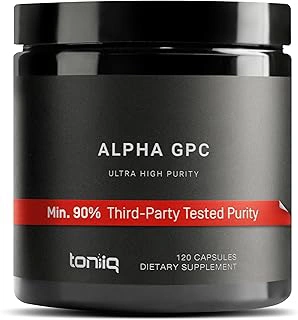
Toniiq Alpha GPC Capsules 600mg, 120 Count
Toniiq Alpha GPC delivers 600 mg of alpha-glycerylphosphorylcholine per capsule, a choline compound that supports acetylcholine synthesis in the brain. The 120-count bottle provides a four-month supply at the standard daily dose, making it a cost-effective entry point at $29.97. The 4.4-star rating reflects generally positive user feedback on this straightforward, single-ingredient format.
This product works best for first-time nootropic users who want to isolate the effects of choline supplementation without juggling multiple ingredients. The 600 mg dose sits at the higher end of typical alpha GPC servings, so you can assess how acetylcholine support affects your focus and mental clarity before layering in other compounds. The capsule format is easy to split or adjust if you prefer starting with a lower dose.
The tradeoff: alpha GPC is a precursor ingredient rather than a complete nootropic stack, so its effects depend on your baseline choline levels and overall brain chemistry. Some users notice sharper focus and verbal fluency within days, while others experience subtle or delayed changes. The single-ingredient approach gives you clean data on what works for you, but it won't address other focus pathways like dopamine modulation or stress response.
At roughly the listed amount per serving, Toniiq Alpha GPC fits budget-conscious experimentation. The 120-capsule count reduces the need for frequent reordering, and the straightforward label makes it easy to track your response over weeks. If you're mapping out which nootropic mechanisms matter most for your cognitive goals, this product offers a clear starting variable.
- ✅ 600 mg alpha GPC per capsule for straightforward dosing
- ✅ 120-count bottle provides four-month supply
- ✅ $29.97 price point keeps cost per serving low
- ✅ Single-ingredient format isolates choline effects
- ⚠️ Precursor compound may produce subtle or delayed effects
- ⚠️ Does not address non-cholinergic focus pathways
- ⚠️ Response varies based on individual choline status
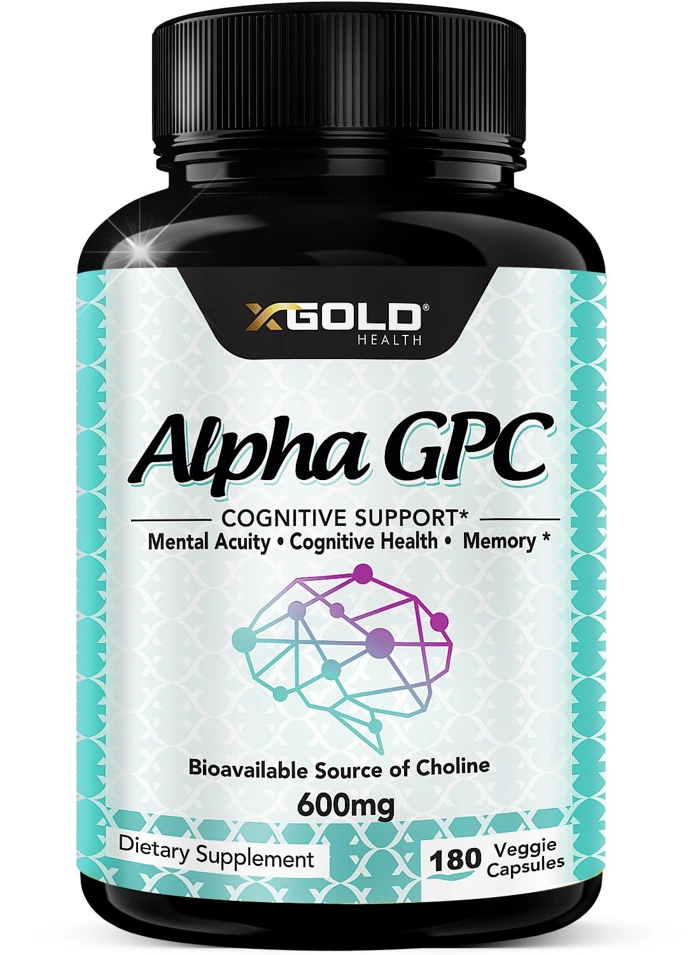
Alpha GPC Choline 600mg, 180 Veggie Capsules
This Alpha GPC Choline 600mg bottle provides 180 veggie capsules, making it a longer-trial option for those testing choline supplementation over an extended period. Each capsule delivers the same 600mg dose as shorter-supply alternatives, but the larger count offers better cost-per-serving value at $38.95 for the full bottle.
The veggie capsule format is designed for individuals who prefer plant-based materials or wish to avoid gelatin. This can matter if dietary preferences or restrictions guide your supplement choices.
Compared to the Toniiq Alpha GPC 60-capsule bottle, this product carries a higher upfront cost but stretches across three times as many servings. If you're planning to use Alpha GPC consistently for weeks or months, the per-dose economics shift in favor of the 180-count format. If you're still determining whether choline supplementation fits your routine, a smaller bottle may reduce initial commitment.
The product holds a 4.4 out of 5 rating and is currently in stock. Consider your testing timeline and budget flexibility when deciding between a 60-count starter supply and this extended option.
- ✅ 180 veggie capsules for extended use
- ✅ 600mg dose per capsule
- ✅ Better price-per-serving for longer trials
- ✅ Plant-based capsule format
- ⚠️ Higher upfront cost at $38.95
- ⚠️ Larger commitment if uncertain about fit
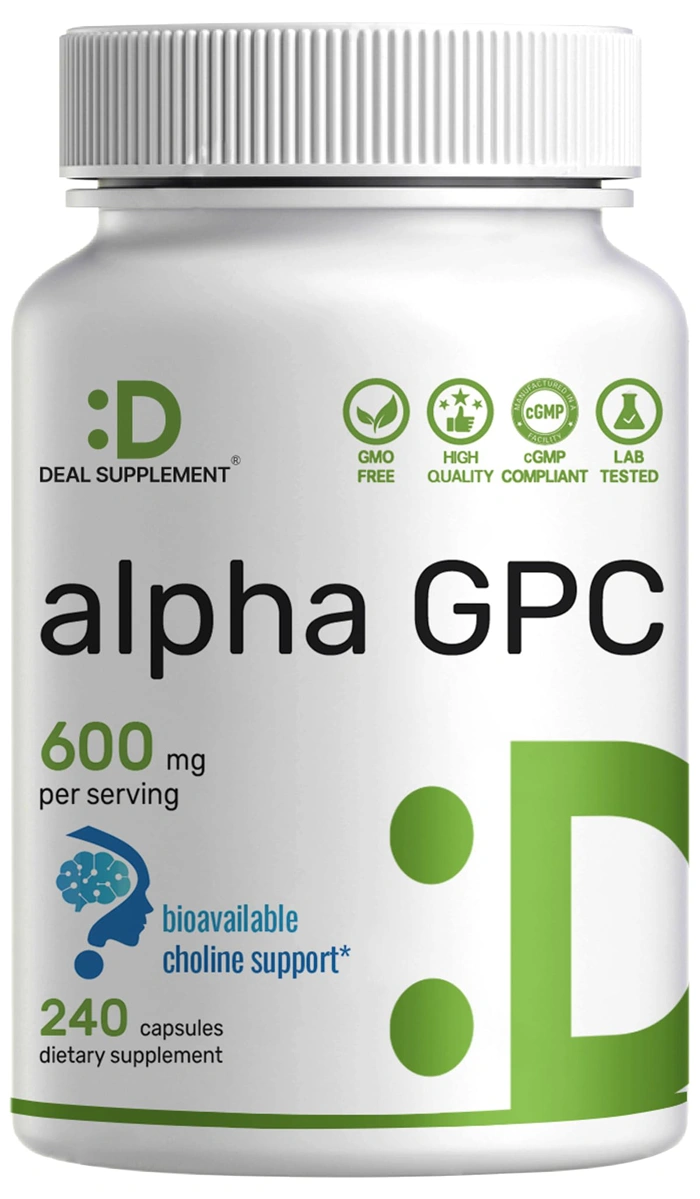
Alpha GPC 600mg Per Serving, 240 Capsules – Bioavailable Choline Replenishment –Nootropic Brain Health Supplements for Memory and Focus – Non-GMO, Gluten Free
This Alpha GPC supplement delivers 600 mg per two-capsule serving in a 240-count bottle priced at $19.95, making it one of the most cost-effective options for anyone planning regular or extended use. At roughly the listed amount per serving, the per-dose cost is considerably lower than smaller-count bottles, which matters if you're moving beyond an initial trial and want to assess how choline supplementation fits into your daily routine over weeks or months.
The formula is marketed as bioavailable choline replenishment, positioning Alpha GPC as a source of choline that crosses into the brain more readily than some other choline compounds. Each serving provides 600 mg, a common mid-range dose that allows room to adjust depending on individual response. The product is labeled non-GMO and gluten-free, which may be relevant if you have specific dietary restrictions or preferences.
With a 4.5 out of 5 rating, this option reflects generally positive user feedback. The larger bottle count means fewer re-orders and less packaging waste if you decide choline supplementation supports your focus and clarity goals. The two-capsule serving size also offers flexibility: you can start with one capsule to gauge tolerance before moving to the full 600 mg dose.
This product suits buyers who have already identified Alpha GPC as a good fit - perhaps after trying a smaller bottle - and want better value for ongoing use. The 240-capsule format is less ideal for first-time experimenters who prefer to test a compound in smaller quantities before committing to a larger supply. If you're still comparing nootropic ingredients or unsure whether choline is a priority, a smaller trial size may make more sense as a starting point.
Because this is a single-ingredient supplement, it stacks easily with other nootropics or fits into an existing regimen without redundant fillers. The straightforward spec sheet - 600 mg per serving, non-GMO, gluten-free - keeps decision-making simple and focused on cost per dose and supply duration rather than navigating complex blends or unproven additives.
- ✅ 240 capsules at $19.95 offers strong cost-per-serving value
- ✅ 600 mg per serving is a common, adjustable mid-range dose
- ✅ Non-GMO and gluten-free for dietary compatibility
- ✅ Two-capsule serving allows half-dose flexibility
- ✅ Single-ingredient format stacks cleanly with other supplements
- ⚠️ Large bottle count less practical for first-time trialing
- ⚠️ No smaller size option if you want to test before committing
- ⚠️ Bioavailability claim not accompanied by third-party verification in product specs
MINDHONEY DOSE 60 Count Premium Nootropic Brain Supplement with Mushrooms & Adaptogens
MINDHONEY DOSE takes a different path than single-ingredient nootropics: instead of focusing on one compound like choline, it combines mushrooms and adaptogens into a broader formula designed to support both focus and stress response. The 60-count bottle is priced at $29.98 and carries a 4.2-star rating.
This approach appeals to users who prefer a holistic formula over isolated support. The combination of mushrooms and adaptogens may address mental clarity alongside the body's stress mechanisms, offering a more comprehensive profile than a standalone choline supplement. If you're drawn to multi-ingredient blends that work across several pathways, this format fits that preference.
The trade-off is reduced transparency around individual ingredient effects. When a formula includes multiple active compounds, it becomes harder to identify which component is responsible for any change you notice - or to adjust the dosage of a specific ingredient. Single-ingredient products offer clearer cause-and-effect feedback, making it easier to fine-tune your regimen. Blends like MINDHONEY DOSE prioritize breadth of support over precision.
Consider this option if you value a multi-faceted approach and are comfortable with the inherent ambiguity of stacked formulas. If you prefer to isolate variables and build your stack incrementally, a simpler choline or single-extract product will serve you better as a first nootropic.
- ✅ Combines mushrooms and adaptogens for broader support
- ✅ 60-count supply at $29.98
- ✅ Holistic formula may address both focus and stress response
- ⚠️ Harder to isolate individual ingredient effects
- ⚠️ Less precision for users who want to adjust single compounds
- ⚠️ Multi-ingredient blend reduces transparency compared to single-ingredient options
Who This Guidance Is For
This guidance is designed for knowledge workers, students, and professionals who notice recurring patterns of brain fog, mid-afternoon attention drops, or difficulty sustaining mental clarity during demanding work. If you find yourself rereading the same paragraph multiple times, struggling to prioritize tasks after lunch, or feeling mentally sluggish despite adequate caffeine, you may benefit from structured nootropic support.
It is equally important to recognize when nootropics are not the right starting point. If you consistently sleep fewer than six hours, rely on erratic meal timing, or experience chronic stress without management strategies, those foundational habits deserve attention first. Nootropics work best when layered onto stable routines, not as substitutes for rest, hydration, or balanced nutrition.
This article is not for individuals seeking recreational stimulation or quick fixes. It is for those with sustained performance goals - whether that means maintaining focus through back-to-back meetings, improving reading retention during study sessions, or supporting clear thinking during creative problem-solving. Casual curiosity is welcome, but the selection process outlined here assumes you are prepared to observe effects over days or weeks, adjust based on response, and integrate nootropics into a broader wellness framework.
If you are managing a diagnosed medical condition, taking prescription medications, or pregnant, consult a healthcare provider before introducing any nootropic supplement. The information here addresses general selection principles, not individualized medical advice.
What Matters Most in Your First Nootropic
Your first nootropic should simplify the learning curve, not add to it. The clearest path forward is choosing a product with a single active ingredient or a small, well-documented blend where each component's role is transparent. Starting simple reduces the number of variables and makes it easier to identify what works for your brain chemistry.
Dosage transparency is the first filter. Look for a supplement facts panel that lists exact milligram amounts for every active ingredient. Proprietary blends that hide individual doses behind a total weight make it impossible to know whether you're getting an effective amount of any single compound. If the label doesn't tell you how much of each ingredient you're taking, move on.
Bioavailability determines whether an ingredient reaches your brain in active form. Some compounds, like citicoline and alpha-GPC, are naturally well-absorbed. Others require specific delivery mechanisms - phospholipid complexes, liposomal encapsulation, or co-factors like piperine - to cross the blood-brain barrier efficiently. Check whether the product uses the researched form of the ingredient, not a cheaper analog with lower absorption.
Third-party testing signals vary in strength. Certifications from NSF International, Informed Choice, or USP indicate independent verification of label accuracy and contaminant screening. A certificate of analysis (COA) available on request is better than nothing, but less rigorous than ongoing batch testing. Brands that publish test results openly tend to have tighter quality control.
Price-per-serving matters more than bottle price. Divide the total cost by the number of doses to compare apples to apples. A $40 bottle with 60 servings costs less per day than a $25 bottle with 20 servings. Factor in whether the dosage matches research benchmarks - underdosed products are expensive even when they look cheap.
Understanding mechanism types helps you choose based on what you're trying to support. Choline donors like citicoline and alpha-GPC supply raw material for acetylcholine synthesis, supporting memory encoding and sustained attention. Adaptogens such as Rhodiola rosea and Bacopa monnieri modulate stress pathways and may improve focus under pressure, though effects often build over weeks. Stimulant-based options, including caffeine and certain plant extracts, increase alertness and motivation quickly but come with tolerance risk and potential for jitteriness.
Starting with a single mechanism - whether cholinergic support, adaptogenic balance, or mild stimulation - gives you a clear baseline. If the effect is subtle or absent, you know to adjust dose, timing, or ingredient. If you start with a six-ingredient stack, you won't know which component helped, which did nothing, and which caused the headache.
Avoid products that combine high-dose stimulants with unproven exotic extracts. The stimulant will mask whether the other ingredients contribute anything, and you'll end up dependent on caffeine without understanding your actual needs. Similarly, blends that throw in trace amounts of a dozen ingredients rarely deliver meaningful benefit - they're designed to look impressive on paper, not to work in your system.
Your first nootropic should be legible: clear ingredients, transparent doses, a plausible mechanism, and a price that reflects real value. Complexity can come later, once you understand how your focus and clarity respond to specific inputs.
Single-Ingredient vs. Blends: Which to Start With
One of the first decisions you'll face is whether to start with a single-ingredient nootropic or a multi-ingredient blend. Each approach has distinct advantages and tradeoffs that affect how clearly you can understand your own response.
Single-ingredient nootropics - such as Alpha GPC, L-theanine, or citicoline - offer straightforward cause-and-effect feedback. When you take only one compound, any changes in focus, energy, or clarity can be traced directly to that ingredient. This makes it easier to identify what works for your brain chemistry, dial in an effective dose, and spot any unwanted effects. For first-time users, this clarity is invaluable: you build a personal baseline and learn how your body responds before layering in additional variables.
Multi-ingredient blends typically combine choline donors, adaptogens like rhodiola or ashwagandha, medicinal mushrooms such as lion's mane, and sometimes caffeine or amino acids. These formulas aim to support focus, stress resilience, and mental energy from multiple angles. The benefit is broader support - you may experience smoother, more sustained cognitive performance. The tradeoff is complexity: if you feel great, it's hard to know which ingredient deserves the credit. If you experience jitteriness or an upset stomach, isolating the culprit becomes guesswork.
Blends also vary widely in dosing. Some products include research-backed amounts of each active; others use proprietary blends that obscure individual ingredient quantities, making it difficult to assess whether you're getting an effective dose of any single compound.
For most beginners, starting with a single ingredient is the smarter path. Choose one well-studied nootropic, use it consistently for one to two weeks, and observe how it affects your focus, mood, and energy. Once you understand that response, you can add a second ingredient or try a curated blend with transparent dosing. This stepwise approach reduces confusion, minimizes the risk of stacking incompatible compounds, and gives you the confidence to adjust your regimen based on real feedback rather than marketing promises.
Common Mistakes to Avoid
New users often stumble in predictable ways that can obscure whether a nootropic is actually helping. Recognizing these pitfalls before you buy will save time, money, and frustration.
Starting with complex blends. Multi-ingredient formulas make it nearly impossible to identify which compound is creating benefit or side effects. Begin with a single ingredient - such as caffeine plus L-theanine, citicoline, or Bacopa monnieri - so you can attribute changes clearly.
Ignoring dosage per serving. Labels vary widely. A product might list an impressive ingredient but deliver only a fraction of the effective dose studied in research. Compare the actual milligram amount per capsule or scoop to published dosage ranges before assuming potency.
Not tracking subjective effects. Memory and focus shifts are subtle. Without a simple log - time taken, tasks completed, mood, energy level - you will rely on vague impressions and may abandon something that is working or continue something that is not.
Expecting instant results. Stimulants like caffeine act within an hour, but many nootropics - especially adaptogens and cholinergics - require consistent use over two to four weeks before effects stabilize. Impatience leads to product-hopping and wasted purchases.
Combining too many supplements at once. Adding a nootropic on top of a new multivitamin, sleep aid, and pre-workout creates a tangle of variables. Introduce one product at a time, wait at least a week, then layer cautiously if needed.
Choosing based on marketing hype rather than ingredient evidence. Proprietary blends, dramatic before-and-after testimonials, and celebrity endorsements do not predict real-world efficacy. Prioritize transparent labeling, disclosed dosages, and ingredients with peer-reviewed human studies behind them.
By sidestepping these mistakes, you create a clearer signal: you will know what you are taking, why you are taking it, and whether it deserves a place in your routine.
How to Evaluate Your Response
Once you begin taking a nootropic, tracking your response helps you understand whether it's working and worth continuing. A structured self-assessment removes guesswork and makes it easier to spot genuine effects versus placebo or day-to-day variation.
Start by establishing a baseline. For one week before you begin supplementation, note your typical focus duration, mental clarity at different times of day, energy patterns, and any existing issues like afternoon fatigue or difficulty concentrating during specific tasks. This baseline gives you something concrete to compare against.
When you start the nootropic, maintain consistency in dosage and timing. Take it at the same time each day, with or without food as directed, and avoid changing other variables like sleep schedule, caffeine intake, or meal timing during the evaluation period. Inconsistent use makes it nearly impossible to assess true effects.
Track focus duration and clarity on a consistent schedule. Simple metrics work best: how long you can work on a demanding task without losing concentration, how quickly you grasp new information, or how easily you switch between tasks. Note the timing of any effects - some nootropics work within an hour, while others build gradually over days or weeks.
Log any side effects, even mild ones. Headaches, digestive changes, jitteriness, or sleep disruption are important data points. If side effects appear, note whether they diminish over a few days or persist, and whether adjusting timing or taking the supplement with food makes a difference.
Reassess after two to four weeks. Compare your tracking notes to your baseline. Look for consistent patterns rather than isolated good or bad days. If you notice meaningful improvement in focus or clarity without problematic side effects, the nootropic may be a good fit. If results are unclear or side effects outweigh benefits, it may be time to stop or try a different option.
Journaling on paper or using a simple tracking app both work well. The key is consistency and honesty. Note what you observe, not what you hope to see, and give the process enough time to reveal a pattern.
Final Takeaway
Choosing your first nootropic for focus and mental clarity comes down to a few foundational practices: prioritize products with transparent dosing and clear ingredient lists, start with single-ingredient options so you can isolate how each compound affects you, and track your response systematically rather than relying on subjective impressions alone. Begin with lower doses to assess tolerance, and adjust based on measurable changes in attention, work output, or mental stamina - not on expectation or marketing claims.
Set realistic goals from the outset. Nootropics can support concentration and reduce mental fatigue during demanding tasks, but they are not a replacement for adequate sleep, balanced nutrition, regular physical activity, or effective stress management. The most consistent results come from integrating nootropics into a broader routine that addresses the fundamentals of cognitive health.
Be patient with the process. Some ingredients deliver noticeable effects within hours, while others require weeks of consistent use to show meaningful benefit. If an initial product does not meet your needs, adjust one variable at a time - dose, timing, or ingredient - so you can identify what works and what does not. Avoid stacking multiple unfamiliar compounds early on, and resist the temptation to chase dramatic shifts in focus or clarity that may not be sustainable.
Nootropics are one tool among many. Used thoughtfully, with attention to quality, dosing, and individual response, they can help you maintain sharper focus and clearer thinking during periods of high cognitive demand. Approach your first choice with curiosity, caution, and a commitment to tracking real-world outcomes.