We may earn a commission when you buy through links on this page, at no extra cost to you. How this works.
At-home food sensitivity tests offer a starting point for people who experience unexplained digestive discomfort, skin changes, fatigue, or other recurring symptoms that may be linked to what they eat. These tests measure IgG antibody reactions or other immune markers to common foods, not the IgE antibodies involved in true allergic reactions. The goal is to identify foods that may contribute to low-grade inflammation or intolerance, which you can then investigate through structured elimination and reintroduction.
Before choosing a test, compare three core factors: sample type, item count, and turnaround time. Most kits use either a fingerstick blood spot or a small hair sample. Blood-spot tests typically measure IgG antibody levels against a panel of foods, while hair-based tests claim to detect sensitivities through bioresonance or similar mechanisms that lack the same body of peer-reviewed validation. Blood-spot collection is straightforward but requires following lancet instructions carefully; hair samples are simpler to collect but interpretation frameworks vary widely.
The number of foods tested ranges from around 96 items in basic panels to more than 200 in comprehensive options. Larger panels test grains, dairy, meats, seafood, fruits, vegetables, nuts, seeds, spices, and additives. Turnaround time after the lab receives your sample usually falls between five and ten business days. Result formats differ: some companies deliver a color-coded chart grouping foods into high, moderate, and low reactivity; others provide numerical IgG levels or simply flag items above a threshold.
These tests do not diagnose celiac disease, Crohn's disease, or IgE-mediated food allergies, and elevated IgG levels do not always predict symptoms. Results are best used as a guide for a short-term elimination trial - removing high-reactivity foods for three to four weeks, then reintroducing them one at a time while tracking symptoms. This approach helps you assess whether a suspected food genuinely affects how you feel.
At-home food sensitivity testing works best for adults who have already ruled out serious gastrointestinal conditions with their healthcare provider, eat a varied diet that includes most of the foods on the panel, and are prepared to follow an elimination protocol. It is less useful if you have already eliminated many foods, if your symptoms are severe or worsening, or if you need a definitive diagnosis rather than clues for self-experimentation.
The step-by-step process involves registering your kit, collecting your sample according to the instructions, mailing it to the lab, reviewing your results online, and planning an elimination phase based on the foods flagged. Success depends on consistent sample handling, honest symptom tracking, and patience during reintroduction.
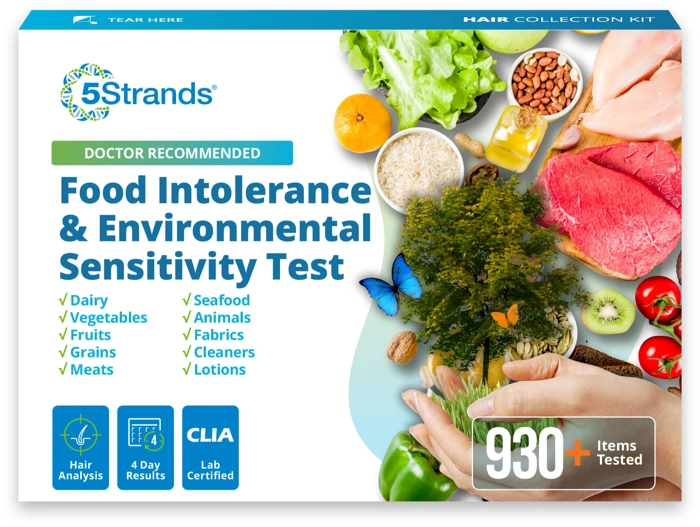
5Strands At-Home Food & Environmental Sensitivity Test for Adults & Kids, 950 Items
The 5Strands At-Home Food & Environmental Sensitivity Test scans 950 items using a hair sample, making it accessible for children and adults who prefer to avoid blood draws. Unlike the finger-prick tests above, this kit requires a small strand of hair that you cut at home and mail to the lab. The broad coverage includes common food categories as well as environmental triggers, which can be useful if you suspect sensitivities extend beyond diet.
With a 4.2 out of 5 rating and a price of $110.70, the 5Strands test sits in the mid-range for sensitivity panels. The hair-based collection is straightforward: you trim a small sample from the back of the head, seal it in the provided envelope, and send it in. Results typically arrive within multiple business days and list items flagged for potential sensitivity, grouped by category.
This test is designed for a wide scan rather than deep clinical detail. If you're looking to identify patterns across both food and environmental factors - pollen, dust, pet dander - without the need for a needle, the 5Strands panel offers a comprehensive starting point. Keep in mind that hair-based sensitivity testing measures a different type of immune response than blood IgG assays, so results should be used to guide an elimination trial rather than as a definitive diagnosis.
The kit works well for families, since the same non-invasive collection method applies to both adults and children. After receiving your report, prioritize the highest-scoring items for elimination and track symptoms over several weeks to confirm whether those triggers affect how you feel.
- ✅ Hair sample collection - no blood draw required
- ✅ Scans 950 items including food and environmental triggers
- ✅ Suitable for adults and children
- ✅ Mid-range price at $110.70
- ⚠️ Hair-based testing measures a different immune marker than blood IgG panels
- ⚠️ Results require follow-up elimination trials to confirm relevance
- ⚠️ Turnaround time of 7 - 10 business days is longer than some finger-prick options
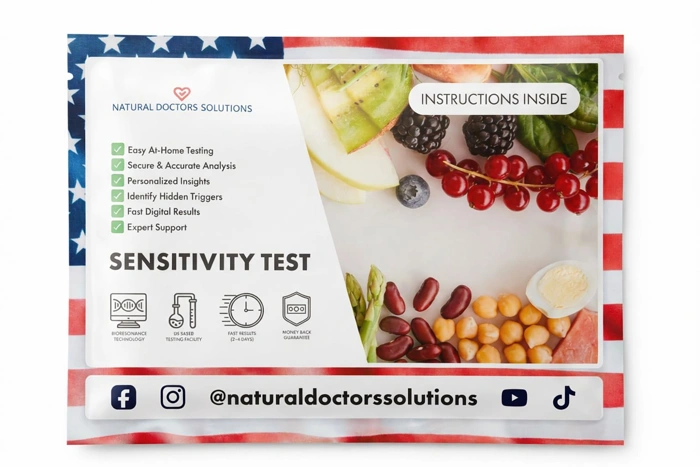
At-Home Food Sensitivity Test Kit with Hair Analysis, 1250 Items
The At-Home Food Sensitivity Test Kit with Hair Analysis covers 1,250 items - the highest count in this category - and is priced at $79.00, making it a budget-friendly option for users who want maximum breadth. With a 4.4/5 rating, it uses hair sample collection instead of a blood draw or finger prick, which many find more convenient and comfortable for at-home use.
This kit is designed for users who prefer to avoid needles and want coverage across the widest range of foods, additives, and other common items. The hair-based method requires only a small sample, which you mail to the lab for analysis. The 1,250-item panel provides unusually broad screening at a lower price point than many smaller-panel competitors.
The tradeoff is less brand recognition compared to established names in the category, and hair analysis results may be interpreted differently than antibody tests using blood samples. If you prioritize maximum item count, affordability, and needle-free sample collection, this kit offers strong value. Users who prefer blood-based testing or a more widely known brand may want to compare other options in this guide.
- ✅ 1,250-item panel - highest count for broad coverage
- ✅ $79.00 price point offers strong value
- ✅ Hair sample collection avoids needles
- ✅ 4.4/5 rating from users
- ⚠️ Less brand recognition in the category
- ⚠️ Hair analysis methodology differs from blood-based tests
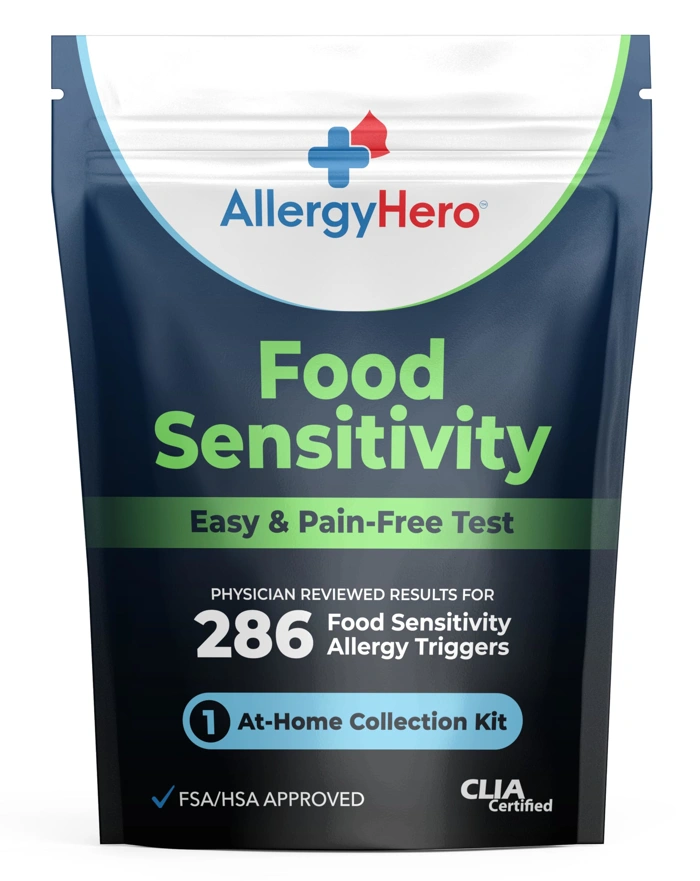
AllergyHero Comprehensive Food Sensitivity Test Kit for Adults & Kids – Easy At-Home Use, Evaluates 286 Foods & Beverages and Identifies Dietary Triggers, Helps with Precise Dietary Choices & Wellness
The AllergyHero Comprehensive Food Sensitivity Test Kit evaluates 286 foods and beverages, offering a mid-sized panel designed for both adults and children. Priced at $229.00 with a 4.4/5 rating, this kit positions itself as a family-friendly option with straightforward collection and result presentation.
At approximately the listed amount per item tested, this kit carries a higher per-item cost than broader panels, but the focused selection may appeal to users who want a curated list of common trigger foods without overwhelming detail. The packaging and instructions emphasize ease of use, particularly for households testing multiple family members or introducing children to the process.
Sample collection follows the standard finger-prick protocol. The kit includes illustrated instructions that walk users through preparation, collection, and return shipping. Results arrive in a digital format that categorizes reactivity levels by food group, making it easier to identify patterns across related items like dairy, grains, or nightshades.
The result report highlights foods with moderate to high reactivity and groups them visually, which can simplify meal planning discussions with a dietitian or family members. However, the smaller item count means some niche ingredients or regional foods may not appear on the panel, so users with diverse diets or suspected rare triggers may find gaps.
This kit suits families seeking a shared testing experience, users new to elimination diets who want a manageable starting point, or anyone prioritizing clear, accessible result formatting over exhaustive coverage. The higher price reflects branding and presentation rather than technical depth, so budget-conscious users comparing cost per item may prefer larger panels. For households valuing simplicity and kid-friendly design, the AllergyHero kit delivers a focused, approachable entry into food sensitivity investigation.
- ✅ Kid-friendly design and clear illustrated instructions
- ✅ Results grouped by food category for easier pattern recognition
- ✅ Suitable for both adults and children in the same household
- ✅ Straightforward digital result format
- ⚠️ Higher per-item cost at approximately $0.80 per food tested
- ⚠️ Smaller panel may omit niche or regional ingredients
- ⚠️ Premium price reflects branding rather than broader coverage
Who Should Consider At-Home Food Sensitivity Testing
At-home food sensitivity testing is most appropriate for people who experience recurring digestive or systemic symptoms that don't have a clear medical explanation. Common patterns include persistent bloating, irregular bowel movements, low-grade fatigue, brain fog, skin changes such as occasional breakouts or dryness, and energy fluctuations that don't align with sleep or activity levels.
These tests are designed for situations where symptoms are consistent enough to disrupt daily comfort but subtle enough that they haven't triggered a formal diagnosis. They work best when you're prepared to follow up with a structured elimination protocol, keeping detailed records and making deliberate diet changes over several weeks.
It's important to understand what these tests are not. At-home food sensitivity panels are not replacements for medical allergy testing, which measures IgE antibodies involved in immediate, potentially severe allergic reactions. They also cannot diagnose celiac disease, Crohn's disease, ulcerative colitis, irritable bowel syndrome, or other gastrointestinal conditions that require clinical evaluation, imaging, or endoscopy.
If you experience symptoms such as severe abdominal pain, blood in stool, unintended weight loss, chronic diarrhea, or vomiting, those warrant a visit to a healthcare provider before exploring at-home sensitivity options. Similarly, if you have a known history of food allergies or autoimmune conditions, coordinate any testing or elimination efforts with your doctor to avoid interference with diagnosis or treatment.
At-home testing is most valuable when you've already tried basic diet adjustments - such as increasing fiber, staying hydrated, or reducing processed foods - without meaningful improvement. It's also useful if you suspect multiple foods may be contributing to symptoms, making it difficult to isolate triggers through trial and error alone.
Successful use of these tests depends on your willingness to track symptoms consistently, prepare meals with controlled ingredients, and stay patient through the elimination and reintroduction phases. The process requires time, attention, and a degree of dietary flexibility that may not suit everyone's lifestyle or schedule.
Understanding What Food Sensitivity Tests Measure
At-home food sensitivity tests primarily use one of two methods: hair sample bioresonance analysis or blood spot IgG antibody testing. Hair-based kits claim to detect energetic responses or patterns associated with certain foods by analyzing the electromagnetic frequency of your hair follicle. Blood spot tests, on the other hand, measure IgG antibodies - proteins your immune system produces in response to foods you've consumed. Both approaches aim to identify foods that may be associated with delayed or low-grade immune activity, rather than the immediate, acute reactions that characterize true food allergies.
It's important to understand what these tests do not measure. Unlike allergy tests that detect IgE antibodies - the markers of rapid allergic responses such as hives, throat swelling, or anaphylaxis - food sensitivity tests look at IgG levels or bioresonance signals that suggest a different, slower immune interaction. The presence of IgG antibodies to a food may simply mean you've eaten that food recently and your body recognizes it, not that it causes symptoms. Similarly, bioresonance readings have limited scientific validation and should be interpreted cautiously.
Because of these limitations, results from at-home food sensitivity tests are best used as starting points, not definitive diagnoses. A high IgG level or flagged bioresonance reading does not confirm intolerance or prove that a food is causing your symptoms. Instead, these results can help you build a focused elimination diet - a structured process where you temporarily remove flagged foods, then reintroduce them one at a time to observe whether symptoms improve or return. This observational approach, ideally guided by a healthcare provider or dietitian, is the most reliable way to identify true trigger foods.
Setting realistic expectations is key. At-home sensitivity tests offer convenience and a broad screening tool, but they lack the diagnostic certainty of medically supervised testing. Use your results as a hypothesis to test through elimination and reintroduction, not as a final answer. Pay attention to your body's response over time, and be prepared to refine your understanding of which foods genuinely affect your well-being.
Step-by-Step: Collecting Your Sample Correctly
Accurate results start with proper sample collection. Most at-home food sensitivity tests use either a hair sample or a dried blood spot, and each method requires careful technique to ensure the lab receives a usable specimen.
Hair Sample Collection
If your kit tests hair, you'll need to cut a small amount - typically about one tablespoon in volume - from multiple areas close to the scalp. Use clean scissors and gather strands from the back of the head where hair is less exposed to environmental contaminants. Cut as close to the root as possible, since newer growth provides the most current information. Avoid sending hair from the ends if it's been chemically treated with dye, bleach, or keratin treatments, as these can interfere with analysis. Place the sample directly into the collection envelope provided and seal it immediately.
Blood Spot Collection
Blood spot kits include sterile lancets and a collection card with marked circles. Start by washing your hands with warm water and soap, then dry them thoroughly. Warm hands improve blood flow, so consider running them under warm water or doing a few arm circles before you begin. Clean your fingertip - usually the ring or middle finger works best - with the alcohol wipe included in the kit.
When you're ready, press the lancet firmly against the side of your fingertip and release the mechanism in one quick motion. Let your hand hang below your waist and gently massage from palm toward fingertip to encourage blood flow. Allow large drops to fall naturally onto the marked circles on the collection card. Do not touch the card to your finger or smear the blood; each circle should fill with a single hanging drop that soaks through to the back of the card. If blood flow slows, use a second lancet on a different finger rather than squeezing excessively, which can dilute the sample with tissue fluid.
After filling all required circles, let the card air-dry flat for at least 30 minutes before placing it in the protective sleeve. Do not use heat or direct sunlight to speed drying.
Common Collection Mistakes
The most frequent reason for sample rejection is insufficient quantity. For hair, this means sending too few strands or cutting too far from the scalp. For blood, it means underfilled circles or samples that were folded or sealed before drying completely. Contamination is another issue: hair samples stored in plastic bags instead of paper envelopes can develop moisture, and blood cards touched with dirty hands may be rejected.
Read the instruction sheet included in your kit before you begin, and follow each step in order. Most kits include visual guides or QR codes linking to video demonstrations. If you're unsure whether your sample meets the requirements, many companies offer customer support lines where you can ask questions before mailing. Taking an extra five minutes to collect your sample correctly will save weeks of waiting for a retest.
How to Read and Interpret Your Results
Most at-home food sensitivity tests deliver results in a digital report or printed chart that ranks foods by severity level. Common formats include color-coded scales - green for low or no reaction, yellow for moderate, and red for high - or numeric scores such as 0 - 3 or low/moderate/high categories. These scales represent the measured immune or bioresonance response detected in your sample, not the severity of symptoms you'll experience after eating the food.
A high-sensitivity score indicates a stronger measurable response in the test's methodology. For IgG tests, this means higher antibody levels; for bioresonance or enzyme-based methods, it reflects the relative signal strength. None of these readings predict how you'll feel in daily life, only that your body produced a detectable marker when exposed to that food component.
Start by identifying foods in the high-response category. These are your first candidates for elimination testing. Write down the full list, then cross-reference it with your symptom diary. Foods you already eat regularly and that coincide with symptoms become immediate priorities. Foods you rarely consume may still warrant attention but are lower urgency.
Treat every flagged result as a hypothesis, not a diagnosis. The test suggests which foods may be worth removing temporarily - usually for three to four weeks - to observe whether symptoms improve. If you notice meaningful changes during elimination and symptoms return when you reintroduce the food, that strengthens the case for sensitivity. If elimination produces no benefit, the test result may be a false signal or reflect a response that doesn't translate to noticeable symptoms.
Moderate-level results occupy a gray zone. You may choose to eliminate them after addressing high-response foods, or monitor them while keeping them in your diet. Low or green-zone foods typically don't require action unless you have strong reason to suspect them based on your own experience.
Many reports also break results into food groups - dairy, grains, nuts, proteins - making it easier to spot patterns. If multiple items within one category score high, consider whether cross-reactivity or a shared protein might explain the cluster. This can simplify elimination by targeting the whole group rather than individual foods.
Remember that sensitivity test results reflect a snapshot in time. Immune markers can shift based on gut health, recent diet, stress, and other factors. Use the report as a starting point for structured observation, not a permanent food blacklist.
Common Mistakes to Avoid When Using Sensitivity Tests
At-home food sensitivity tests provide valuable information, but misusing them can lead to unnecessary dietary restrictions, missed diagnoses, or wasted time and money. Understanding common mistakes helps you get the most from your test while maintaining a balanced approach to managing symptoms.
One of the most significant errors is treating sensitivity test results as medical diagnoses. These tests identify immune responses to specific foods - they don't diagnose allergies, autoimmune conditions, celiac disease, or other medical disorders. A positive result for wheat sensitivity is not the same as a celiac diagnosis, and a reaction to dairy on a test doesn't confirm lactose intolerance. If you have severe or persistent symptoms, these tests should complement, not replace, evaluation by a healthcare provider.
Another common pitfall is eliminating multiple foods immediately without tracking symptoms first. Removing ten or fifteen foods at once makes it nearly impossible to identify which ones actually contribute to your discomfort. You may unnecessarily restrict your diet, miss the actual trigger, or create nutritional gaps. A more effective approach is to eliminate one or two high-reactivity foods at a time while keeping a detailed symptom journal, then reintroduce them systematically to confirm whether they genuinely affect how you feel.
Testing too frequently also wastes resources and creates confusion. Immune responses to foods don't shift dramatically week to week, and retesting every month won't provide meaningful new information. Most sensitivity panels are most useful as a starting point for an elimination trial, not as a monitoring tool. If you've already completed an elimination process and identified your triggers, repeated testing offers little added value.
Some people make decisions about medications or supplements based solely on test results, which can be dangerous. If you take prescription medication for a chronic condition, do not stop or adjust your dosage because a food sensitivity test suggests a dietary connection. Similarly, if you experience symptoms like severe abdominal pain, blood in stool, unexplained weight loss, or persistent vomiting, these require medical evaluation - not just a dietary change based on a screening test.
Relying on test results without considering context is another mistake. A test might flag tomatoes as a moderate sensitivity, but if you eat tomatoes regularly without any symptoms, there's no reason to eliminate them. Conversely, if a food doesn't appear on your results but consistently causes discomfort, your experience matters more than the test. Sensitivity tests measure one type of immune response; they don't capture every mechanism behind food-related symptoms.
Finally, some users misinterpret the difference between reaction levels. A "moderate" result doesn't necessarily mean moderate symptoms, and a "low" reaction isn't a green light to eat unlimited amounts of that food. These categories reflect antibody levels in your sample, which may or may not correlate with how you feel. The real test is how your body responds when you eat - or avoid - the food in question.
By approaching sensitivity tests as one piece of information within a broader strategy, you can avoid these mistakes and make decisions that genuinely support your wellbeing.
When to Retest and How Often
Food sensitivities are not necessarily permanent. Your immune response to certain foods can shift over time as your gut microbiome changes, inflammation levels fluctuate, or you complete elimination and reintroduction protocols. Knowing when and how often to retest helps you stay informed without creating unnecessary dietary restrictions.
Most experts recommend retesting every 6 to 12 months if your diet has changed significantly, symptoms have returned, or you have completed a gut-healing protocol. If you successfully eliminated trigger foods and worked to restore digestive health through dietary adjustments or probiotic support, your immune tolerance may have improved. Retesting in this window allows you to see whether previously reactive foods can be reintroduced safely.
Retesting may also be useful if you experience new or recurring symptoms after a period of stability. Changes in stress levels, medication use, or major life events can influence gut permeability and immune function, potentially altering your sensitivity profile. If you notice digestive discomfort, skin issues, fatigue, or other symptoms that were previously resolved, a retest can help identify whether new sensitivities have developed or old ones have returned.
Avoid retesting more frequently than once every three months. Testing too often can lead to conflicting results, especially if your body is still adjusting to dietary changes or if inflammation has not had time to settle. Frequent retesting may also encourage unnecessary food eliminations, which can narrow your diet and make it harder to maintain balanced nutrition over the long term.
Keep a simple record of when you test, what you eliminate, and how your symptoms respond. This timeline makes it easier to decide when a retest is truly warranted and helps you track patterns over months or years. If you are working with a dietitian or healthcare provider, share your test history and symptom logs so they can help you interpret changes and adjust your approach as needed.
Remember that at-home food sensitivity tests capture a snapshot of your immune response at a single point in time. Use retesting as a tool to confirm progress or investigate new issues, not as a routine habit. Thoughtful, well-timed retesting supports long-term dietary flexibility and helps you avoid the confusion that comes from over-reliance on testing alone.
Final Takeaway: Treating Results as a Starting Point, Not a Diagnosis
At-home food sensitivity tests can be a helpful starting point when you're trying to understand persistent digestive discomfort, skin reactions, or other symptoms that seem connected to what you eat. But they work best when you treat the results as clues, not final answers.
These tests measure immune responses that may or may not correlate with the symptoms you experience day-to-day. A positive result doesn't guarantee that a food is causing your issues, and a negative result doesn't rule out intolerance or other non-immune reactions. That's why the most valuable step comes after you receive your results: using them to guide a structured elimination trial where you remove suspected foods, track your symptoms carefully, and reintroduce items one at a time to observe what happens.
Keep your food and symptom journal detailed and consistent. Note not just what you eat, but how you feel in the hours and days afterward. Look for patterns rather than isolated events. When you reintroduce a food, do it gradually and give your body time to respond before drawing conclusions.
If your symptoms are severe, persistent, or confusing, work with a healthcare provider or registered dietitian. They can help you interpret results in the context of your overall health, rule out conditions that require medical treatment, and ensure that any elimination diet remains balanced and sustainable. Restricting foods without guidance can lead to nutritional gaps and unnecessary anxiety.
The goal isn't to build a list of foods to avoid forever. It's to regain control over how you feel by identifying genuine triggers, understanding your personal tolerance levels, and making informed choices that support your well-being. Use your test results as a map for exploration, not a prescription for permanent restriction.
What to Look for in a Food Sensitivity Test Kit
- Sample type: hair clipping (non-invasive) or finger-prick blood spot (IgG antibody)
- Item count: 286 - 1,250 foods and environmental triggers tested
- Turnaround time: typical range is 5 - 10 business days after lab receipt
- Result format: web portal, PDF report, or mobile app with food lists and severity levels
- Age suitability: many kits work for both adults and children
- Clear instructions: kit should include all collection materials and step-by-step guidance
Using Results to Plan an Elimination Diet
- Start by removing only high-sensitivity foods for 3 - 4 weeks
- Keep a detailed symptom journal tracking energy, digestion, skin, and mood
- Reintroduce one food at a time every 3 - 4 days, watching for symptom return
- Document which reintroductions trigger symptoms and which do not
- Consider working with a registered dietitian for structured guidance
- Avoid removing entire food groups without professional support