We may earn a commission when you buy through links on this page, at no extra cost to you. How this works.
At-home infrared sauna therapy has shifted from niche wellness trend to practical routine for people looking to add heat sessions into their week without the gym membership or dedicated room. Infrared sauna blankets and tents both promise the core experience - deep, radiating warmth that triggers sweating - but they deliver it through very different structures, and that structure shapes everything from where you can use them to how long setup and cleanup take.
Blankets wrap around your body like a sleeping bag, zipping closed to contain heat while leaving your head exposed. Tents create a freestanding enclosure you sit inside, often with a fold-up chair, giving you more space to move your arms and adjust your posture. The choice between the two comes down to four practical factors: how portable you need the unit to be, what kind of heat experience feels sustainable for regular use, what you're willing to spend upfront, and how much time you want to spend on cleaning and storage after each session.
This comparison walks through each format across those four dimensions, so you can match the design to your space, schedule, and how you actually plan to use it. Neither option requires installation or permanent changes to your home, but the trade-offs in convenience, comfort, and cost are significant enough to steer most people toward one format or the other.
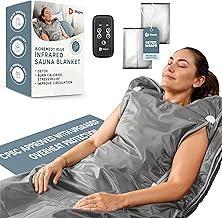
LifePro BioRemedy Plus Far Infrared Sauna Blanket with Detox Wrap – Dual-Layer Carbon Fiber Heating Foldable Home Sauna Blanket – Adjustable Temp (86–158°F) & 20–60 Min Timer For Relaxation & Wellness
The LifePro BioRemedy Plus offers a compact, wallet-friendly entry point into infrared sauna blankets, pairing dual-layer carbon fiber heating with a foldable design that stores easily in a closet or under a bed. Priced at $199.99, it sits well below many blanket competitors, making it accessible for first-time buyers who want to explore infrared heat without a major financial commitment.
The temperature range spans multiple°F, covering gentle warm-up sessions and more intense sweat experiences. A built-in timer runs from multiple minutes, so you can schedule shorter trials or longer relaxation blocks without watching the clock. The dual-layer carbon fiber heating aims to distribute warmth evenly across the blanket surface, reducing the risk of hot spots that can make sessions uncomfortable.
LifePro includes a detox wrap in the package, which acts as a moisture barrier between your body and the blanket interior. This accessory simplifies cleanup and extends the blanket's lifespan by keeping sweat away from the heating elements. The foldable construction means you can collapse the unit after each use and tuck it into tight storage spaces, a clear advantage over rigid tent frames that occupy permanent floor area.
With a 4.2 out of 5 rating, user feedback points to solid performance for the price, though some reviewers note the controller interface feels basic compared to higher-end models. The lower cost reflects trade-offs in build refinement and feature depth, but the core heating and timer functions work as described. If your priority is minimal storage footprint and a budget under multiple, this blanket delivers the essentials without unnecessary extras.
The foldable design and included wrap make the LifePro BioRemedy Plus a practical choice for apartment dwellers or anyone rotating wellness equipment in and out of shared spaces. The wide temperature range lets you experiment with milder heat if you're new to infrared sessions, then ramp up intensity as you adapt. For users focused on straightforward operation, compact storage, and a low barrier to entry, this blanket checks the right boxes.
- ✅ Foldable design stores easily in closets or under beds
- ✅ Temperature range from 86 to 158°F accommodates gentle and intense sessions
- ✅ Includes detox wrap to simplify cleanup and protect heating elements
- ✅ Priced at $199.99, making it accessible for first-time buyers
- ⚠️ Controller interface feels basic compared to premium models
- ⚠️ Lower price reflects trade-offs in build refinement and feature depth
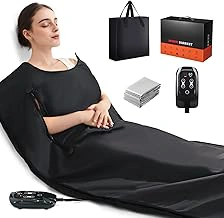
Portable Far Infrared Sauna Blanket for Home Detox and Relaxation
Budget matters when you're exploring infrared options for the first time, and the Portable Far Infrared Sauna Blanket offers an entry point at $159.99. With a 4.8/5 rating, it delivers far infrared heat in a compact, foldable design that fits on a bedroom floor or in a closet when not in use.
The blanket uses far infrared heating to warm the body during sessions. Because it wraps around you rather than enclosing your head, users who feel confined in full-coverage tents may prefer this open format. The portability also makes it practical if you want to move the blanket from room to room or store it out of sight between uses.
This option works well for someone testing the format before committing to a higher-priced model or for users who want occasional sessions without investing in a full tent setup. Keep in mind that far infrared penetration is generally less intense than near infrared, so heat build-up may take longer and sessions may feel milder compared to dual-zone or near-infrared systems.
If you're budget-conscious or unsure whether you'll stick with regular sauna sessions, this blanket provides a low-risk way to explore the experience. For users who plan frequent, high-intensity sessions or want faster warm-up, a more powerful model or tent may be a better long-term fit.
- ✅ Entry-level price at $159.99
- ✅ Compact, foldable design for easy storage
- ✅ Open format around the head reduces confined feeling
- ✅ Strong 4.8/5 user rating
- ⚠️ Far infrared only, with less intense heat penetration
- ⚠️ Slower warm-up compared to dual-zone or near-infrared systems
- ⚠️ May feel milder for users seeking high-intensity sessions
What is an Infrared Sauna Blanket?
An infrared sauna blanket wraps your body from shoulders to feet, delivering heat through embedded carbon fiber or low-EMF heating panels sewn into waterproof layers. You lie down, zip or Velcro the blanket closed around you, and set the controller to your preferred temperature - most models run between 110°F and 160°F with programmable timers for 30- to 60-minute sessions. The heat radiates inward to warm your core and skin without needing an enclosed cabin or dedicated space.
Blankets fold into a size similar to a sleeping bag when not in use, which makes them a practical choice for smaller apartments or closets. Because they plug into a standard outlet and heat up in five to ten minutes, you can set one up on a yoga mat, towel, or bed in almost any room. Cost typically falls between $200 and $600, well below the price of a freestanding sauna or even many tent models.
The trade-off is the experience itself. Your head stays outside the blanket, exposed to room air, while the rest of your body is sealed inside. Some people find this cozy and calming; others feel claustrophobic or notice that sweat pools against the inner lining. Ventilation is limited to whatever airflow exists in the room, so humidity can build quickly if you're in a small, closed space. Cleaning involves wiping down the interior with a damp cloth and mild cleaner after each session, since most blankets use non-removable, waterproof fabric.
If your priorities are portability, budget, and simplicity, a blanket delivers infrared heat in the most compact, low-maintenance format available.
What is an Infrared Sauna Tent?
An infrared sauna tent is a freestanding enclosure built around a collapsible frame, similar to a pop-up camping tent. Most designs let you sit upright in a chair or stool with your head outside the tent, which allows you to breathe cool air while your body absorbs infrared heat. Panels containing infrared emitters are positioned around the interior walls, typically at back, front, and side positions to surround the torso and legs.
The pop-up frame uses flexible poles or tension hoops that fold down when not in use. Setup involves unfolding the frame, attaching the fabric shell, and plugging in the heating panels. Most tents require three to five minutes to assemble once you know the routine. The fabric is usually a reflective polyester or nylon blend designed to contain heat while remaining washable.
Because your head stays outside, many users find the experience less claustrophobic than lying fully enclosed in a blanket. You can read, watch a screen, or sip water without interrupting your session. The seated posture also feels more natural for longer durations, and the extra interior volume makes it easier to shift position or adjust clothing mid-session.
The main tradeoffs are size and cost. A sauna tent occupies roughly the floor space of an armchair, so it requires a dedicated corner or closet for storage. Folding and unfolding every time adds friction compared to simply unrolling a blanket. Prices typically start higher than blankets - often in the range of $300 to $600 - and replacement heating panels can be harder to source if one fails. For users who value breathing comfort and upright posture during longer sessions, those tradeoffs may be worthwhile.
Head-to-Head: Space & Portability
Footprint and storage requirements differ sharply between these two formats. A sauna blanket folds flat to about the size of a rolled sleeping bag, slipping easily under a bed, into a closet, or even inside a suitcase. Most measure around 70 by 70 inches when open but compress to less than six inches thick when folded. You can set one up on a bed, couch, or yoga mat in under a minute, then fold it away just as quickly.
Tents occupy a dedicated corner or section of floor when assembled. Even compact dome models stand three to four feet tall and span a similar width, and they stay in place once you've unzipped the door and arranged the chair inside. Breakdown takes five to ten minutes - unclip the frame poles, fold the fabric panels, and pack the chair separately. Collapsed tents fit into a carry bag, but that bag still measures two to three feet long and weighs fifteen to twenty-five pounds, which limits how easily you can tuck it out of sight.
If you share a small apartment or want the option to use your sauna in different rooms, a blanket offers clear flexibility. You can drape it over a guest bed one day and take it to a friend's house the next. Tents work best when you claim a semi-permanent spot - a spare bedroom, garage corner, or basement nook - and leave the setup mostly intact between sessions. Neither option bolts to the floor, but portability favors the blanket by a wide margin.
Head-to-Head: Heat Quality & User Experience
The way heat surrounds your body changes everything about the session. Infrared sauna blankets wrap tightly around your torso, arms, and legs, creating a cocoon effect that some users find immersive and others describe as restrictive. Your head stays inside the blanket unless you unzip the top slightly, which means you feel warmth across your face and scalp. That full-body enclosure can intensify the sweating experience, but it also limits what you can do while lying flat - most people close their eyes, listen to music through earbuds, or simply relax without much movement.
Tents take a different approach. You sit upright on a folding chair, and your head remains completely outside the heated chamber. This setup allows normal breathing in room-temperature air, and you can read a book, scroll on a tablet, or sip water without opening the enclosure. The tent's larger interior gives you space to shift position or adjust your posture mid-session, which becomes useful during 30- or 40-minute stretches.
Heat distribution also differs. Blankets place infrared panels directly against fabric that touches your skin, delivering concentrated warmth along your back, front, arms, and legs. Some users notice hotter zones near the heating elements and cooler spots at the edges, especially around the feet. Tents rely on panels mounted to the interior walls, radiating heat across the open space. The warmth feels less direct but more even, with fewer dramatic temperature differences between body parts. That distance can mean a gentler, less intense sensation for users who prefer gradual sweating over immediate warmth.
Comfort during longer sessions often hinges on whether you tolerate lying flat in a sealed blanket or prefer sitting upright with your head free. If you want to stay entertained, answer a text, or simply breathe cool air, the tent's open-head design wins. If you want full-body heat immersion and don't mind the tighter fit, the blanket delivers that without requiring extra floor space for a chair and tent frame.
Head-to-Head: Cost & Value
Price often decides which format makes it into your home. Infrared sauna blankets typically start around $200 and climb to roughly $500 for models with multiple heat zones and durable outer shells. Tents begin closer to $300 and extend past $700, reflecting the cost of a collapsible frame, larger heating panels, and zippered enclosures that preserve heat without wrapping the body.
The price gap reflects more than materials. A blanket's flat design keeps manufacturing straightforward, while a tent's frame must support fabric walls and distribute infrared emitters across a bigger interior. That added engineering shows up at checkout.
Value depends on how often you'll use it and where you'll store it. If your routine calls for three or four sessions a week and closet space is tight, a blanket's lower cost and minimal footprint deliver strong return. A tent justifies its premium when multiple household members want access, when you prefer sitting upright with a book, or when you have a corner of a bedroom or garage that can stay semi-dedicated to the setup. Buying the less expensive option only to find it uncomfortable or inconvenient means the savings evaporate quickly.
Consider durability alongside sticker price. Blankets with reinforced seams and waterproof liners tend to last longer than budget models that crack after a few months. Tents with metal frames outlive plastic equivalents. Spending an extra $100 upfront can mean years of reliable use rather than a replacement cycle that doubles your total outlay.
Head-to-Head: Ease of Use & Cleaning
Setup complexity separates these two formats immediately. A blanket requires nothing more than unrolling the unit, plugging it into a standard outlet, and preheating for five to ten minutes. Tents ask you to assemble a collapsible frame, attach fabric panels or zippers, position the heating unit inside, and confirm the structure holds stable. That initial assembly takes fifteen to thirty minutes the first time, and while subsequent sessions skip most steps, you still need floor space and a few minutes to unfold everything.
Session prep follows similar patterns. Both formats benefit from a towel barrier between skin and heated surfaces to absorb sweat and protect interior materials. Clothing choices differ: blankets let you wear light garments on your lower body if you prefer, while tents typically accommodate full loose clothing or a towel wrap. Neither requires elaborate ritual, but blankets let you start a session faster because the device itself is already laid flat and ready.
Post-use cleaning determines long-term satisfaction. Blanket interiors need wiping with a damp cloth after each session to remove sweat residue, then air-drying with the unit open for ten to twenty minutes. Tents require the same wipe-down on interior panels, but the larger surface area and seams take more time. Odor management becomes critical for both: inadequate drying invites mildew. Blankets dry faster because you can drape them over a chair or lay them flat with both sides exposed. Tents need deliberate ventilation, and some users prop panels open with small fans to speed the process.
Storage adds another layer. A rolled blanket fits into a closet or under a bed in seconds. Tents must be disassembled or left semi-erected, and even when collapsed they occupy more volume. If you plan to use the sauna three or more times per week, a tent left standing may feel convenient. For occasional users or small apartments, a blanket's pack-and-go design reduces friction and keeps the routine simple.
The Verdict: Who Should Buy a Sauna Blanket?
Sauna blankets make the most sense for people facing space limits or seeking the easiest entry point into infrared heat sessions. If you're working with a studio apartment, a shared bedroom, or limited storage, a blanket rolls up and tucks into a closet or under a bed in seconds. Setup is just as straightforward: unroll, plug in, and lie down.
Budget plays a clear role here. Blankets typically cost less than tents, and the simplified design means fewer components to troubleshoot or replace. You won't need extra floor space reserved year-round, and cleanup involves wiping down a flat surface rather than navigating poles or zippers.
The trade-off is the experience itself. A blanket wraps around your body completely, leaving only your head exposed. Some users appreciate the cocooning sensation and find it relaxing; others feel restricted or overly warm. If you've never used enclosed infrared gear, consider whether lying still in a sealed wrap for twenty to forty minutes sounds manageable or uncomfortable.
Portability extends beyond storage. A folded blanket fits in a suitcase or car trunk, so you can bring infrared sessions to a vacation rental or a family visit. Tents, by contrast, require disassembly and reassembly, making them impractical for frequent moves.
Choose a sauna blanket when convenience, compact storage, and a lower price outweigh the desire for open air or seated posture during your heat session.
The Verdict: Who Should Buy a Sauna Tent?
Sauna tents make the most sense for people who have space to spare and prioritize comfort over portability. If you can dedicate a corner of a bedroom or spare room to a semi-permanent setup, a tent offers a noticeably more comfortable experience than lying flat in a blanket. Your head stays outside the heated zone, which means easier breathing, less claustrophobia, and the ability to scroll your phone, read, or meditate without feeling trapped.
The extra space inside allows you to sit upright on a folding chair or stool, and many users find this posture more relaxing for longer sessions. Tents also tend to heat more evenly around your torso and legs, though they take longer to warm up and use more energy. The tradeoff is clear: you pay more upfront, give up easy portability, and accept a bulkier footprint in exchange for a more spa-like experience at home.
If you know you'll use the sauna regularly and want the session itself to feel less restrictive, the tent's design delivers on that promise. Just be prepared for a longer setup the first time and a cleaning routine that involves wiping down interior panels instead of a single surface.
Final Recommendation: Which At-Home Solution is Best for You?
Your choice between an infrared sauna blanket and a tent comes down to three core factors: available space, budget, and how you prefer to experience heat.
Blankets fit users who need a compact solution that stores in a closet and travels easily. They work well in smaller apartments, require no dedicated setup area, and typically cost less upfront. The wraparound design delivers direct heat contact, which some users find more intense. If you're comfortable lying flat for sessions and want the simplest cleanup routine, a blanket is the practical pick.
Tents suit users who value seated comfort and want more control over how much of their body is exposed to heat. The upright posture lets you read, adjust your position, or step out mid-session without fully unwrapping. Tents generally cost more and require a permanent or semi-permanent footprint, but they offer a less restrictive experience that may feel closer to a traditional sauna.
Before you buy, measure your available floor space and decide whether you'll store the unit after each use or leave it set up. Check your budget against both the initial price and any replacement parts the manufacturer lists. Consider whether you prefer lying flat with full-body contact or sitting upright with easier exit access. Users who prioritize portability and lower cost will find blankets more efficient. Those who want flexibility in posture and a roomier heat environment will get more value from a tent.
Neither option requires installation or plumbing, so your decision rests on how the design fits your routine rather than technical compatibility.