We may earn a commission when you buy through links on this page, at no extra cost to you. How this works.
Slow-wave sleep - the deepest phase of non-REM sleep - accounts for roughly 15 - 25% of total sleep time in healthy adults, yet its influence on next-day cognition extends far beyond that narrow window. During this stage, the brain consolidates declarative memories, prunes unnecessary synaptic connections, and clears metabolic waste through the glymphatic system. Without adequate slow-wave sleep, working memory, attention span, and problem-solving capacity all decline measurably, even when total sleep duration appears normal.
Many sleep supplements rely on sedation to shorten sleep-onset latency, but sedation alone does not guarantee progression into deep sleep or preserve the natural architecture of sleep cycles. Apigenin and L-theanine represent a different approach: both compounds interact with specific receptor systems - GABAAreceptors and glutamate pathways - that influence the neurochemical conditions required for slow-wave sleep. Apigenin, a flavonoid found in chamomile, acts as a partial agonist at benzodiazepine binding sites on GABAAreceptors, promoting inhibitory signaling without the dependency or rebound insomnia associated with pharmaceutical sedatives. L-theanine, an amino acid abundant in green tea, modulates alpha brain wave activity and attenuates excitatory neurotransmission, creating a calm-alert state that may ease the transition from wakefulness to sleep.
This article examines the receptor-level mechanisms through which apigenin and L-theanine may support slow-wave sleep, the limitations of current research, and what those mechanisms suggest about their practical use. The focus remains on biology and tradeoffs, not marketing promises.
What is Apigenin? Understanding This Natural Compound
Apigenin is a flavonoid compound found naturally in chamomile flowers, parsley, celery, and several other plants. As a member of the flavone subclass, it carries a distinctive molecular structure that allows it to interact with certain receptor systems in the human body, particularly those involving gamma-aminobutyric acid (GABA).
Chamomile tea has been consumed for centuries as a calming bedtime beverage, and researchers now understand that apigenin accounts for much of chamomile's relaxing character. A typical cup of chamomile tea may contain between 0.8 and 1.2 milligrams of apigenin, though concentrations vary widely depending on preparation method and plant source.
In recent years, apigenin has become available as an isolated supplement, typically derived from chamomile extract and standardized to deliver consistent amounts per serving. Most apigenin supplements offer doses ranging from 50 to 200 milligrams per capsule, significantly higher than what a cup of tea provides. This shift toward concentrated supplementation reflects interest in achieving more predictable effects on sleep architecture and relaxation without the fluid volume or variable potency of brewed tea.
The compound itself is lipophilic, meaning it has an affinity for fatty tissues and can cross the blood-brain barrier. Once in the central nervous system, apigenin binds to benzodiazepine receptors on GABA-A receptor complexes, which may contribute to its calming properties. Unlike pharmaceutical benzodiazepines, apigenin's binding profile is gentler and does not appear to carry the same risk of dependency or next-day grogginess, though individual responses vary.
When evaluating apigenin for sleep support, it helps to recognize that dietary sources alone rarely provide the concentrations studied in sleep-focused research. Supplementation offers a practical route for those seeking consistent intake, but the compound remains just one piece of a broader sleep-support puzzle that includes habits, environment, and overall stress management.
The Mechanism: How Apigenin Interacts with GABA Receptors to Promote Sleep
Apigenin operates through a well-documented interaction with GABA-A receptor complexes in the central nervous system. The flavonoid binds to benzodiazepine receptor sites on these complexes, the same allosteric modulatory sites targeted by pharmaceutical sleep aids, though with markedly lower affinity. This weak-to-moderate binding enhances the inhibitory effect of gamma-aminobutyric acid (GABA), the brain's primary inhibitory neurotransmitter, by increasing the frequency of chloride channel opening when GABA binds to its recognition site.
The resulting influx of negatively charged chloride ions hyperpolarizes the neuronal membrane, making the neuron less likely to fire. This dampening of neuronal excitability contributes to the sedative and anxiolytic effects observed in preclinical models. Because apigenin's binding affinity is substantially weaker than synthetic benzodiazepines or Z-drugs, the compound produces a gentler modulatory effect without the receptor saturation that characterizes stronger sedatives.
This difference in binding strength has practical implications. Apigenin does not appear to produce the same degree of tolerance, dependence, or next-day impairment documented with high-affinity benzodiazepine receptor agonists. Research in animal models shows dose-dependent increases in sleep duration and reductions in sleep latency, but the effect size remains modest compared to prescription agents. Human data remains limited to small trials and observational studies, so the translation of receptor pharmacology to reliable sleep outcomes in diverse populations is not yet fully characterized.
The takeaway is that apigenin modulates GABAergic inhibition through a recognized molecular pathway, but its weaker binding profile means it functions as a mild modulator rather than a potent sedative.
What is L-Theanine? The Calming Amino Acid from Tea
L-theanine is an amino acid analog found almost exclusively in the leaves of Camellia sinensis, the plant that produces green, black, white, and oolong tea. Unlike the twenty standard amino acids that build proteins, L-theanine functions as a bioactive compound that crosses the blood-brain barrier and influences neuronal activity without sedative effects.
Humans have consumed L-theanine for thousands of years through tea, particularly in East Asian cultures where green tea has been a daily ritual. Traditional preparation methods preserved the compound, which survives hot water infusion and remains stable in brewed tea. The concentration in tea varies by cultivar, growing conditions, and processing method, with shade-grown varieties such as matcha and gyokuro containing higher amounts.
Isolation of L-theanine for supplementation began in the mid-20th century when Japanese researchers identified it as the compound responsible for tea's characteristic umami flavor and calming effect. Modern extraction separates L-theanine from caffeine and other tea constituents, allowing targeted dosing that delivers the amino acid independently of the stimulant.
Where apigenin works by binding to specific GABA-A receptor sites, L-theanine takes a different path. It modulates neurotransmitter synthesis and receptor activity without directly occupying GABA receptors. This distinct mechanism means the two compounds can complement each other, targeting sleep architecture through separate but overlapping pathways. L-theanine increases alpha brain wave activity, a marker of relaxed alertness, while influencing the balance of excitatory and inhibitory signals in the brain.
The amino acid's structure allows it to influence glutamate receptors, the brain's primary excitatory system, without causing drowsiness or impairing cognition. This makes L-theanine suitable for daytime use to manage stress and for nighttime use to support the transition into deeper sleep stages. Its ability to work alongside other compounds, including apigenin, stems from these non-overlapping receptor targets.
The Mechanism: How L-Theanine Promotes Alpha Brain Waves and Relaxation
L-theanine crosses the blood-brain barrier within 30 to 45 minutes of ingestion, positioning itself to influence neurotransmitter systems that govern relaxation and alertness. Once inside the central nervous system, this amino acid modulates the levels of GABA, dopamine, and serotonin - three neurotransmitters that regulate mood, stress response, and the transition from wakefulness to sleep.
The primary effect documented in electroencephalogram (EEG) studies is an increase in alpha brain wave activity. Alpha waves oscillate between 8 and 12 Hz and characterize a state of calm alertness - the mental condition people experience when they are relaxed yet mentally present, such as during meditation or quiet reading. L-theanine promotes this alpha wave dominance without producing sedation, which means it does not force drowsiness or impair cognitive function during waking hours.
This distinction matters because sleep onset benefits from a gradual shift in brain state rather than abrupt suppression of neural activity. By encouraging alpha wave production, l-theanine helps quiet the beta wave activity associated with active thinking and stress, creating a smoother neural pathway toward theta waves and eventual slow-wave sleep. The neurotransmitter changes support this process: elevated GABA activity reduces excitatory signaling, while modest increases in dopamine and serotonin contribute to emotional steadiness and reduced rumination.
Research shows that l-theanine's effects on alpha waves become measurable within 40 minutes and persist for several hours. The compound does not bind directly to sleep receptors like many pharmaceutical sedatives, which explains why users typically report feeling relaxed rather than impaired. This mechanism aligns well with the natural sleep architecture because it supports the brain's own transition sequence rather than overriding it.
The practical outcome is that l-theanine shortens the time spent in the pre-sleep phase - lying awake with an active mind - without creating next-day grogginess. For individuals whose sleep difficulty stems from an inability to downregulate mental activity at bedtime, this alpha wave promotion addresses the root cause rather than masking symptoms with forced sedation.
The Synergistic Effect: Why Apigenin and L-Theanine Work as a Combination
Apigenin and l-theanine target different parts of the neurochemical sleep pathway, which is why practitioners and formulators often pair them. Apigenin binds to benzodiazepine-sensitive GABAAreceptor sites, reducing neuronal excitability and creating a calming effect that can ease the transition into sleep. L-theanine works upstream by modulating glutamate and increasing alpha brain wave activity, promoting relaxation without drowsiness. Together, they address both sleep onset - helping the nervous system downregulate - and sleep maintenance by reducing the kind of excitatory signaling that fragments rest during the night.
The rationale for combining them rests on their complementary actions rather than direct synergy demonstrated in controlled trials. Apigenin's GABAergic activity may help initiate the shift toward sleep, while l-theanine's influence on neurotransmitter balance and cortical rhythm supports sustained relaxation. This pairing is designed to avoid the sedative overshoot of pharmaceutical sleep aids; neither compound forces sleep, but both create conditions favorable for natural slow-wave progression. The absence of morning grogginess reported with this combination likely reflects their shorter half-lives and lack of receptor downregulation over time.
Research on apigenin and l-theanine as a specific combination remains limited. Most evidence comes from isolated studies of each compound, and extrapolating to their joint effect requires caution. The this product plausibility is sound - one enhances inhibitory signaling, the other reduces excitatory tone - but clinical data confirming additive or synergistic benefits in sleep architecture are sparse. What can be said is that their mechanisms do not overlap redundantly, and both have established safety profiles when used at typical supplemental doses. For individuals seeking non-sedative support for sleep quality, the pairing offers a rational, mechanistically grounded approach, even as the field awaits more rigorous combination trials.
Practical Application: Dosing, Timing, and Expectations
Apigenin and l-theanine work best when taken 30 to 60 minutes before bedtime, allowing enough time for absorption and receptor activity to begin. Apigenin typically requires about 45 to 90 minutes to reach peak concentration, while l-theanine enters circulation faster, often within 30 to 40 minutes. Taking both together gives the brain time to shift into a calmer state as you prepare for sleep.
Most people notice subjective relaxation - reduced mental chatter, looser muscle tension, a general winding-down - within the first hour. Objective changes to sleep architecture, such as increased slow-wave sleep duration or deeper delta wave activity, usually emerge over several nights of consistent use rather than immediately after the first dose. These compounds support the brain's natural transition into sleep rather than force sedation, so the effect feels gentler and more gradual compared to pharmaceutical sleep aids.
Realistic expectations matter. Apigenin and l-theanine can help you fall asleep more easily and spend more time in restorative sleep stages, but they won't override poor sleep hygiene. A consistent bedtime, a cool and dark room, limited screen exposure in the evening, and managing caffeine intake all remain foundational. These compounds work best when layered on top of solid habits, not as replacements for them.
Individual response varies based on body weight, metabolism, baseline anxiety levels, and sensitivity to GABAergic or glutamatergic modulation. Some people feel noticeably calmer within a few days, while others may need two to three weeks of nightly use to observe meaningful changes in sleep quality or morning alertness. If you feel no effect after three weeks at standard doses, the issue may lie elsewhere in your sleep routine or overall stress load rather than with the compounds themselves.
Limitations, Safety Considerations, and When to Consult a Professional
Apigenin and l-theanine are generally well-tolerated compounds, but they are not appropriate for everyone and should be used thoughtfully within a broader approach to sleep health.
Apigenin may interact with medications metabolized by cytochrome P450 enzymes, particularly CYP1A2, CYP2C9, and CYP3A4. If you take anticoagulants such as warfarin, sedatives, benzodiazepines, or other GABAergic drugs, consult a healthcare provider before adding apigenin. Chamomile, the primary dietary source, has been associated with allergic reactions in individuals sensitive to plants in the Asteraceae family.
L-theanine is considered safe at typical supplemental doses (100 - 400 mg), but it may potentiate the effects of medications that lower blood pressure or act on GABA receptors. High doses combined with stimulants or other sedatives should be approached with caution, as the interaction effects are not well characterized.
Neither compound is a cure for chronic insomnia or underlying sleep disorders. If you experience persistent difficulty falling asleep, frequent nighttime awakenings, excessive daytime sleepiness, or symptoms of sleep apnea, restless leg syndrome, or circadian rhythm disruption, seek clinical evaluation. These compounds work as supportive tools for sleep quality when the fundamentals - consistent sleep schedule, light exposure management, controlled bedroom environment, and appropriate stress management - are already in place.
Pregnant or breastfeeding individuals should avoid supplemental doses of apigenin and l-theanine due to limited safety data. If you are managing a psychiatric condition, autoimmune disorder, or taking multiple medications, discuss supplementation with a qualified professional to avoid unintended interactions or contraindications.
Integrating Science-Backed Compounds into Your Sleep Protocol
Understanding the this product pathways of apigenin and l-theanine provides a foundation for integrating these compounds into a sleep protocol rather than relying on guesswork. Apigenin's interaction with GABA-A receptors and l-theanine's modulation of alpha brain waves address two distinct mechanisms that support the transition into deep slow-wave sleep.
Start with conservative doses and observe your response over at least one week. Apigenin is typically used at 50 mg, while l-theanine dosing ranges from 100 to 200 mg about 30 to 60 minutes before bed. Individual variability in receptor sensitivity and neurotransmitter baseline means the same dose may produce different effects across people.
Track both subjective markers - how long it takes to fall asleep, how rested you feel upon waking - and any objective data available from wearable devices that estimate sleep stages. Look for patterns rather than single-night anomalies. If you notice no improvement after two weeks at a stable dose, the compounds may not align with your particular sleep architecture or the root cause of your disruption may lie elsewhere.
Combining apigenin and l-theanine does not replace sleep hygiene fundamentals. Light exposure management, consistent sleep and wake times, temperature control, and limiting stimulants remain the non-negotiable base layer. Compounds that target specific receptor pathways work best when the broader environment supports natural circadian signaling.
Avoid stacking multiple new supplements simultaneously. Introducing one compound at a time clarifies which change drives any observed benefit or side effect. This approach also reduces the risk of unexpected interactions and allows you to isolate the mechanistic contribution of each substance.
If you take medications that affect GABA or glutamate activity - including benzodiazepines, certain antidepressants, or anticonvulsants - consult a healthcare provider before adding apigenin or l-theanine. Both compounds influence neurotransmitter systems that may interact with prescription drugs.
The goal is informed experimentation grounded in biology, not reactive supplementation driven by marketing claims. When you understand how apigenin modulates inhibitory tone and how l-theanine shifts brain wave activity, you can assess whether these mechanisms address the specific this product in your own sleep cycle. That clarity transforms supplementation from trial and error into a deliberate strategy aligned with your physiology.
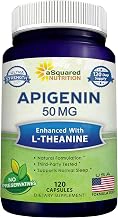
aSquared Nutrition Apigenin 50mg & L-Theanine 200mg, 120 Capsules
The aSquared Nutrition formula delivers 50 mg of apigenin and 200 mg of l-theanine in a single capsule, matching the dose ranges that appear in much of the receptor-binding and sleep-architecture research. Each bottle contains 120 capsules, providing a four-month supply at one capsule per night. The price sits at $39.95, working out to roughly multiple cents per serving.
This formulation keeps things straightforward. You get the two active compounds without a long list of additional herbs or fillers that can make it harder to track what's influencing your sleep. That simplicity is useful if you're applying the GABAAreceptor and alpha-wave mechanisms discussed earlier and want a clean read on how these two compounds work for you.
The product holds a 4.2 out of 5 rating based on user feedback. That score reflects a range of experiences - some people report falling asleep more easily and waking less often, while others notice subtler shifts in how rested they feel. Individual responses to both apigenin's benzodiazepine-site activity and l-theanine's influence on glutamate will vary depending on your baseline neurochemistry, stress load, and sleep environment.
The 50 mg apigenin dose aligns with the lower end of the range used in receptor studies, and the 200 mg l-theanine sits in the middle of the spectrum where alpha-wave increases have been recorded. If you're sensitive to calming compounds, this combination may feel noticeable within multiple minutes. If your system runs higher on excitatory tone, the effect may be more gradual across several nights.
Because this is a two-compound stack, it's harder to isolate which mechanism is doing the heavy lifting. If you respond well, you're likely aSquared Nutrition Apigenin 50mg & L-Theanine 200mg, 120 Capsules from both the GABAergic modulation and the glutamate buffering. If the effect feels mild, you may need to address other variables - light exposure, caffeine timing, or cortisol patterns - that sit upstream of receptor activity.
For those looking to translate the aSquared Nutrition Apigenin 50mg & L-Theanine 200mg, 120 Capsules mechanisms into a nightly routine, the aSquared option offers research-aligned doses in a simple capsule. Results will depend on how your own GABA and glutamate systems respond, but the formulation gives you a reasonable starting point without unnecessary extras.
- ✅ 50 mg apigenin and 200 mg l-theanine match research dose ranges
- ✅ 120-capsule bottle provides four-month supply
- ✅ Straightforward two-compound formulation without extra additives
- ✅ Price of $39.95 works out to about 33 cents per serving
- ⚠️ Two-compound stack makes it harder to isolate which mechanism drives your response
- ⚠️ Individual results vary based on baseline neurochemistry and sleep environment
Key Considerations When Evaluating Sleep Supplement Formulations
- Dosage alignment with research: apigenin studies typically use 50 mg, l-theanine 100 - 200 mg
- Third-party testing for purity and absence of contaminants
- Capsule count and cost per serving for ongoing use
- Absence of unnecessary fillers, binders, or proprietary blends that obscure active doses
- Timing compatibility: best taken 30 - 60 minutes before intended sleep onset
- Individual tolerance variability and the need for personal experimentation