We may earn a commission when you buy through links on this page, at no extra cost to you. How this works.
Micro Ingredients L-Theanine 400mg, 400 Softgels
Two popular calming compounds, very different mechanisms. Here's what the research shows about each.
Racing thoughts at 2 a.m., a mind that won't settle before a presentation, or the relentless mental loop after a stressful day - millions of people search for compounds that can quiet the noise without sedation. L-theanine and GABA both promise mental calm, yet they differ in fundamental ways: how they interact with the brain, whether they cross the blood-brain barrier efficiently, how quickly you feel the effect, and which situations favor one over the other.
L-theanine is an amino acid found naturally in tea leaves. It crosses into the brain readily and modulates neurotransmitter activity to promote relaxed alertness. GABA - gamma-aminobutyric acid - is the brain's primary inhibitory neurotransmitter, but as a supplement, its ability to enter the brain remains debated. Some evidence suggests it may work through peripheral nerves or the gut-brain axis, while other studies question its bioavailability altogether.
This comparison examines five criteria that matter when choosing between L-theanine and GABA: mechanism of action, absorption and bioavailability, speed of onset, side effect profile, and situational fit. Understanding these differences helps you match the compound to your specific pattern of racing thoughts - whether you need steady focus during the day, a wind-down aid in the evening, or support during acute stress. Neither compound is a sedative, and neither works universally, but each has a distinct profile that suits different needs and physiologies.
What is L-Theanine? The Amino Acid from Green Tea
L-Theanine is an amino acid found naturally in tea leaves, particularly abundant in green tea and matcha. Unlike most amino acids that serve as protein building blocks, L-Theanine crosses the blood-brain barrier efficiently, making it bioavailable for direct effects on brain chemistry within 30 to 60 minutes after oral intake.
Once absorbed, L-Theanine influences brain activity by modulating alpha wave patterns, the electrical rhythms associated with relaxed alertness. Research shows it affects neurotransmitter systems indirectly: it increases dopamine and serotonin signaling while also interacting with GABA receptors, but it does not function as a neurotransmitter itself. This indirect approach means L-Theanine promotes calm focus without the sedation or receptor tolerance risks tied to compounds that flood the brain with neurotransmitters directly.
Because L-Theanine is absorbed reliably through standard digestion and has been studied in multiple clinical trials, it offers a well-documented pathway for managing racing thoughts. The amino acid's ability to reach the brain intact and work through multiple receptor systems makes it a predictable option for people seeking mental quiet without drowsiness or cognitive dullness.
What is GABA? Understanding the Brain's Inhibitory Neurotransmitter
GABA, or gamma-aminobutyric acid, functions as the primary inhibitory neurotransmitter in the central nervous system. When GABA binds to receptors on neurons, it reduces their excitability, effectively slowing down the rapid firing patterns that contribute to anxious thoughts and mental restlessness. This inhibitory action creates a natural braking mechanism that helps regulate the balance between neural activity and calm.
The brain produces GABA from glutamate, another neurotransmitter, through an enzymatic conversion process. Under normal circumstances, adequate GABA levels help maintain steady mood, support restful sleep, and prevent the kind of hyperactive neural signaling that manifests as racing thoughts. When GABA activity is insufficient, the nervous system can become overactive, leading to heightened anxiety and difficulty quieting the mind.
Oral GABA supplements face a significant obstacle: the blood-brain barrier restricts large, hydrophilic molecules like GABA from crossing into the brain tissue where it would exert direct calming effects on central neurons. This bioavailability challenge has sparked ongoing debate within the research community. Traditional neuroscience held that supplemental GABA simply cannot reach the brain in meaningful amounts, making it ineffective for addressing racing thoughts at their source.
Recent investigations suggest the picture may be more nuanced. Some researchers point to potential peripheral pathways through which oral GABA might influence relaxation. The enteric nervous system - often called the "second brain" - contains GABA receptors and communicates with the central nervous system via the vagus nerve. GABA may also interact with receptors in other peripheral tissues, triggering signals that indirectly affect subjective feelings of calm without crossing the blood-brain barrier directly.
Small human studies have documented reductions in stress markers and improvements in relaxation measures after GABA supplementation, though the mechanisms remain incompletely understood. Whether these effects stem from peripheral receptor activation, subtle barrier permeability under certain conditions, or placebo response continues to be investigated. The central takeaway: oral GABA may offer relaxation benefits for some individuals, but it operates through less direct pathways than compounds that cross into brain tissue more readily.
Head-to-Head: Mechanism, Absorption, and Speed of Effect
L-Theanine crosses the blood-brain barrier efficiently, reaching peak plasma concentration within 30 to 60 minutes after oral ingestion. Once inside the central nervous system, it modulates alpha-wave activity and influences neurotransmitters including dopamine, serotonin, and GABA itself. This pharmacokinetic profile explains why users often notice a shift toward calm focus within the first hour, with effects lasting three to five hours in most people.
GABA faces a fundamental absorption challenge: its polar molecular structure limits passive diffusion across the blood-brain barrier. Traditional pharmacology holds that orally ingested GABA remains largely peripheral, acting on the enteric nervous system or vagal pathways rather than directly calming cortical neurons. Recent animal studies suggest small amounts may cross under certain conditions or that GABA influences the gut-brain axis, but human evidence remains inconsistent. When people report calming effects from GABA supplements, the mechanism is still debated - peripheral signaling, placebo response, or trace central penetration all remain possibilities.
Clinical trial quality tilts heavily toward L-Theanine. Multiple randomized, placebo-controlled studies demonstrate reproducible reductions in subjective stress markers, heart rate variability improvements, and EEG changes consistent with relaxed alertness. GABA supplement trials are fewer, smaller, and show mixed outcomes; some report mood or sleep benefits, while others find no difference from placebo. The reliability gap matters when racing thoughts demand a dependable intervention rather than an experimental one.
Onset speed also differs predictably. L-Theanine users typically describe a gradual easing of mental chatter within 30 to 90 minutes, without sedation or cognitive blunting. GABA's reported onset varies widely - some anecdotal accounts mention effects within 15 minutes, others none at all - likely reflecting individual differences in gut permeability, microbiome composition, or expectation. For situations requiring predictable timing, such as pre-presentation anxiety or evening wind-down, L-Theanine offers more consistent performance windows.
The tradeoff is straightforward: choose L-Theanine when you need validated brain-targeted calming with clear pharmacokinetics, or experiment with GABA if you respond to gut-mediated relaxation pathways and accept the uncertainty. For most people managing racing thoughts, the stronger evidence base and reliable absorption make L-Theanine the more rational starting point.
Which Works Better for Silencing Racing Thoughts?
L-Theanine offers more reliable support for racing thoughts tied to cognitive anxiety, especially when you need to stay focused and alert. Research consistently shows it promotes alpha-wave activity in the brain, which translates to a calm-but-clear mental state within 30 to 60 minutes. If your racing thoughts interfere with concentration during the day or prevent you from winding down without feeling groggy, L-Theanine is the better-supported choice. It works well for people who want a predictable effect without sedation or next-day fog.
GABA's role is less straightforward. While it functions as the brain's primary inhibitory neurotransmitter, oral GABA supplements face absorption challenges that make their effects harder to predict. Some users report feeling calmer after taking GABA, possibly due to peripheral nervous system effects or gut-brain signaling, but the mechanism remains uncertain. If you respond well to compounds that work through indirect or enteric pathways, GABA may be worth trying. Results tend to be more individual and less consistent than L-Theanine.
Consider your response pattern. If you prefer research-backed options with clear onset windows and minimal trial-and-error, L-Theanine is the practical starting point. It pairs well with caffeine for focus or works alone before bed without the heaviness of sedatives. GABA suits users willing to experiment with compounds that may work through less understood routes. Some people notice a gentle shift toward relaxation, while others feel little difference. The trade-off is straightforward: L-Theanine delivers dependable calm for cognitive racing thoughts, while GABA requires more patience to determine if your physiology responds to its peripheral cues.
Side Effects and Safety Considerations
L-Theanine shows a strong safety record at standard doses of 200 - 400 mg, with minimal reported side effects in most users. Occasional reports include mild headache or drowsiness, but these are uncommon and typically resolve when the dose is adjusted. The amino acid does not appear to interact significantly with most medications, though anyone taking blood pressure medication should monitor their response, as L-Theanine may have a modest lowering effect.
GABA supplements are also considered safe for most people, but side effects occur more frequently than with L-Theanine. Some users report drowsiness, lightheadedness, or a tingling sensation in the skin, particularly at higher doses. Because GABA can enhance the sedative effects of other substances, it should be used cautiously with alcohol, benzodiazepines, sleep medications, or other central nervous system depressants. Combining GABA with sedatives may amplify drowsiness or impair coordination.
Starting with the lower end of the recommended range helps you assess tolerance before increasing the dose. For L-Theanine, that typically means 100 - 200 mg; for GABA, 250 - 500 mg. If you experience unwanted effects, reduce the dose or stop use entirely.
Neither compound should replace professional treatment for diagnosed anxiety disorders, panic disorder, or other mental health conditions. Racing thoughts that interfere with daily function, sleep, or well-being warrant a conversation with a healthcare provider. These supplements may support calm during occasional stress, but they are not substitutes for therapy, medication, or medical evaluation when symptoms persist or worsen.
Can You Take L-Theanine and GABA Together?
No known dangerous interactions exist between L-theanine and GABA, and some people do use both compounds together to target racing thoughts from different angles. The rationale is simple: L-theanine modulates neurotransmitter activity in the brain, while GABA - if absorbed - acts as an inhibitory signal. In theory, the two mechanisms could complement each other.
That said, starting with each compound individually makes it much easier to figure out which one actually helps. If you take both from day one, you won't know whether L-theanine is doing the work, GABA is contributing, or neither is making a meaningful difference. This trial-and-error clarity matters, especially if one compound causes drowsiness or digestive upset while the other does not.
Some supplement formulas intentionally combine L-theanine and GABA in a single capsule, banking on the idea that additive calming effects will appeal to users who want a broader approach. The challenge is that GABA's bioavailability remains uncertain - most research suggests it crosses the blood-brain barrier poorly when taken orally. Adding it to a formula that already contains well-absorbed L-theanine may not deliver measurable extra benefit, though subjective reports vary.
If you decide to try both together, keep dosages conservative at first and monitor how you feel across several days. Watch for excessive sedation, especially if you're also using other calming supplements or medications. The safest path is to establish a baseline with one compound, assess your response over a week or two, then introduce the second if you're still looking for additional support.
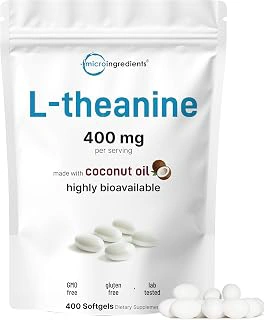
Micro Ingredients L-Theanine 400mg, 400 Softgels
Micro Ingredients packages 400mg of L-theanine per softgel - double the standard multiplemg dose found in many supplements - and delivers 400 softgels per bottle at $23.99. This higher per-serving concentration lets you tailor your intake more precisely: take one softgel for a stronger effect or split the dose across the day without juggling multiple capsules. The 4.7 out of 5 rating reflects consistent feedback on the straightforward formulation, which contains L-theanine as the sole active ingredient with no added herbs, nootropics, or proprietary blends.
That simplicity matters when you want to evaluate how L-theanine alone affects your racing thoughts. Because the softgel contains only one compound, you can adjust timing and dosage without wondering whether another ingredient is driving the result. The 400-count bottle offers roughly multiple servings at the full 400mg dose or 400 servings if you prefer a standard multiplemg amount, making cost-per-dose favorable compared to smaller bottles or lower-concentration products.
Softgels dissolve quickly in the digestive tract, and users typically notice a gentle shift in mental clarity within multiple minutes. The higher 400mg dose may suit individuals who find multiplemg or multiplemg insufficient, though starting at half a softgel or one every other day can help you gauge your personal threshold. Because L-theanine does not sedate like GABA-targeting compounds, you can take this supplement during the day without drowsiness, adjusting your routine based on when racing thoughts tend to peak.
This product works well for anyone who wants a pure L-theanine option with flexible dosing and a long supply at a competitive price. If you prefer a single-compound approach to compare directly against GABA or combination formulas, the Micro Ingredients 400mg softgels provide a clear baseline without added variables.
- ✅ 400mg per softgel allows flexible dosing or stronger single servings
- ✅ 400-count bottle offers extended supply at $23.99
- ✅ Pure L-theanine formulation with no added herbs or proprietary blends
- ✅ Softgel format dissolves quickly for consistent absorption
- ⚠️ Higher dose per softgel may require splitting for users new to L-theanine
- ⚠️ No additional calming compounds for those seeking synergistic blends
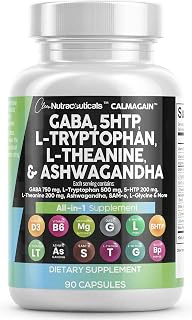
Clean Nutraceuticals Mood Support with GABA, 5 HTP, Tryptophan, Theanine & Ashwagandha
Clean Nutraceuticals Mood Support combines GABA, L-Theanine, 5-HTP, tryptophan, and ashwagandha in a single capsule, offering a multi-pathway strategy for users who want to trial both primary compounds without purchasing separate bottles. The formula carries a 4.4 out of 5 rating and retails for $23.92.
This approach gives you exposure to both the GABAergic and serotonin-precursor pathways at once, along with adaptogenic support from ashwagandha. If you're new to calming supplements or unsure whether L-Theanine or GABA suits you better, a combination product removes some of the guesswork upfront.
The clear downside is dosage dilution. When five active ingredients share space in a capsule, each typically appears at a lower dose than you'd find in a single-ingredient product. That makes it harder to isolate which compound is responsible for any shift in mental chatter or relaxation, and you may need to increase the serving size to approach clinically meaningful doses of any one ingredient.
Combination products also limit your ability to fine-tune timing. L-Theanine often works well in the morning or before focus work, while GABA and 5-HTP are more commonly used in the evening. Taking all five together locks you into one dosing window.
If you prefer to test one variable at a time or already know which compound works for your racing thoughts, a single-ingredient product offers more control. But for exploratory use or budget-conscious buyers who want a broader net, this formula provides a reasonable starting point at a moderate price.
- ✅ Includes both L-Theanine and GABA in one formula
- ✅ Adds 5-HTP, tryptophan, and ashwagandha for multi-pathway support
- ✅ Moderate price point for five ingredients
- ✅ Useful for users exploring multiple compounds without buying separately
- ⚠️ Each ingredient appears at a lower dose than single-ingredient products
- ⚠️ Difficult to isolate which compound drives observed effects
- ⚠️ Fixed dosing window limits timing flexibility
- ⚠️ Less control for users who already know their preferred compound
Quick Decision Framework: Choosing Your Calming Compound
- Choose L-Theanine if you want research-backed cognitive calm with reliable absorption and daytime use
- Choose GABA if you're open to experimenting with a compound that may work peripherally or via gut-brain pathways
- Start with standalone formulas to assess individual response before trying combination products
- Typical effective L-Theanine dose is 200 - 400 mg; GABA is often taken at 500 - 750 mg
- Allow 30 - 60 minutes for L-Theanine onset; GABA timing is more variable and individual
- Consider combination use only after testing each compound separately
Our Verdict: Which Calming Compound Fits Your Needs?
L-Theanine stands out as the more reliable choice for most people dealing with racing thoughts. Its absorption pathway is well understood, it crosses the blood-brain barrier predictably, and research consistently shows it promotes calm focus without causing drowsiness. The compound works by modulating neurotransmitter activity in ways that have been studied across multiple clinical trials, making its effects more foreseeable.
GABA supplements remain less certain. While GABA itself is a crucial inhibitory neurotransmitter in the brain, oral supplements face absorption challenges that create significant individual variation. Some users report noticeable calming effects, while others experience little to no benefit. The science on whether standard GABA supplements cross the blood-brain barrier in meaningful amounts is still developing.
If you want an evidence-based starting point with a track record of supporting mental clarity during stress, L-Theanine is the practical first option. It offers a gentler approach that maintains alertness while taking the edge off anxious thinking. GABA may be worth exploring if L-Theanine doesn't produce the results you need, or if you're interested in testing how your body responds to a different mechanism.
Neither compound should replace professional mental health care when racing thoughts interfere with daily functioning or signal clinical anxiety. These supplements work best as part of a broader approach that may include therapy, lifestyle adjustments, and medical guidance tailored to your specific situation.