We may earn a commission when you buy through links on this page, at no extra cost to you. How this works.
Nasal breathing during sleep can improve oxygen intake, reduce snoring, and support better rest, but the tool you choose depends on where your breathing this product actually occurs. Mouth tape works by keeping your lips sealed, forcing air through your nose - useful if you're a habitual mouth breather with clear nasal passages. Nasal strips take the opposite approach: they physically pull open the nostrils from the outside, helping when nasal congestion or narrow airways restrict airflow before it even reaches your throat.
The comparison isn't about which product is objectively superior. It's about matching the mechanism to your anatomy. If your nose is open but you default to mouth breathing out of habit, tape can retrain that pattern. If structural narrowing or nighttime congestion blocks your nasal passages, a strip may provide the lift you need to breathe through your nose in the first place.
Comfort tolerance matters, too. Tape requires accepting adhesive on your lips for six to eight hours. Strips sit across the bridge of your nose and can feel tight or leave residue. Both tools are low-cost and non-invasive, but neither addresses underlying issues like a deviated septum or severe sleep apnea. Measurable outcomes - oxygen saturation during sleep, snoring frequency, and subjective rest quality - offer the clearest feedback on whether your choice is working.
This guide walks through how each tool functions, who benefits most, and what the research says about their effects on nighttime breathing. The right answer depends on your specific obstruction point, not marketing claims.
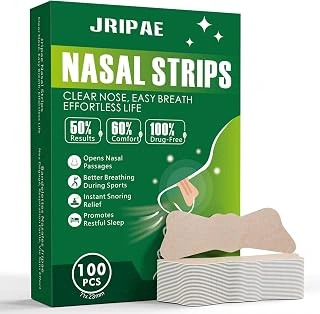
100ct Extra Strong Nasal Strips for Snoring, Tan
The 100ct Extra Strong Nasal Strips for Snoring, Tan offer a straightforward approach to opening nasal passages during sleep. Rated 4.4 out of 5, these tan strips use an adhesive-backed spring mechanism to lift the sides of the nose and widen the airway. The extra-strong adhesive is designed to stay in place through the night, which matters for people who shift positions or have oily skin.
At $18.99 for 100 strips, the cost per night is roughly multiple cents, making this option practical for regular users who rely on nasal strips several times a week or nightly. The tan color blends with many skin tones, though it remains visible. Each strip is single-use, so the 100-count packaging reduces the frequency of reordering.
This product works best for people whose nighttime breathing difficulty stems from narrow nasal passages rather than mouth breathing habits. If your nose feels blocked or you notice reduced airflow through your nostrils when lying down, the lift mechanism can create more space. However, nasal strips do not address mouth breathing or prevent the jaw from dropping open during sleep, so they are less effective if you breathe primarily through your mouth at night.
The extra-strong adhesive is a practical feature for secure overnight wear, but it also means you need to remove the strip carefully in the morning to avoid irritating the skin on your nose bridge. People with sensitive skin or those prone to adhesive reactions should test one strip before committing to nightly use. The strip must be applied to clean, dry skin to achieve the full holding strength.
For regular nasal strip users who have already confirmed that opening the nasal passages improves their breathing and reduces snoring, the 100-count packaging and reliable adhesive make this a sensible choice. If you are still determining whether nasal dilation or mouth closure is the primary issue affecting your nighttime oxygen intake, consider starting with a smaller pack to evaluate fit and results before purchasing in bulk.
- ✅ Extra-strong adhesive designed for secure overnight wear
- ✅ 100-count packaging lowers cost per use to roughly 19 cents per night
- ✅ Tan color blends with many skin tones
- ✅ Spring mechanism provides consistent lift to widen nasal passages
- ⚠️ Strong adhesive may irritate sensitive skin during removal
- ⚠️ Does not prevent mouth breathing or address open-mouth snoring
- ⚠️ Single-use strips generate ongoing waste
- ⚠️ Requires clean, dry skin for full adhesion
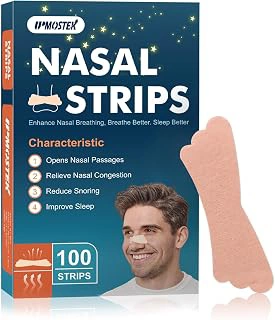
100Pcs Extra Strength Nasal Strips for Snoring
The 100Pcs Extra Strength Nasal Strips offer a high-volume option for those looking to manage nighttime nasal airflow over several months. Priced at $19.89 for 100 strips, the cost per use drops to roughly twenty cents, making it economically sensible for nightly application. With a 4.2 out of 5 rating, this product sits slightly below some premium alternatives but represents a practical choice when budget and quantity matter.
Extra-strength formulas typically use wider adhesive surfaces and more rigid lift bands to create greater nasal passage dilation. The trade-off can be firmer adhesion, which may feel more noticeable on sensitive skin but provides stronger pull throughout the night. For people who find standard-strength strips lose effectiveness as the hours pass, the added rigidity can help maintain consistent lift until morning.
The 100-piece count suits regular users who have already confirmed that nasal strips work for their anatomy and breathing pattern. If you are still testing whether external nasal dilation improves your oxygen saturation or snoring, a smaller trial pack may be wiser. Once effectiveness is established, however, buying in bulk reduces the per-night expense and ensures you do not run out mid-week.
Compared to mouth tape, nasal strips address a different mechanical issue: they open the nostrils rather than enforce nasal breathing by sealing the lips. Some individuals benefit from using both - tape to prevent mouth breathing and strips to reduce nasal resistance - while others find one tool sufficient. The choice depends on whether your primary challenge is habitual mouth breathing or anatomical narrowness in the nasal valve area.
This product works best for consistent nightly users who have already identified nasal resistance as a contributor to disrupted breathing or snoring and want a cost-effective supply without frequent reordering.
- ✅ 100-piece count reduces cost per use and reorder frequency
- ✅ Extra-strength design provides stronger nasal passage lift
- ✅ Priced at $19.89 for multi-month supply
- ⚠️ Firmer adhesive may feel more noticeable on sensitive skin
- ⚠️ 4.2/5 rating slightly lower than some competing options
- ⚠️ Larger pack size less suitable for first-time trial
What Is Mouth Tape and How Does It Promote Nasal Breathing?
Mouth tape works by creating a physical barrier that keeps your lips sealed during sleep, redirecting all airflow through your nasal passages. A strip of hypoallergenic, this product tape is placed vertically or horizontally across closed lips before bed, preventing the jaw from dropping open and forcing your body to rely exclusively on nasal breathing throughout the night.
This tool operates through this product constraint rather than correcting or opening any anatomical structures. The tape itself does nothing to widen your airways or improve nasal patency. If your nasal passages are already open or only mildly congested, mouth tape can successfully shift your breathing pattern from mouth to nose. If significant nasal obstruction exists - whether from chronic congestion, structural deviation, or swelling - mouth tape may feel uncomfortable or restrictive, since it blocks the fallback route your body would normally use when nasal airflow is limited.
The mechanism is straightforward: when mouth breathing is no longer an option, your nervous system adapts by maintaining nasal airflow, which can reduce snoring, limit dry mouth, and support more stable oxygen exchange. Mouth tape does not treat the underlying reason someone breathes through their mouth; it simply removes the option, making it most effective for people whose nasal passages can handle the full breathing load once the mouth is sealed.
Benefits and Limitations of Mouth Tape for Sleep Breathing
Mouth tape encourages nasal breathing throughout the night by gently holding the lips closed, which can reduce the dry mouth and throat irritation that often follow open-mouth sleeping. Many people who breathe through their mouths at night also snore less when the airway is channeled through the nose, and the tape itself is inexpensive and simple to use.
However, mouth tape only works when the nasal passages are clear. If you have congestion from allergies, a deviated septum, or another structural issue that restricts airflow through the nose, taping the mouth shut can feel uncomfortable or even cause anxiety. The sensation of forced nasal breathing may also be unsettling for first-time users, and anyone with complete or near-complete nasal obstruction should avoid mouth tape entirely because it does not address the underlying blockage.
The habit-forming aspect is one of the tool's strengths: over time, consistent nasal breathing can become automatic, even without the tape. But if your nose is not functioning well on its own, mouth tape will highlight the problem rather than solve it.
What Are Nasal Strips and How Do They Work?
Nasal strips work by using a spring-like adhesive band that sits across the bridge of your nose and physically lifts the sides of your nasal passages outward. This external mechanical action targets the nasal valve - the narrowest part of your airway just inside each nostril - and can increase the cross-sectional area by up to 31% when the strip is properly positioned. Unlike mouth tape, nasal strips do nothing to keep your mouth closed; they focus entirely on reducing resistance at the entrance to your nose.
The adhesive backing holds the strip in place while you sleep, and the internal spring mechanism provides constant outward tension. This makes them useful when congestion, a deviated septum, or natural nasal valve narrowing limits airflow during the night. They do not change your breathing pattern or train you to breathe through your nose - they simply make it easier to pull air in when your nose is already your preferred route.
Nasal strips address structural bottlenecks rather than this product ones. If your nasal passages collapse slightly under the negative pressure of inhalation, the strip can counteract that tendency and keep the airway open. They will not, however, stop you from mouth breathing if your lips part during sleep, and they offer no benefit if your nasal passages are already wide open and your breathing trouble stems from an open mouth instead.
Benefits and Limitations of Nasal Strips for Sleep Breathing
Nasal strips provide an immediate mechanical lift to the outer nostrils, widening the nasal valve area and improving airflow through the nose. For people with temporary congestion from colds, seasonal allergies, or mild structural narrowing, the adhesive band gently pulls the sidewalls of the nose outward, reducing resistance and making it easier to breathe without effort. Many users notice a difference within the first few breaths after application, and the strips remain in place through the night without requiring adjustments.
Most people tolerate nasal strips well, and because they work externally, there is no sensation inside the nose or mouth. This makes them a practical option during short-term congestion or when traveling. They also work alongside other interventions - some people pair nasal strips with saline rinses or humidifiers to maximize nasal comfort and airflow.
The main limitation is that nasal strips do not address mouth breathing. If someone's mouth falls open during sleep, air will bypass the nose entirely, and the strip's mechanical advantage is wasted. This makes nasal strips less effective for habitual mouth breathers or people whose airway obstruction occurs deeper in the nasal passages, such as a deviated septum, enlarged turbinates, or polyps. For these individuals, the external lift does not reach the blocked area, and airflow improvement may be minimal.
Adhesive sensitivity is another consideration. Nasal strips use medical-grade adhesive to stay attached through sweat and movement, and some users experience redness, itching, or irritation on the bridge of the nose after repeated use. Switching to a hypoallergenic or flexible strip design can reduce discomfort, but people with fragile or reactive skin may need to limit frequency or find an alternative.
Nasal strips work best for people with functional nasal breathing who need temporary congestion relief or a modest boost in airflow. They offer a gentle, non-invasive way to support nasal breathing but do not close the mouth or address the deeper anatomical factors that often drive sleep-disordered breathing.
Head-to-Head: Effectiveness for Oxygen Saturation and Snoring Reduction
The right tool depends on where the breathing restriction originates. Mouth tape addresses the habit of breathing through the mouth during sleep, which bypasses the nasal passages and can reduce oxygen efficiency. When nasal passages are clear but a person defaults to mouth breathing, tape encourages the body to return to nasal breathing, which filters, humidifies, and warms air more effectively. Users with functional nasal airways often see better oxygen saturation and reduced snoring when they eliminate mouth breathing.
Nasal strips target a different problem: restricted nasal airflow caused by congestion, structural narrowness, or weak nasal valve collapse. By lifting the outer walls of the nose, strips increase the available cross-sectional area inside the nostrils, allowing more air to pass through with each breath. This can raise oxygen intake when the nose itself is the limiting factor, and it often reduces the turbulent airflow that produces snoring sounds.
Neither tool treats obstructive sleep apnea or replaces medical evaluation for chronic low oxygen levels. Mouth tape will not help if nasal passages are blocked, and nasal strips will not prevent mouth breathing if the habit is strong. Some sleepers find that using both together provides the best result: strips open the nasal pathway, and tape ensures that pathway is actually used. Testing one tool at a time for several nights helps identify which constraint is more significant in your case.
Comfort, Ease of Use, and Accessibility Comparison
Choosing between mouth tape and nasal strips often comes down to how each tool fits into your nightly routine and how your body reacts during the first few nights. Mouth tape is straightforward to apply - peel and press a single strip vertically across closed lips - but the sensation of having your mouth held shut can feel unfamiliar or restrictive at first. Some people adapt within two or three nights, while others find the feeling intrusive enough to switch approaches.
Nasal strips require more attention to placement. The adhesive band must sit squarely across the bridge of your nose, with the flexible supports aligned over the nasal passages. If the strip lands too high or too low, it won't lift the nasal valve effectively, and you may wake with the strip peeled off or shifted. Once positioned correctly, nasal strips feel less confining because your mouth remains free to open if you need to swallow, cough, or breathe through your mouth momentarily.
Both options are non-invasive, require no prescription, and cost less than most other breathing aids. Mouth tape typically sells in rolls or multi-packs for a few dollars per week of nightly use, and nasal strips run a similar per-night cost when bought in bulk. Neither device needs batteries, charging, or professional fitting, so accessibility is high for most budgets.
Tolerance varies by individual factors. People with nasal congestion, deviated septum, or seasonal allergies may struggle with mouth tape because forcing nasal breathing when airways are partially blocked can feel suffocating. In those cases, nasal strips may open the nasal passage enough to make overnight nasal breathing comfortable. Conversely, people who already breathe easily through the nose but habitually let their jaw drop open during sleep often find mouth tape simpler and more effective than trying to prop open airways that don't need widening.
Adjustment periods differ as well. Mouth tape users report an initial sense of claustrophobia that fades as the brain learns to trust the nasal airway. Nasal strip users more commonly cite adhesive irritation or morning redness on the nose bridge, which usually lessens after the skin acclimates to nightly removal. If either tool causes pain, rash, or worsening breathing, stop use and reassess your baseline airway health before continuing.
Can You Use Both Mouth Tape and Nasal Strips Together?
Using mouth tape and nasal strips at the same time is not only possible but often practical for people who face both nasal congestion and habitual mouth breathing. Each device addresses a different part of the airway: nasal strips work to open the nostrils and improve airflow through the nose, while mouth tape encourages you to keep your lips closed throughout the night. When combined, they create a two-part system that supports nasal breathing from both ends.
This approach makes the most sense if you find that nasal strips alone reduce congestion but you still wake with a dry mouth, or if mouth tape feels uncomfortable because your nasal passages remain partially blocked. By opening the nasal valve and gently discouraging mouth breathing at the same time, you remove two common barriers to steady nighttime nasal breathing.
The practical routine is straightforward: apply the nasal strip first, positioning it across the bridge of your nose to lift the nostrils, then place the mouth tape vertically or horizontally over closed lips. Both devices are designed to stay in place during sleep without interfering with each other. If you experience any difficulty breathing through your nose after applying both, remove the mouth tape immediately and reassess whether your nasal passages are clear enough for this combination.
People with structural nasal issues, seasonal allergies, or mild congestion often see the greatest benefit from using both tools together. The nasal strip handles the mechanical restriction, and the mouth tape reinforces the breathing pattern. If you rely on this dual approach regularly, monitor how you feel in the morning: consistent dry mouth, headache, or fatigue may signal that nasal airflow is still insufficient and that you should address the underlying congestion before continuing with mouth tape.
Making the Right Choice for Your Sleep Breathing Goals
Choosing between mouth tape and nasal strips comes down to identifying where your nighttime breathing struggle begins. If you consistently wake with a dry mouth, sore throat, or notice yourself breathing through your mouth during the day, mouth tape addresses the habit directly by encouraging consistent nasal breathing throughout the night. If your nose feels congested or you struggle to draw enough air through your nostrils even when you want to breathe nasally, nasal strips target that physical restriction by widening the nasal passages.
Many people find success experimenting with one tool first for several nights to gauge the response. Track simple markers like morning mouth dryness, how rested you feel, and whether your bed partner notices changes in snoring. Some individuals benefit from using both together: the strip opens the nasal pathway while the tape reinforces the breathing route, though this combination works best when nasal congestion is mild to moderate rather than severe.
Neither tool replaces professional evaluation when breathing issues persist. Chronic nasal congestion, loud or irregular snoring, gasping during sleep, or daytime fatigue that doesn't improve with these aids warrants a conversation with a healthcare provider. Structural issues like a deviated septum, enlarged turbinates, or sleep-disordered breathing conditions require targeted diagnosis and treatment that goes beyond what a strip or tape can offer.
The right choice supports your specific breathing pattern and comfort preferences, so give each option a fair trial and adjust based on what your mornings tell you about your nights.
When to Choose Mouth Tape Over Nasal Strips
- You can breathe comfortably through your nose when awake
- You wake with a dry mouth or sore throat from mouth breathing
- Your snoring is primarily caused by open-mouth sleeping
- You want to build a consistent nasal breathing habit
- You do not have chronic nasal congestion or structural blockages
When to Choose Nasal Strips Over Mouth Tape
- You experience nasal congestion, especially at night
- You have a deviated septum or narrow nasal valves
- You already breathe primarily through your nose but feel restricted airflow
- You are recovering from a cold or dealing with seasonal allergies
- You feel anxious about having your mouth covered while sleeping