We may earn a commission when you buy through links on this page, at no extra cost to you. How this works.
Memory retention is not a single process - it spans encoding new information, consolidating it during sleep, and retrieving it on demand. Bacopa Monnieri and Alpha-GPC represent fundamentally different approaches to supporting these stages, and choosing between them requires clarity on your goals and tolerance for trade-offs.
Bacopa Monnieri is a traditional Ayurvedic herb that supports long-term memory consolidation through antioxidant activity and modulation of neurotransmitter systems. Its benefits emerge gradually, typically over eight to twelve weeks of consistent use, making it suitable for people who want sustained cognitive support without stimulation. The evidence base includes multiple human trials, though effect sizes vary and side effects such as digestive discomfort appear in a subset of users.
Alpha-GPC is a choline compound that delivers choline rapidly to the brain, where it converts into acetylcholine - a neurotransmitter directly involved in memory formation and recall. Its onset is faster, often within hours to days, and it pairs well with acetylcholine-demanding tasks such as learning new material or intensive cognitive work. The trade-off is a narrower mechanism of action and occasional reports of headaches or overstimulation in sensitive individuals.
This comparison evaluates both compounds on five criteria: the quality and consistency of clinical evidence, how each works at the neurochemical level, how quickly you can expect noticeable effects, the side effect profile based on published studies, and which cognitive goals align best with each compound's strengths. The goal is not to crown a winner but to help you match the right nootropic to your specific memory challenges, timeline, and tolerance for gradual versus rapid effects.
Choosing the Right Nootropic for Your Memory Goals
- Choose Bacopa if you prefer herbal options, want stress reduction alongside memory support, and can wait eight to twelve weeks for full effects
- Choose Alpha-GPC if you need faster onset (days to weeks), already use choline-supporting supplements, or want direct acetylcholine precursor activity
- Consider stacking both if your budget and tolerance allow; some users report synergistic benefits, though introduce each compound separately first
- Start with lower doses of either compound and titrate up to assess individual tolerance and response over two to three weeks
- Track subjective memory, mood, and side effects in a journal for at least four weeks to make an informed continuation or adjustment decision
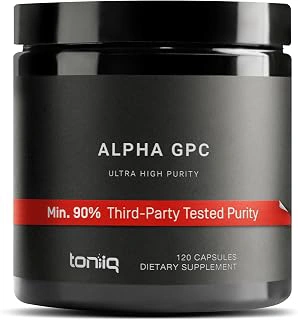
Toniiq Alpha GPC Capsules 600mg, 120 Count
Toniiq Alpha GPC Capsules deliver 600 mg of alpha-GPC per capsule, a dose near the upper end of the typical therapeutic range used in memory and cognitive support studies. Each 120-capsule bottle provides a four-month supply when taken at the standard 600 mg daily dose, or a two-month supply for users who prefer the higher the listed dose protocol some research has explored for acute cognitive benefit.
At $29.97 per bottle, the cost per serving is competitive for a high-potency alpha-GPC supplement. The 4.5 out of 5 rating reflects user satisfaction with the product's straightforward formulation and consistent dosing. Because alpha-GPC is fast-absorbing and acts quickly to raise acetylcholine levels, this product suits users who want a cholinergic nootropic with a rapid onset - particularly those seeking support for focus, learning tasks, or short-term memory during mentally demanding periods.
The 600 mg capsule format offers dosing flexibility: you can take one capsule for moderate cholinergic support or split dosing across the day if you prefer smaller, more frequent intake. Users sensitive to choline supplementation may find it easier to start with half a capsule to assess tolerance before moving to the full dose.
This supplement pairs well with a cholinergic strategy for memory retention, especially when you need cognitive support on a predictable schedule. The higher per-capsule dose and extended supply make it a practical choice for consistent daily use without frequent reordering.
- ✅ 600 mg per capsule at upper therapeutic range
- ✅ 120-count bottle provides four-month supply at standard dosing
- ✅ Fast-absorbing format for quick cholinergic support
- ✅ Competitive cost per serving at $29.97
- ⚠️ High per-capsule dose may require splitting for sensitive users
- ⚠️ No additional ingredients for stacking or synergy
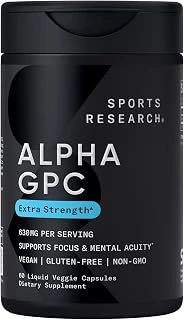
Sports Research Alpha GPC 630mg Extra Strength for Focus & Cognitive Support, 60 Liquid Capsules
Sports Research delivers 630 mg of Alpha-GPC per serving, a higher dose than many standard formulas and enough to meet the upper end of ranges used in cognitive research. Each liquid capsule is designed to support focus and cognitive function without requiring multiple pills to reach an effective amount. The 60-count bottle provides a two-month supply at one capsule daily or a one-month supply if you prefer the full 630 mg dose, giving you flexibility to adjust based on your tolerance and goals.
The liquid capsule format may offer smoother digestion compared to pressed tablets, and the single-ingredient design keeps the formula straightforward - no proprietary blends or added stimulants. At $26.95, this option sits in the mid-range for Alpha-GPC supplements, balancing potency with cost per serving. The 4.6 out of 5 rating reflects consistent user feedback on quality and noticeable cognitive support, though individual response to choline supplementation varies.
This product works well if you want the option to split doses or prefer a single capsule over taking two lower-dose pills. The extra strength per capsule also means fewer pills in your daily routine, which can simplify stacking with other nootropics. If you're comparing this to the Toniiq the listed dose option reviewed earlier, Sports Research offers slightly higher potency per capsule and a liquid format, while Toniiq provides purity testing transparency and a longer supply at a similar price point. Choose based on whether you prioritize dose flexibility and capsule type or third-party verification and value per bottle.
- ✅ 630 mg per capsule meets upper research ranges without multiple pills
- ✅ Liquid capsule format for smoother digestion
- ✅ 60-count supply allows flexible daily or split dosing
- ✅ Single-ingredient formula with no proprietary blends
- ⚠️ No third-party purity testing mentioned
- ⚠️ Higher per-capsule dose may require splitting for tolerance adjustment
- ⚠️ Mid-range price compared to bulk Alpha-GPC options
What is Bacopa Monnieri?
Bacopa monnieri is a creeping herb native to wetlands across Asia, used in Ayurvedic medicine for centuries to support memory and learning. The plant's cognitive effects come primarily from bacosides, a group of triterpenoid saponins that appear to influence neurotransmitter systems and promote synaptic communication. Modern research has focused on standardized extracts containing 45 - 55% bacosides, though concentrations vary by manufacturer.
A typical effective dose falls between 300 and 450 mg of standardized extract per day, often split into two servings. Unlike fast-acting stimulants, bacopa requires consistent use over eight to twelve weeks before noticeable memory retention improvements emerge. This delayed onset reflects its mechanism: bacopa seems to support structural changes in neurons rather than delivering an immediate neurochemical boost.
Most human studies have examined bacopa's effects on recall, information processing speed, and attention in healthy adults. Participants generally tolerate the herb well, though gastrointestinal discomfort appears occasionally when taken on an empty stomach. Because benefits accumulate gradually, bacopa suits individuals willing to commit to a multi-week regimen rather than those seeking same-day cognitive lift.
What is Alpha-GPC?
Alpha-GPC is a choline compound valued for its ability to cross the blood-brain barrier efficiently and deliver choline directly to neurons. Once inside the brain, it serves as a precursor to acetylcholine, the neurotransmitter responsible for learning, memory formation, and communication between brain cells. This direct pathway makes Alpha-GPC one of the most bioavailable forms of choline available as a supplement.
The compound is derived from soy lecithin or other phospholipid sources and typically appears in supplement form as alpha-glycerophosphocholine. Standard dosing ranges from 300 to 600 mg per day, often split into two doses. Unlike plant-based nootropics that require weeks of consistent use to show effects, Alpha-GPC works on a faster timeline - many users notice changes in focus and mental clarity within days of starting supplementation.
This quicker onset stems from its straightforward mechanism: the body rapidly converts Alpha-GPC into acetylcholine without the need for complex metabolic adaptations. For those seeking immediate cognitive support before exams, presentations, or demanding mental tasks, this responsiveness can be a practical advantage. The compound also appears in combination nootropic stacks, where it provides the choline foundation that other ingredients may depend on for optimal function.
Alpha-GPC has been studied primarily in older adults experiencing cognitive decline, though younger populations use it for memory support and attention. The difference in onset speed and mechanism compared to herbal options like Bacopa Monnieri shapes how each fits into different cognitive strategies.
How Each Nootropic Works in the Brain
Bacopa Monnieri and Alpha-GPC follow different pathways to influence memory, and understanding these mechanisms helps clarify which compound fits specific cognitive needs.
Bacopa Monnieri works through multiple routes. It modulates activity at serotonin and acetylcholine receptor sites, adjusting how neurons communicate without simply increasing neurotransmitter levels. Research shows it provides antioxidant protection to brain cells, reducing oxidative stress that can interfere with memory formation. Beyond immediate signaling, Bacopa appears to support dendritic growth - the branching structures neurons use to form new connections - which may explain why consistent use over weeks or months shows cumulative benefit in memory tasks.
Alpha-GPC operates more directly. It delivers choline across the blood-brain barrier, where the brain converts it into acetylcholine, the neurotransmitter central to attention, learning, and memory encoding. By increasing the raw material available for acetylcholine synthesis, Alpha-GPC can raise neurotransmitter levels relatively quickly, often within hours of supplementation. This makes it useful when acetylcholine availability is the limiting factor.
The practical difference: Bacopa supports memory through structural and protective changes that build over time, while Alpha-GPC addresses immediate neurotransmitter supply. If your goal is to counter age-related memory decline or support long-term brain health, Bacopa's multi-pathway action and neuroprotection may offer broader benefits. If you need faster support for focus and learning tasks, or suspect low acetylcholine availability, Alpha-GPC's direct precursor role becomes more relevant. Neither compound simply floods the brain with a single chemical; instead, they work with existing systems to shift how memory processes unfold.
Clinical Evidence for Memory Retention
Clinical research on both compounds reveals distinct evidence profiles. Bacopa monnieri has been studied primarily through multi-week supplementation trials, with meta-analyses indicating improvements in delayed recall and information processing speed after 8 to 12 weeks of consistent use. One systematic review of nine randomized controlled trials found that Bacopa enhanced free recall memory and reduced forgetting rates in healthy adults, though effect sizes varied across studies. The time-dependent response suggests cumulative this product changes rather than immediate cognitive shifts.
Alpha-GPC research has focused more narrowly on verbal memory and age-related cognitive decline. Several human trials have shown that 300 - 600 mg daily can improve performance on verbal learning tasks and attention measures, particularly in older populations. A six-month trial in patients with mild to moderate cognitive impairment reported significant gains in mini-mental state scores compared to placebo. However, these findings often involve clinical populations rather than healthy young adults, limiting generalizability.
Both evidence bases have notable gaps. Bacopa trials frequently use standardized extracts with varying bacosides content, making direct comparisons difficult. Alpha-GPC studies tend to be shorter in duration and sometimes industry-funded, which raises questions about replication. Few head-to-head trials exist, and optimal dosing windows remain debated. Long-term safety data beyond six months is sparse for both compounds, and most studies exclude individuals on psychiatric medications or with significant health conditions.
The takeaway: Bacopa shows stronger evidence for enhancing consolidation and long-term retention in healthy users willing to wait weeks for results. Alpha-GPC demonstrates faster onset for verbal recall and may offer more immediate support during cognitively demanding periods, though much of its evidence comes from populations already experiencing decline.
Beyond Memory: Additional Cognitive and Mood Effects
Memory retention sits at the center of this comparison, but both Bacopa monnieri and Alpha-GPC influence other aspects of cognition and well-being that can shape your decision.
Bacopa has demonstrated anxiolytic properties in several human trials. Participants taking standardized Bacopa extracts reported lower anxiety scores and improved stress tolerance compared to placebo groups. The bacosides appear to modulate serotonin and dopamine pathways, which may explain why some users notice a calmer mental state alongside improved recall. If you experience test anxiety or work-related stress that interferes with focus, Bacopa's dual action on memory and mood could offer meaningful support.
Alpha-GPC operates primarily through the cholinergic system, boosting acetylcholine availability in both cognitive and motor neurons. This translates to sharper focus during demanding tasks and, in some studies, improved power output and reaction time during physical activity. Athletes and individuals who blend mental and physical performance goals sometimes favor Alpha-GPC for this reason. The compound does not carry the same anxiolytic profile as Bacopa, so it works best when stress is not a limiting factor.
Neither supplement addresses mood disorders or replaces targeted interventions for anxiety. Bacopa's calming effect is subtle and develops over weeks, while Alpha-GPC's cognitive sharpness appears more quickly but without direct stress modulation. Weigh these secondary benefits against your daily routine: if you juggle high-pressure deadlines and occasional nervousness, Bacopa's broader influence may suit you. If you need rapid focus and engage in regular training, Alpha-GPC's cholinergic boost aligns more closely with those demands.
Side Effects and Safety Considerations
Understanding the safety profile of each nootropic helps you weigh tolerance against benefit. Bacopa monnieri and Alpha-GPC share some overlapping side effects, but differ in frequency and mechanism-related concerns.
Bacopa monnieri is generally well tolerated in clinical doses (300 - 450 mg standardized extract daily). The most common side effects are gastrointestinal - nausea, cramping, or loose stools - particularly during the first week or two as your system adjusts. A smaller number of users report mild fatigue or increased sleepiness, which may reflect Bacopa's adaptogenic and anxiolytic properties. Taking Bacopa with food often reduces stomach upset. Long-term human studies spanning twelve weeks show a consistent safety record, with most adverse events resolving spontaneously.
Alpha-GPC raises acetylcholine levels quickly, and this cholinergic boost can trigger side effects in sensitive individuals. Headaches are the most frequently reported complaint, likely due to excess acetylcholine or an imbalance with other neurotransmitters. Some users experience brain fog, irritability, or digestive discomfort - especially at doses above 600 mg per day. A few reports link very high or prolonged Alpha-GPC intake to mood changes, though controlled trials at standard doses (300 - 600 mg daily) have not consistently reproduced these effects. If you are taking medications that affect acetylcholine - such as anticholinergics for overactive bladder or certain Alzheimer's drugs - Alpha-GPC may interact, so medical clearance is important.
Both compounds carry specific contraindications. Bacopa may enhance the effects of thyroid hormone medications or sedatives, so dose adjustments or monitoring may be needed. Alpha-GPC should be used cautiously if you have a history of seizures, bipolar disorder, or other cholinergic-sensitive neurological conditions. Pregnant or breastfeeding individuals should avoid both supplements due to limited safety data in these populations.
Start with the lower end of the effective dose range, monitor your response over the first two weeks, and consult a healthcare provider if you take prescription medications or have a pre-existing health condition. Tolerability differences can guide your choice: if gastrointestinal sensitivity is a concern, Alpha-GPC may suit you better; if you are prone to headaches or mood shifts, Bacopa's gentler cholinergic influence may be the safer starting point.
The Verdict: Context Determines Superiority
Neither Bacopa Monnieri nor Alpha-GPC holds a universal advantage for memory retention - your choice depends on cognitive goals, timeline, and tolerance for different mechanisms. Bacopa delivers sustained improvements in memory consolidation and recall over weeks to months, with additional anti-anxiety effects that benefit users whose cognitive performance suffers under stress. Alpha-GPC provides faster cholinergic support, often within days, making it more suitable for individuals seeking immediate boosts in attention and working memory or those addressing age-related acetylcholine decline.
The two compounds work through distinct pathways: Bacopa modulates synaptic communication and protects neurons from oxidative damage, while Alpha-GPC directly supplies choline for acetylcholine synthesis. This difference means they address different cognitive bottlenecks. If your memory struggles stem from information overload, chronic stress, or long-term retention deficits, Bacopa's adaptogenic profile and bacosides offer broader support. If you need sharper focus during demanding tasks or experience brain fog linked to cholinergic deficiency, Alpha-GPC's targeted mechanism proves more efficient.
Stacking the two is common in nootropic communities, leveraging Bacopa's long-term neuroprotection alongside Alpha-GPC's acute cognitive lift. However, this approach requires careful attention to dosing and individual response - some users report headaches from excess choline or digestive upset from Bacopa, particularly when combining supplements. Start with one compound, track cognitive changes over four to six weeks, then consider adding the second if results plateau.
Consult a healthcare provider before beginning either supplement, especially if you take anticholinergic medications, blood thinners, or have thyroid conditions. Evidence-based experimentation - using consistent doses, objective memory assessments, and honest self-monitoring - remains the most reliable path to determining which nootropic aligns with your specific cognitive needs.