We may earn a commission when you buy through links on this page, at no extra cost to you. How this works.
Sitting still for twenty minutes sounds simple until your knees protest, your hips lock, or your lower back rounds into a slouch that turns every breath shallow. The cushion beneath you isn't decoration - it changes the angle of your pelvis, the load on your joints, and whether your diaphragm can move freely enough to signal your nervous system that it's safe to shift into rest-and-digest mode.
We built this guide around five functional priorities: fill adjustability so you can dial in the exact height and firmness your hips need, pelvic tilt support that keeps your spine naturally stacked without effort, knee and hip clearance to prevent compression pain during longer sessions, washability for sweat and indoor dust, and shape retention so the cushion doesn't flatten into a pancake after three months of daily use.
Posture stability matters because a forward pelvic tilt opens the hip angle, reduces strain on the lumbar spine, and gives the diaphragm room to descend fully on each inhale. When your structure is stable, breath slows naturally, heart rate variability improves, and the body reads the signal as safety rather than threat. A cushion that collapses or tilts you backward works against that chain.
Every product in this comparison uses verified specifications: listed fill type, stated dimensions, cover fabric, and weight capacity. it helps to compare buckwheat hull sets that let you remove handfuls of fill, memory foam rounds that respond to body heat, and traditional zafu designs with different loft options. No hand-waving about "premium comfort" - just measurements, material trade-offs, and how each design solves specific sitting problems for different body types and flexibility ranges.
Quick comparison
| ellier Zafu & Zabuton Meditation Cushion Set with Buckwheat & Memory Foam (Khaki) | Check current price |
| HOMBYS Large Foam Meditation Cushion with Knee and Hip Support | View full specs |
| Meditation Zafu Cushion Set with Buckwheat Hulls & Memory Foam (Green) | See latest reviews |
Our Selection Criteria for Meditation Cushion Performance
Choosing a meditation cushion that supports longer sessions requires looking past surface appeal and evaluating how the design responds to real postural demands. Five criteria guide the selections in this review, each grounded in measurable attributes that affect comfort and alignment over time.
Fill material and loft retentiondetermine how well a cushion holds its shape under your body weight. Buckwheat hulls shift to conform to individual contours and remain firm, while memory foam compresses predictably but may flatten with heat. Kapok offers plant-based resilience but settles faster than buckwheat. A cushion that loses height mid-session forces the pelvis lower, collapsing the natural lumbar curve and adding strain to the lower back.
Height and pelvic tilt geometrycontrol the forward rotation of the pelvis, which in turn opens the hip flexors and reduces tension in the knees. Most practitioners need 5 to 8 inches of elevation to achieve a neutral or slightly anterior pelvic tilt in cross-legged postures. Cushions below 5 inches may work for flexible hips, but they leave many users rounding the lower back. Adjustable-height designs or modular stacks let you dial in the angle that keeps your spine upright without effort.
Hip and knee support surface areamatters when sessions extend beyond 20 minutes. A wider zafu base distributes pressure across more tissue, reducing hot spots at the sit bones. Flat bench-style designs spread weight along the thighs, which can relieve knee compression but may feel less stable during shifts in posture. Narrow or steeply rounded tops concentrate load and fatigue the pelvis faster.
Cover durability and washabilityseparate cushions built for occasional use from those designed for daily practice. Removable, machine-washable covers with sturdy zippers extend the life of the fill and simplify maintenance. Organic cotton and linen resist pilling and hold color through repeated washing, while synthetic blends may trap heat or wear thin at seams. Inner liners that contain the fill make refilling or adjusting loft straightforward.
Value relative to price pointweighs construction quality, material sourcing, and feature set against cost. A cushion priced under $40 may use polyester fill and a non-removable cover, which limits adjustability and long-term hygiene. Mid-range options often include organic fabrics, buckwheat or kapok fill, and dual-layer construction. Premium sets bundle matching support cushions, carry handles, and certified organic materials, justified when the design and durability align with frequent, extended practice.
These five this product translate abstract claims into concrete performance markers, making it easier to match a cushion to your flexibility, session length, and posture goals.
How Pelvic Tilt and Spinal Alignment Support Parasympathetic Tone
Cushion height directly influences pelvic position, which in turn shapes the entire spinal column during seated meditation. When your hips sit higher than your knees, the pelvis naturally tilts forward slightly - called anterior pelvic tilt - allowing the lumbar spine to maintain its gentle inward curve. This alignment reduces muscular effort along the back and neck, which matters because sustained muscle tension activates stress-related pathways that work against the calm state most people seek in meditation.
A neutral lumbar curve also creates more room for the diaphragm to descend fully during inhalation. When the spine rounds or the pelvis tucks under, the abdominal cavity compresses, limiting how deeply you can breathe without pushing or straining. Shallow breathing keeps the chest and accessory muscles engaged, which tends to maintain a more alert, sympathetic tone rather than the restful parasympathetic state associated with long, slow breaths.
The vagus nerve, a key player in parasympathetic activation, responds to signals from the diaphragm and the stretch receptors in the lungs. Unrestricted breathing - made easier by proper spinal alignment - supports vagal tone over time. This is not a therapeutic intervention but a mechanical advantage: when posture allows relaxed, full breathing cycles, the body has an easier pathway into calm.
Cushion choice becomes practical when you recognize that different body proportions need different amounts of lift. Taller cushions work well for tighter hips or longer femurs; lower profiles suit flexible practitioners or those with shorter legs. The goal is to find the height that lets your pelvis tilt forward just enough to keep your spine stacked without active correction, so you can hold the posture comfortably for the duration of your session.
Fill Material Comparison: Buckwheat Hulls vs. Memory Foam
Choosing between buckwheat hulls and memory foam determines how your cushion adapts to your body and how you manage it over time. Buckwheat hulls shift under pressure, allowing you to adjust the loft by adding or removing fill until you find the exact height and firmness that supports your pelvis in alignment. The hulls create small air channels that keep the cushion cooler during long sessions, and the subtle rustle provides tactile feedback as you settle into position. The tradeoff is weight - buckwheat-filled cushions are noticeably heavier and less practical for travel or frequent relocation.
Memory foam offers consistent, predictable support without the option to customize loft. The foam compresses evenly under your sit bones and returns to its original shape between sessions, making it a reliable choice if you prefer a set-it-and-forget-it approach. Memory foam cushions are lighter and easier to carry, but they retain more heat and the density cannot be adjusted to match changes in your flexibility or sitting preference. If your practice involves moving between spaces or you want a portable solution, memory foam reduces the hassle. If you value the ability to fine-tune your setup and prefer traditional, this product materials, buckwheat hulls provide that control at the cost of added bulk.
Single Cushion vs. Zafu-Zabuton Set: Which Setup Fits Your Space?
Choosing between a single cushion and a zafu-zabuton set depends on how much floor space you have and whether you need extra support under your knees and ankles. A single meditation cushion typically measures 15 to 18 inches in diameter and 5 to 7 inches in height, making it easy to tuck into a closet or carry in a bag. Sets, on the other hand, pair a raised zafu with a flat zabuton mat that often spans 30 by 28 inches or more, providing a padded surface that extends well beyond your seated footprint.
If you sit cross-legged or in half lotus, the larger mat cushions your lower legs and reduces pressure on your ankles. That extra coverage becomes especially helpful during sessions longer than twenty minutes, when hard floors start to cause discomfort. Single cushions work well for kneeling postures or shorter sits where you don't need the added real estate, and they're the better fit if you move between rooms or take your practice outdoors.
Storage is the other practical trade-off. A zafu-zabuton set requires dedicated floor or shelf space, while a single cushion can slide under a bed or hang on a hook if it has a carry handle. Sets also tend to weigh more - often six to ten pounds combined - so portability drops. If your meditation corner is fixed and you have the square footage, the set delivers more stability and comfort. If you share space or practice in different locations, a single cushion keeps setup and teardown simple without sacrificing the lift you need for proper pelvic tilt.
Practical Tips for Extending the Life of Your Meditation Cushion
Buckwheat-filled cushions benefit from regular rotation - every few weeks, shake and turn the cushion to redistribute the hulls evenly and prevent compaction in the center where you sit most often. This simple step maintains loft and keeps the surface level, extending usable life by months or even years.
Most meditation cushions come with removable covers designed for washing. Check the care label before laundering; many cotton and linen blends tolerate cold-water machine washing on a gentle cycle, while some fabrics require spot cleaning. Always air-dry covers to avoid shrinkage, and wait until they are completely dry before reassembling to prevent mildew inside the fill.
Store cushions in a dry, well-ventilated area away from direct sunlight, which can fade fabric and degrade elastic. If you stack multiple cushions, place the heaviest on the bottom to avoid crushing lighter fills like kapok or memory foam. Humid environments accelerate wear on natural fibers and can cause buckwheat hulls to retain moisture, so a closet shelf or this product storage bin works better than a damp basement.
Inspect seams, zippers, and stitching every few months. Loose threads or small gaps can quickly widen under the stress of daily use, spilling fill and requiring costly repairs. Catching minor issues early - reinforcing a seam with a few hand stitches or replacing a zipper pull - keeps the cushion functional and saves you from replacing it prematurely.
Final Thoughts: Matching Cushion Design to Your Practice Goals
Choosing the right meditation cushion comes down to four practical factors: fill type and whether you can adjust it, the footprint and coverage of any included mat, how easily you can move or store the set, and the experience other users report in verified reviews.
Fill adjustability matters because flexibility and comfort needs vary. Buckwheat hulls let you dial in height and firmness by adding or removing handfuls. Memory foam arrives pre-shaped and softens under weight but cannot be customized after purchase. If your hip flexibility or preferred posture might change as your practice deepens, adjustable fill offers more runway.
Mat size determines how much floor contact your knees and ankles receive during longer sessions. A generous zabuton spreads pressure across a wider area, which can make a meaningful difference past the twenty-minute mark. Smaller or no-mat designs work when you already have a yoga mat or rug, but they shift the comfort equation onto that surface.
Portability becomes relevant if you move between rooms, travel to group sits, or need to reclaim floor space daily. Lighter cushions and those with carry handles or storage bags simplify transport. Heavier sets with thick mats stay put but require dedicated space.
Verified user ratings highlight real-world durability, cover quality, and whether the cushion holds its shape over months of use. Pay attention to comments about seam strength, zipper function, and whether the fill compresses or migrates unevenly.
Revisit the checklist above and compare each product's specifications against your own sitting habits, available floor area, and how often you plan to move the cushion. The best choice supports your posture without requiring you to compensate, fits the space you have, and aligns with how adjustable or portable you need the design to be.
Checklist: Choosing the Right Meditation Cushion for Your Practice
- Measure your hip flexibility and preferred seated posture (cross-legged, kneeling, or half-lotus)
- Decide between adjustable buckwheat fill or consistent memory foam support
- Evaluate your practice length to determine mat coverage and knee support needs
- Check cover washability and fabric durability for long-term use
- Consider storage space and portability if you practice in multiple locations
- Compare verified ratings and price points within your budget range
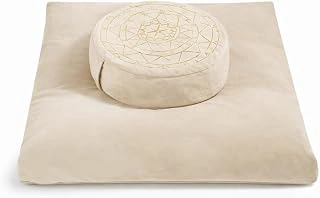
ellier Zafu & Zabuton Meditation Cushion Set with Buckwheat & Memory Foam (Khaki)
The ellier Zafu & Zabuton Meditation Cushion Set delivers the traditional Japanese meditation setup in one package, pairing a buckwheat-filled zafu with a memory foam zabuton mat. Priced at $66.49 with a 4.4/5 rating, this khaki-toned set addresses both seat height and knee protection - two priorities that matter when sessions stretch beyond twenty minutes.
The zafu uses buckwheat hulls, which you can add or remove to dial in your preferred seat height and firmness. This adjustability helps if you're experimenting with different postures or sharing the cushion with someone who needs a different loft. The zabuton beneath provides a padded base that cushions knees, ankles, and feet against hard floors, reducing the pressure points that can cut a session short.
Memory foam in the mat layer offers consistent support without the lumpiness sometimes found in cotton-batting alternatives. The khaki fabric blends into neutral spaces without drawing attention, and the set's portability is reasonable if you move between rooms or take cushions to a group practice.
The tradeoff is footprint and cost. A two-piece set occupies more floor space than a single cushion and requires more storage when not in use. At this price point, you're paying for full-body cushioning and the flexibility of buckwheat fill; if knee protection isn't a concern or your budget is tighter, a standalone zafu will cost less and pack smaller.
This set works best for practitioners who sit in traditional cross-legged or kneeling postures and want ergonomic support from hips to ankles. The buckwheat fill and memory foam base make it a practical choice for longer sessions where comfort directly affects how long you can maintain focus.
- ✅ Buckwheat fill allows adjustable loft and firmness
- ✅ Memory foam zabuton cushions knees and ankles on hard floors
- ✅ Traditional two-piece design supports full-body posture
- ✅ Neutral khaki fabric suits a range of spaces
- ⚠️ Larger storage footprint than single-cushion options
- ⚠️ Higher price reflects two-piece construction and materials
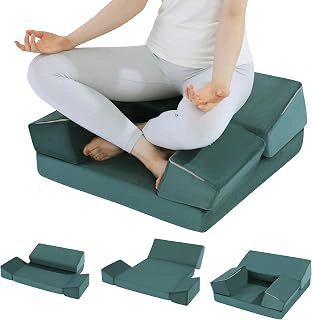
HOMBYS Large Foam Meditation Cushion with Knee and Hip Support
The HOMBYS Large Foam Meditation Cushion ($59.99, 4.2/5) delivers a single-piece foam platform designed to support both knees and hips during seated practice. Instead of a zafu-and-mat pairing, this cushion extends a contoured foam surface that accommodates kneeling postures and cross-legged sits without requiring separate components.
The all-foam construction means the cushion arrives ready to use - no fill adjustment or settling period. The larger footprint provides room to shift weight between knees and hips, which can reduce pressure on either joint during extended sessions. Because it's one piece, storage is simpler than a buckwheat zafu set, and the lighter weight makes it easier to move between rooms or pack for travel.
That single-piece design also removes the option to add or remove fill. Zafu sets with buckwheat or kapok let you customize loft and firmness; the HOMBYS cushion offers fixed support density. The foam surface sits directly on the floor, so you won't have the layered cushioning that a separate meditation mat or yoga mat provides. If you practice on hardwood or tile, you may want to place the cushion on a thin mat to protect the floor and add a buffer layer.
Compared to the Florensi or Seat of Your Soul zafus, the HOMBYS cushion trades fill customization and a dedicated mat for a wider, integrated platform that supports multiple postures in one product. It's a practical choice when you want straightforward setup, prefer foam to natural fill, or need a cushion that handles both kneeling and seated positions without swapping components.
- ✅ Single-piece foam design - no assembly or fill adjustment required
- ✅ Larger surface area supports both knee and hip placement
- ✅ Lighter and simpler to store than multi-piece zafu sets
- ✅ Contoured edges accommodate kneeling and cross-legged postures
- ⚠️ Fixed foam density with no option to add or remove fill
- ⚠️ No separate mat layer; may require additional padding on hard floors
- ⚠️ Less loft customization compared to buckwheat or kapok zafus
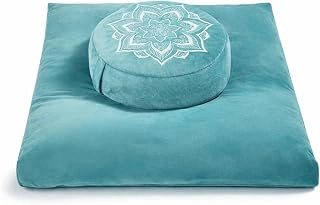
Meditation Zafu Cushion Set with Buckwheat Hulls & Memory Foam (Green)
The Meditation Zafu Cushion Set with Buckwheat Hulls & Memory Foam arrives in green with a traditional round zafu paired with a rectangular base mat. At $69.34, it carries a 4.7 out of 5 rating, the highest among the cushions reviewed here, signaling strong user satisfaction.
Buckwheat hulls fill the zafu, letting you adjust loft and firmness by adding or removing material. The memory foam base mat cushions knees and ankles during longer sits. This hybrid approach gives you the moldable, Meditation Zafu Cushion Set with Buckwheat Hulls & Memory Foam (Green) support of buckwheat in the zafu and the forgiving cushion of foam underfoot, useful when sessions stretch past twenty minutes and pressure points begin to announce themselves.
The green fabric and classic round shape fit well in spaces where aesthetics matter. If you value the ability to fine-tune seat height and prefer natural fill that conforms over time, this set delivers both. The buckwheat shifts with your posture, and the memory foam reduces hard-floor contact without adding bulk.
With the top verified rating in this group, the set suits practitioners who want adjustability, proven user feedback, and a look that aligns with traditional meditation settings. The price reflects the dual-fill design and the flexibility it offers for different body types and sitting styles.
- ✅ 4.7/5 rating, highest verified score in this comparison
- ✅ Buckwheat hulls allow loft and firmness adjustment
- ✅ Memory foam base mat cushions knees and ankles
- ✅ Traditional green aesthetic fits meditation spaces
- ⚠️ At $69.34, higher price than single-cushion options
- ⚠️ Buckwheat requires occasional redistribution for even support
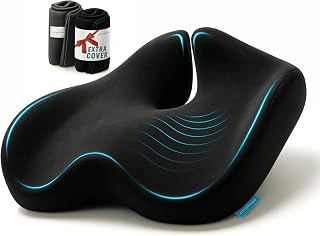
SitCushion Extra Large Memory Foam Seat Cushion for Office Chairs (Black)
The SitCushion Extra Large Memory Foam Seat Cushion offers a dual-use approach that bridges meditation practice and daily office ergonomics. Priced at $59.99 with a 4.4/5 rating, this cushion departs from the traditional zafu and mat format in favor of a single memory foam platform that adapts to both floor sitting and desk chair use.
The extra-large footprint provides enough surface area for cross-legged postures on the floor, while the memory foam core compresses to support body weight without bottoming out during longer sessions. Because the cushion remains flat rather than elevated, practitioners sit lower to the ground compared to a zafu - this changes hip angle and may require more hip flexibility to maintain a neutral spine. For those who already sit comfortably on the floor, the memory foam layer adds cushioning under the sit bones and knees without the bulk of a separate mat.
Where this cushion excels is portability and space efficiency. A single piece replaces both a meditation cushion and an office chair pad, making it practical for small living spaces or practitioners who move between home and workplace. The black cover blends into professional settings, and the foam construction keeps the cushion light enough to carry in a tote or backpack. However, the lack of a traditional zafu lift means the pelvis tilts less forward, which can flatten the lumbar curve and increase effort in the lower back during extended sits. Practitioners with tight hamstrings or lower back sensitivity may find the flat profile requires more active postural engagement than a raised cushion.
The memory foam also retains some heat during longer sessions, especially in warmer rooms, whereas natural-fill cushions like buckwheat allow more airflow. On the office chair side, the cushion adds a layer of contouring support that can reduce pressure on the tailbone during desk work, though it won't transform a poorly adjusted chair into an ergonomic workstation.
This cushion suits practitioners who value flexibility over specialized design - those who meditate for multiple minutes and then move the same cushion to a desk chair, or travelers who need one multipurpose item. It's less ideal for practitioners seeking the postural lift of a zafu or the dedicated comfort of a thick meditation mat. The tradeoff is clear: adaptability and portability in exchange for the biomechanical advantages of height and natural fill.
- ✅ Dual-use design works on floor and office chair
- ✅ Extra-large surface area accommodates cross-legged postures
- ✅ Portable and space-efficient for small spaces or travel
- ✅ Memory foam cushions sit bones without bottoming out
- ✅ Neutral black cover suits professional environments
- ⚠️ Flat profile offers no zafu-style pelvic tilt or lumbar support
- ⚠️ Memory foam retains more heat than natural-fill cushions
- ⚠️ Requires greater hip flexibility and active posture control
- ⚠️ Not a replacement for dedicated meditation mat thickness