We may earn a commission when you buy through links on this page, at no extra cost to you. How this works.
Choosing a synbiotic supplement for gut health requires understanding the difference between prebiotics, probiotics, postbiotics, and synbiotics - terms often blurred by marketing language but backed by distinct biological roles. Prebiotics are fibers that feed beneficial bacteria already in your gut, probiotics introduce live microorganisms intended to colonize or transit the digestive system, postbiotics are the metabolic byproducts of bacterial fermentation, and synbiotics combine prebiotics and probiotics in a single formulation designed to work together. The confusion typically arises because labels emphasize benefits without clarifying which component drives which outcome, making it difficult to match a product to your actual needs.
Effective selection hinges on four practical criteria: ingredient transparency that lists specific strains and prebiotic sources rather than proprietary blends, strain specificity that identifies each probiotic by genus, species, and strain designation, formulation type that suits your digestive tolerance and lifestyle, and alignment with personal goals such as occasional digestive comfort, regularity support, or maintaining microbial diversity during dietary changes. These criteria shift focus from vague wellness claims to verifiable attributes you can compare across products.
This guide walks through each category, explains how synbiotics differ from standalone prebiotics or probiotics, highlights common formulation mistakes that reduce stability or efficacy, and outlines decision points that help you prioritize one product over another without requiring advanced microbiology knowledge. The goal is clarity in a crowded supplement category, not medical advice - consult a healthcare provider if you have diagnosed digestive conditions, immune concerns, or take medications that may interact with live bacteria.
Quick comparison
| Organic Synbiotic 3-in-1 Prebiotic, Probiotic & Postbiotic Liquid Drops Supplement | Check current price |
| Nature M.D. Synbiotic 365 Triple Action Prebiotic and Probiotic Supplement | View product details |
| THORNE Complete Biotic Probiotic, Prebiotic & Postbiotic Supplement | See availability |
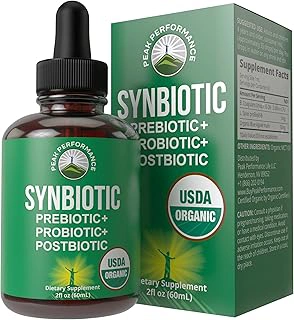
Organic Synbiotic 3-in-1 Prebiotic, Probiotic & Postbiotic Liquid Drops Supplement
Swallowing capsules can be a deal-breaker for some people, and this liquid drop supplement offers a straightforward alternative with a 3-in-1 formula that combines prebiotics, probiotics, and postbiotics in one bottle. At $26.95, it sits in the mid-range for synbiotic products and carries a 4.3 out of 5 rating, reflecting solid user feedback on the convenience and organic sourcing.
The liquid format allows you to measure doses with the included dropper, making it easier to adjust serving sizes or add to smoothies and drinks if you prefer not to taste it straight. Because this product is certified organic, you avoid synthetic fillers and non-organic carriers that sometimes appear in encapsulated supplements. The inclusion of postbiotics - metabolites produced during fermentation - adds a third dimension to the formula, which may support gut barrier function alongside the live cultures and fiber.
That said, liquid supplements require refrigeration after opening to preserve the live probiotic strains, so plan for adequate fridge space and remember to keep the bottle sealed tightly. Some users note an earthy or tangy flavor, which is typical for fermented formulations; mixing with juice or a smoothie can mask the taste if it bothers you. The dropper delivery also means you'll need to commit to a daily routine rather than tossing a pill bottle in your bag when traveling.
This supplement works well for anyone who struggles with pill fatigue, needs flexible dosing, or wants an organic 3-in-1 approach without hunting down separate prebiotic, probiotic, and postbiotic products. If you're comfortable with refrigeration and are looking for a format that integrates easily into morning drinks, this offers a practical balance of convenience and comprehensive gut support. Check current price
- ✅ Liquid format bypasses the need to swallow capsules
- ✅ Combines prebiotics, probiotics, and postbiotics in one formula
- ✅ Certified organic with no synthetic fillers
- ✅ Dropper allows flexible dosing and easy mixing
- ⚠️ Requires refrigeration after opening
- ⚠️ Earthy or tangy taste may not appeal to everyone
- ⚠️ Less portable than capsule alternatives for travel
Who This Guide Is For
This guide is for you if you're dealing with mild digestive discomfort, occasional bloating, or energy inconsistency and want to understand how gut health supplements might help. It's designed for people who want to take a proactive approach to digestive wellness but feel overwhelmed by conflicting advice about prebiotics, probiotics, and synbiotics. If you've found yourself staring at rows of supplement bottles, unsure which combination of bacterial strains or fiber types makes sense for your situation, this article will walk you through the decision framework step by step.
You don't need a diagnosed digestive condition to benefit from this information. Many people explore gut health supplements as part of a broader wellness strategy - supporting regularity, reducing occasional gas, or maintaining digestive comfort during travel or dietary changes. This guide focuses on how to evaluate products based on ingredient transparency, dosage clarity, and realistic expectations, not on treating medical conditions.
We assume you're comfortable reading labels and comparing formulations, but you want evidence-based clarity to cut through marketing language. You'll learn what prebiotics and probiotics actually do, how synbiotics combine both, and which factors matter most when choosing a product that aligns with your goals. This is not a replacement for medical advice; if you have persistent symptoms, inflammatory bowel disease, immune compromise, or other diagnosed conditions, consult a healthcare provider before starting any supplement regimen.
The takeaway: this guide serves the informed consumer who values transparency, wants to avoid common purchasing mistakes, and seeks a practical framework for navigating the gut health supplement category with confidence.
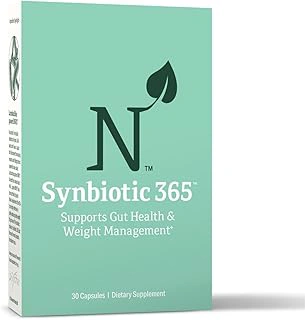
Nature M.D. Synbiotic 365 Triple Action Prebiotic and Probiotic Supplement
Nature M.D. Synbiotic 365 Triple Action Prebiotic and Probiotic Supplement sits at the higher end of the price spectrum at $52.99, positioning itself as a premium option with triple-action marketing. The product carries a 4.4 out of 5 rating and targets users looking for a combined prebiotic and probiotic formula in a single supplement.
The main tradeoff here is cost per serving. At this price point, the supplement becomes a more significant monthly investment compared to mid-range synbiotics, so the decision comes down to whether the formulation and brand reputation justify the premium. Without detailed verified ingredient counts or strain specifications available, the value proposition relies heavily on the triple-action branding and user satisfaction reflected in the 4.4 rating.
This option makes the most sense for users who prioritize a well-reviewed synbiotic formula and are comfortable with a higher monthly supplement budget. If you're comparing several options and cost is a primary concern, you'll want to weigh the per-serving expense against products with similar ratings at lower price points. The consistent availability and solid rating suggest reliable manufacturing and customer satisfaction, which can matter when committing to a long-term gut health regimen.
Consider this supplement if you value established user feedback and are willing to invest more for a formula marketed as comprehensive, but compare the price-per-day cost carefully against your budget and the verified specs of competing synbiotics.
- ✅ Higher user rating of 4.4 out of 5
- ✅ Triple-action synbiotic formulation combining prebiotics and probiotics
- ✅ Consistent stock availability
- ⚠️ Premium price point at $52.99
- ⚠️ Higher cost per serving compared to mid-range options
- ⚠️ Limited verified ingredient detail available
Prebiotics, Probiotics, Postbiotics, and Synbiotics: What Each One Does
Prebiotics are non-digestible plant fibers - such as inulin, fructooligosaccharides (FOS), and galactooligosaccharides (GOS) - that pass through the upper digestive tract and serve as food for beneficial bacteria in the colon. They support the growth of existing microbial populations but do not introduce new strains.
Probiotics are live microorganisms, most commonly from the Lactobacillus and Bifidobacterium families, that temporarily populate the gut when consumed in adequate amounts. They can help restore microbial balance during or after disruption, though they typically do not colonize permanently.
Postbiotics are the metabolic byproducts produced when probiotics ferment prebiotics. These include short-chain fatty acids (such as butyrate), enzymes, peptides, and cell wall fragments. Postbiotics support the gut lining, help maintain barrier integrity, and contribute to immune signaling without requiring live organisms to survive transit or storage.
Synbiotics combine prebiotics and probiotics in a single formulation, pairing specific fibers with compatible bacterial strains to enhance survival, colonization, and metabolic activity. The prebiotic component provides immediate nourishment for the probiotic strains, which may improve their ability to exert beneficial effects once they reach the intestines.
Each category plays a distinct role: prebiotics nourish, probiotics populate, postbiotics signal, and synbiotics integrate the first two functions. Understanding these differences helps you match a supplement to your specific goals, whether that's supporting diversity, restoring balance after antibiotics, or addressing digestive comfort.
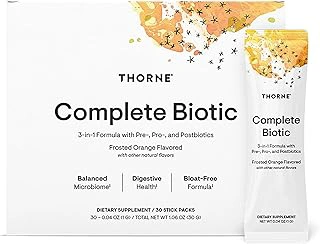
THORNE Complete Biotic Probiotic, Prebiotic & Postbiotic Supplement
THORNE Complete Biotic delivers all three components - probiotics, prebiotics, and postbiotics - in one formula, making it a straightforward choice for readers who want a synbiotic supplement without assembling separate products. The brand is well-regarded in the biohacking and wellness tech communities for its third-party testing and transparency, which adds confidence when comparing options at this price point.
This formula includes multiple probiotic strains alongside prebiotic fibers and postbiotic metabolites, designed to support digestive balance and microbial diversity. The postbiotic addition distinguishes this supplement from many competitors that offer only probiotics and prebiotics. With a 4.6 rating, user feedback reflects consistent quality and tolerability, though individual responses to any synbiotic can vary based on baseline gut composition.
At $46.00, THORNE sits in the premium range compared to standalone probiotic or prebiotic products. The tradeoff is convenience and the complete biotic approach: you get researched strains, prebiotic fuel, and postbiotic compounds in a single capsule, backed by a brand that prioritizes third-party verification. For readers prioritizing brand trust, ingredient transparency, and a streamlined routine, the higher cost may align with those values. If budget is a primary concern or you prefer to customize each component separately, a modular approach with individual probiotic and prebiotic products may be more flexible.
THORNE's reputation for rigorous testing makes this a solid pick for readers who want assurance that label claims match capsule content. The inclusion of postbiotics adds a layer of support that many entry-level synbiotics skip, which can be valuable for those looking to go beyond basic probiotic supplementation.
- ✅ Combines probiotics, prebiotics, and postbiotics in one formula
- ✅ Third-party tested with strong brand reputation in wellness communities
- ✅ 4.6 rating reflects consistent user satisfaction
- ✅ Postbiotic inclusion sets it apart from many competitor synbiotics
- ⚠️ $46.00 price point is higher than many standalone probiotic or prebiotic options
- ⚠️ Less flexibility for readers who prefer to customize or adjust individual components separately
What Matters Most When Choosing a Synbiotic Supplement
Choosing a synbiotic supplement starts with understanding the numbers and ingredients that matter most for your gut. The probiotic CFU count - measured in billions - indicates how many live bacteria are present at the time of manufacture, but higher CFU counts don't automatically mean better results. For most people, a range of 5 to 50 billion CFU per serving supports daily gut health, while formulas above 50 billion are often designed for more targeted use after digestive disruption or antibiotic courses.
Strain diversity is equally important. Look for supplements that list specific strains by genus, species, and strain designation - such as Lactobacillus rhamnosus GG or Bifidobacterium longum BB536 - rather than generic "probiotic blend" language. Multi-strain formulas tend to offer broader support across digestion, immune function, and gut lining health, but single-strain products can be useful if you're targeting a specific concern backed by research on that strain.
The prebiotic component should include soluble fibers or compounds that resist digestion in the upper GI tract and reach the colon intact. Common types include inulin, fructooligosaccharides (FOS), galactooligosaccharides (GOS), and partially hydrolyzed guar gum. Effective doses typically range from 2 to 8 grams per serving. If a product lists prebiotics but provides less than 1 gram, the benefit may be minimal.
Postbiotics - such as short-chain fatty acids, cell wall fragments, or metabolites - are a newer addition to synbiotic formulas. While research is still emerging, their inclusion can support gut barrier integrity and immune signaling without requiring live bacteria to colonize. Not every synbiotic includes postbiotics, but their presence can add value if you're looking for a more comprehensive formula.
Formulation format affects stability and convenience. Capsules with delayed-release or enteric coatings protect probiotic strains from stomach acid, increasing the likelihood they reach the intestines alive. Liquid formulas and gummies may be easier to take but often require refrigeration and have shorter shelf lives. Powders offer flexibility in dosing but can be less convenient for travel.
Third-party testing and certifications provide transparency. Look for labels that mention testing for potency, purity, and contamination by independent labs such as NSF International, USP, or ConsumerLab. Organic or non-GMO certifications indicate cleaner ingredient sourcing but don't directly measure probiotic viability or effectiveness.
Price per serving varies widely, from under $0.50 to over $3.00 per dose. Higher cost doesn't always correlate with better outcomes - compare CFU count, strain specificity, prebiotic type and dose, and testing credentials to assess value. A mid-priced synbiotic with verified strains and adequate prebiotic fiber often outperforms a premium product with vague labeling.
Align your choice with your goals. For daily maintenance and general wellness, a moderate-CFU multi-strain synbiotic with a diverse prebiotic blend works well. If you're managing occasional bloating, irregular digestion, or recovery from antibiotics, consider a higher-CFU formula with strains studied for those situations. More CFUs or more ingredients is not always better - context, quality, and your individual needs matter most.
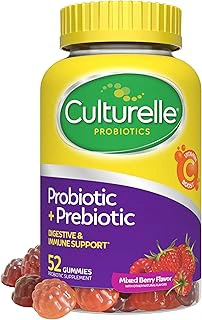
Culturelle Daily Probiotic + Prebiotic Gummies, Berry Flavor
The Culturelle Daily Probiotic + Prebiotic Gummies deliver both prebiotics and probiotics in a berry-flavored gummy format at $13.99, making them one of the most affordable synbiotic options for those who struggle with swallowing capsules. With a 4.7 out of 5 rating, these gummies offer strong user satisfaction combined with an approachable delivery method that can improve daily compliance, especially for anyone who finds traditional pills unpleasant or difficult to take consistently.
The gummy format creates an inherent tradeoff: formulations in chewable gummies typically include fewer bacterial strains and lower colony-forming unit (CFU) counts compared to capsule-based synbiotics, since the gummy matrix and added ingredients like sweeteners and flavor agents can limit the concentration and stability of live cultures. This means you're prioritizing ease of use and palatability over maximum potency or strain diversity. For individuals new to synbiotics, those with sensitive palates, or anyone who values convenience and consistent habit-building over the highest possible microbial load, this product provides a practical entry point.
This option suits budget-conscious users who want a gentle introduction to synbiotics without committing to higher-priced, multi-strain formulas. If you know you'll skip doses with capsules but will happily chew a berry gummy each morning, the compliance advantage often outweighs the lower CFU count. However, if your goal is targeted support for a specific gut concern or you need a research-backed high-potency blend, you may prefer a capsule formula with documented strain details and higher CFU counts, even at a higher price point.
- ✅ Affordable at $13.99
- ✅ Gummy format improves compliance for those who dislike capsules
- ✅ High user satisfaction with 4.7 out of 5 rating
- ✅ Berry flavor makes daily use more enjoyable
- ⚠️ Gummy formulations typically contain fewer bacterial strains than capsules
- ⚠️ Lower CFU counts compared to higher-potency capsule synbiotics
- ⚠️ Added sweeteners and flavor agents may not suit all users
Checklist: Evaluating a Synbiotic Supplement Label
- Check the CFU count: look for at least 1 billion CFUs for daily maintenance
- Identify specific probiotic strains listed by genus, species, and strain code
- Verify the type of prebiotic fiber included (inulin, FOS, GOS, etc.)
- Look for postbiotic ingredients like butyrate or fermentation metabolites
- Confirm the formulation suits your preference: capsule, liquid, or gummy
- Check for third-party testing, organic certification, or quality seals
Common Mistakes to Avoid When Choosing a Synbiotic
Choosing a synbiotic supplement can feel overwhelming, especially when marketing claims overshadow practical guidance. Understanding common mistakes helps you avoid wasting money on products that don't match your needs or expectations.
One frequent pitfall is assuming a higher CFU (colony-forming unit) count always means a better product. While CFU numbers matter, strain specificity and survival through digestion are more important than sheer quantity. A supplement with 50 billion CFUs of poorly researched strains may offer less benefit than 10 billion CFUs of well-documented, stable strains.
Many shoppers also choose based on price alone, picking the cheapest option without checking ingredient transparency. Vague labels that list "proprietary blends" or fail to name specific bacterial strains make it impossible to compare products or verify quality. Look for supplements that clearly identify each probiotic strain (including genus, species, and strain designation) and list prebiotic sources by name.
Ignoring storage requirements is another common error. Some probiotics require refrigeration to maintain potency, while shelf-stable formulas use protective coatings or freeze-dried technology. Storing a refrigeration-dependent product at room temperature can render it ineffective before you even open the bottle.
Expecting immediate results sets up disappointment. Synbiotics work gradually as beneficial bacteria colonize and prebiotics nourish the gut microbiome. Most people notice changes in digestion, regularity, or comfort over weeks, not days. Patience and consistency matter more than switching products after a few doses.
Personal tolerance is often overlooked, especially with prebiotic fibers. Ingredients like inulin, FOS (fructooligosaccharides), or resistant starches can cause gas, bloating, or discomfort in some individuals, particularly when starting at high doses. If you're sensitive to fiber or have IBS, begin with a lower dose or choose a synbiotic with gentler prebiotics like partially hydrolyzed guar gum.
Finally, falling for vague marketing claims without scrutinizing the ingredient list leads to poor choices. Terms like "supports gut health" or "promotes balance" are legally acceptable but tell you nothing about efficacy. Focus on products that disclose strain names, CFU counts at expiration (not manufacture), third-party testing, and prebiotic types. The most reliable synbiotics provide transparency, not hype.
How to Integrate a Synbiotic Supplement Into Your Routine
Integrating a synbiotic supplement into your routine requires attention to timing, dosage, and consistency to support lasting gut health benefits. Start by taking your synbiotic at the same time each day - many people find morning works best for building a habit, though the most important factor is consistency rather than a specific hour. Some supplements are designed to be taken with food to protect probiotic strains from stomach acid, while others are formulated with enteric coatings that allow flexibility; check the product label for manufacturer guidance on timing and meals.
Begin with a lower dose than the recommended maximum, especially if you are new to prebiotics or probiotics. This approach helps you assess your tolerance and minimize temporary digestive changes such as mild bloating or shifts in bowel patterns. Gradually increase to the full dose over one to two weeks, allowing your gut microbiome time to adjust. Pairing your synbiotic with fiber-rich whole foods - vegetables, fruits, legumes, and whole grains - provides additional fuel for beneficial bacteria and enhances the prebiotic effect.
Track subjective changes in energy, digestion quality, mood, and bowel regularity in a simple journal or notes app. Improvements in gut health often unfold over several weeks rather than immediately, so consistency matters more than day-one effects. If you experience persistent discomfort or no noticeable benefit after four to six weeks at the full dose, consider adjusting the timing, trying a different strain profile, or consulting a healthcare provider. Remember that synbiotics work best as part of a broader routine that includes adequate hydration, balanced nutrition, and stress management, rather than as a standalone solution.
Final Takeaway
Choosing a synbiotic supplement for gut health comes down to understanding what prebiotics, probiotics, and postbiotics actually do - and matching that to your own needs. Prebiotics feed beneficial bacteria, probiotics introduce live strains, and postbiotics deliver metabolic byproducts; a synbiotic combines the first two for coordinated support. Prioritize strain specificity over generic CFU counts, because different strains target different outcomes, from digestive comfort to immune function. Look for formulations that disclose strain names, storage requirements, and expiration details - transparency signals quality.
Format matters more than marketing suggests. Capsules, powders, and gummies each carry trade-offs in convenience, stability, and bioavailability, so choose the one you'll use consistently. Price should reflect ingredient quality and manufacturing standards, not just brand recognition; compare cost per serving and verify third-party testing when available. Avoid common mistakes like expecting instant results, mixing incompatible products without guidance, or ignoring storage instructions that protect live cultures.
Consistency beats perfection. Track subjective markers - digestion, energy, regularity - over at least four weeks before deciding whether a product works for you. Informed choice, grounded in real attributes and personal response, will always outperform hype-driven decisions.