We may earn a commission when you buy through links on this page, at no extra cost to you. How this works.
Vagal tone reflects the activity of your vagus nerve, which influences heart rate variability, stress response, and recovery capacity. To track it accurately, you need a wearable device that measures HRV with precision and offers the right metrics to interpret nervous system balance over time.
Not every fitness tracker or smartwatch is built for this purpose. The devices that deliver meaningful vagal tone insights share a handful of critical features: clinical-grade optical or ECG sensors, high sampling rates that capture beat-to-beat intervals reliably, and algorithms that calculate both time-domain metrics like RMSSD and frequency-domain measures such as high-frequency power. Data export options matter if you want to analyze trends in third-party software, and some platforms provide contextualized readiness scores that translate raw HRV data into actionable guidance.
Your monitoring goals shape which specifications take priority. If you're tracking recovery from training, a device with morning readiness assessments and trend analysis may be sufficient. For deeper autonomic nervous system work or biofeedback training, look for real-time HRV display, breathing pace guidance, and access to raw inter-beat interval data. Devices that log continuously throughout the day and night reveal how your vagal tone shifts in response to sleep, meals, stress, and activity, while spot-check monitors work well for shorter, structured sessions.
This guide walks through the wearable categories that support vagal tone tracking, the sensor and algorithm differences that affect accuracy, and how to match device capabilities to your specific use case without overpaying for features you won't use.
What Is Vagal Tone and Why It Matters for Performance
Vagal tone refers to the activity level of the vagus nerve, the longest cranial nerve that runs from the brainstem down through the neck and chest to the abdomen. This nerve serves as the primary pathway for parasympathetic nervous system signals, which control rest, digestion, and recovery functions when your body is not under immediate threat or exertion.
Higher vagal tone means your vagus nerve sends stronger, more consistent signals that help your heart rate slow down quickly after stress or exercise, regulate inflammation responses, and support efficient energy use during rest periods. People with higher vagal tone typically show faster recovery between stressors, more stable heart rate patterns, and greater flexibility in how their nervous system responds to changing demands.
Wearable devices estimate vagal tone indirectly by measuring heart rate variability, the beat-to-beat changes in your heart rhythm. When vagal tone is high, your heart rate fluctuates more between beats because the vagus nerve is actively modulating each contraction. This variability reflects your autonomic nervous system's ability to adapt moment to moment rather than remaining rigid or locked into a single state.
Tracking this metric over weeks or months reveals patterns in how well your nervous system shifts between activation and recovery. Consistent low readings may indicate accumulated stress load, insufficient sleep, overtraining, or other factors that reduce adaptive capacity. Gradual improvement in vagal tone measurements often accompanies better sleep quality, appropriate training volume, and effective stress management habits.
Understanding your vagal tone data helps you make informed decisions about training intensity, rest days, and daily stress exposure without requiring subjective guesswork about readiness or fatigue.
The Link Between Vagal Tone and Heart Rate Variability
Wearable devices estimate vagal tone by measuring heart rate variability, the fluctuation in milliseconds between consecutive heartbeats. When your vagus nerve exerts stronger influence, the intervals between beats vary more. A heart beating at 60 bpm does not tick like a metronome; a healthier pattern might show one interval at 950 ms and the next at 1,050 ms, while lower variability might show 990 ms followed by 1,010 ms.
Higher variability signals that your parasympathetic nervous system can respond flexibly to shifting demands. During calm states, the vagus nerve slows the heart; during activity or stress, sympathetic signals speed it up. This push-and-pull creates the measurable variation consumer devices detect through optical or electrical sensors.
Consumer wearables capture this data using photoplethysmography or chest-strap electrocardiography, then calculate time-domain metrics such as RMSSD or frequency-domain metrics like high-frequency power. These numbers serve as proxies for vagal activity because the vagus nerve directly modulates the sinoatrial node, the heart's natural pacemaker. The devices do not measure the nerve itself; they infer its tone from the rhythmic signature it leaves on your heartbeat.
Understanding this indirect relationship helps you interpret your scores correctly. A wearable showing low HRV does not diagnose a medical condition; it reflects reduced variation at that moment, which may stem from recent exercise, poor sleep, illness, or sustained stress. Tracking the pattern over weeks reveals whether your nervous system maintains flexibility or remains stuck in a narrow range, offering actionable insight without requiring laboratory equipment.
How Wearable Devices Estimate Vagal Tone
Wearable devices estimate vagal tone by measuring the beat-to-beat variation in your heart rhythm, then running that data through algorithms designed to isolate the influence of your vagus nerve. Most consumer wearables use photoplethysmography - an optical sensor that shines light through your skin and detects blood volume changes with each heartbeat. The sensor records the intervals between beats, and onboard software calculates time-domain metrics such as RMSSD (root mean square of successive differences) and SDNN (standard deviation of normal-to-normal intervals), both of which correlate with parasympathetic activity. Higher-end devices may also include ECG electrodes that capture electrical signals directly from the heart, offering cleaner interval data and lower susceptibility to motion artifacts.
Frequency-domain analysis takes this a step further by dividing the heart-rate signal into frequency bands. The high-frequency component - typically 0.15 to 0.4 Hz - is considered a direct marker of vagal modulation because it reflects respiratory sinus arrhythmia, the natural acceleration and deceleration of your heart rate with each breath. Devices that report this metric use fast Fourier transform or autoregressive modeling to separate high-frequency power from lower-frequency oscillations, which are influenced by both sympathetic and parasympathetic branches. This separation allows for a more specific estimate of vagal tone, though it requires stable sampling rates and longer measurement windows.
Accuracy depends heavily on sensor placement, skin contact, and signal processing. Optical sensors can struggle during movement or in cold conditions when blood flow to the extremities drops. ECG-based devices generally deliver more reliable interval data but require consistent electrode contact and may be sensitive to sweat or poor fit. Most wearables report HRV in rounded values and apply smoothing algorithms that can introduce lag or dampen short-term fluctuations. Error margins are rarely published, but independent validation studies suggest that time-domain metrics from wrist-worn optical devices can deviate by 10 to 30 percent compared to clinical ECG, with greater variance at lower heart rates. Frequency-domain measures are more sensitive to artifact and sampling irregularities, so devices that rely solely on optical sensors may offer less precise high-frequency HRV readings.
Understanding these limitations helps you interpret your scores with appropriate caution. A device that shows rising HRV over weeks may indicate improved autonomic balance, but day-to-day swings are often influenced by measurement conditions as much as by physiological changes. Focusing on long-term trends rather than single readings, and cross-checking with subjective markers like sleep quality or recovery sensation, will give you a more grounded sense of your vagal function.
Current Limitations of Consumer Wearables for Vagal Tone Monitoring
Consumer wearables have made heart rate variability tracking accessible, but they come with meaningful limitations when measuring vagal tone. Most fitness trackers and smartwatches use photoplethysmography (optical sensors) rather than electrocardiography, which reduces the precision needed to capture the millisecond-level beat-to-beat intervals that reflect parasympathetic activity. Even devices that report HRV typically focus on time-domain metrics like RMSSD, while frequency-domain analysis - which separates high-frequency (vagal) power from low-frequency components - is often simplified or missing entirely.
Baseline variability between individuals also complicates interpretation. Two people with identical HRV scores may have very different autonomic profiles due to age, fitness level, genetics, and stress history. Absolute numbers are less useful than tracking your own trends over weeks and months. A score that falls within the manufacturer's "normal" range might still represent a decline for you, while another person's lower number could be their stable baseline.
Many wearables also calculate HRV during sleep or short windows rather than controlled resting states, adding noise from movement, position changes, and sleep-stage transitions. Without consistent measurement conditions, day-to-day comparisons lose reliability. These devices work best as trend indicators rather than diagnostic tools, helping you notice patterns in response to stress, recovery practices, or lifestyle changes rather than providing clinical-grade vagal tone assessment.
A Step-by-Step Guide to Tracking Your Vagal Tone Data
Establishing a consistent measurement routine makes vagal tone data meaningful. Most wearables capture their most reliable HRV readings during sleep or within the first few minutes after waking, when your nervous system is least influenced by movement, digestion, or stress. Pick one measurement window - such as the final 90 minutes of sleep or a five-minute seated reading each morning - and stick with it so your baseline and weekly trends reflect real change rather than time-of-day variation.
Wearing the device overnight gives you multiple data points across sleep stages, which smooths out single-reading noise. Sync the device every morning to avoid gaps in your timeline. Log contextual factors in the companion app or a simple note: hours slept, alcohol intake, late meals, argument with a colleague, or an unusually hard workout. These notes clarify why a given morning's HRV might spike or drop, turning raw numbers into actionable patterns.
Review weekly averages instead of reacting to individual readings. A single low score can follow a poor night's sleep or dehydration and tells you very little about your underlying vagal health. A seven-day rolling average filters daily fluctuations and reveals whether your nervous system is recovering well or accumulating strain. Compare week-to-week trends and look for drift in the same direction over three or four weeks before adjusting training volume, sleep habits, or stress management.
Use the app's trend graph to spot inflection points - periods where HRV climbed after you added this product, dropped during a travel week, or plateaued when training intensity stayed flat. Annotations on the graph make it easier to connect interventions with outcomes. The goal is a feedback loop: measure consistently, note what changed, observe the trend, then refine your routine based on what actually moved the needle for your nervous system.
Interpreting Your Scores: What Your Vagal Tone Numbers Mean
Understanding what your heart rate variability numbers actually mean requires looking at context, not just isolated scores. Most wearables report RMSSD (root mean square of successive differences) in milliseconds, and higher values generally indicate stronger parasympathetic nervous system activity - the vagal tone you're trying to track. A reading of 50 ms typically reflects better autonomic balance than 20 ms, but the number alone tells you very little without your personal baseline.
Your baseline is the average HRV you see across multiple days when you're rested, hydrated, and not dealing with illness or unusual stress. This personal reference point matters more than population averages because factors like age, fitness level, and genetics create wide individual variation. A well-trained endurance athlete might show an RMSSD above 80 ms, while someone less active could have a healthy baseline around 35 ms. Comparing yourself to generic norms can lead to misplaced concern or false reassurance.
Downward trends over several days often signal accumulated stress, inadequate recovery, or the onset of illness. If your typical morning RMSSD drops from 55 ms to 35 ms over four consecutive days, your body is likely spending less time in parasympathetic dominance. This pattern suggests prioritizing rest, adjusting training intensity, or examining stressors in your routine. A single low reading doesn't warrant alarm - day-to-day fluctuations of 10 to 20 ms are normal and can reflect sleep quality, hydration, meal timing, or even the previous night's temperature.
Context sharpens interpretation. Take your measurement at the same time each day, ideally in the morning before significant activity, to reduce variables. Track how your scores respond to specific inputs: a hard workout might lower HRV the next day, while a restorative evening routine might lift it. Over weeks, you'll recognize your range and notice which habits move your numbers in the direction you want. Avoid chasing daily highs; instead, watch for sustained shifts and use them to guide adjustments in sleep, stress management, and activity intensity.
Actionable Strategies to Support Your Vagal Tone
Once you've established a baseline with your wearable, several daily practices may help nudge your HRV and vagal function in a favorable direction. Slow diaphragmatic breathing - typically five to six breaths per minute - is one of the most consistently studied methods, with research suggesting it can temporarily increase parasympathetic activity and, over time, improve resting HRV. Aim for inhales through the nose, expanding the belly rather than lifting the chest, and exhales that last slightly longer than the inhale.
Cold exposure, whether through cold showers, ice baths, or face immersion, appears to stimulate the vagus nerve by triggering the mammalian dive reflex. Start with brief bursts - twenty to thirty seconds of cold water at the end of a shower - and observe how your HRV responds over the following days. Not everyone sees improvement, and some may experience an initial dip as the body adapts.
Sleep quality and duration remain foundational. Poor or fragmented sleep consistently correlates with lower HRV, while seven to nine hours of consolidated rest tends to support recovery and autonomic balance. If your wearable flags declining overnight HRV alongside poor sleep scores, prioritize consistent bedtimes and a cool, dark sleep environment before layering on additional interventions.
Moderate aerobic exercise - running, cycling, swimming - builds cardiovascular fitness and often raises resting HRV over weeks or months. High-intensity or high-volume training can temporarily suppress HRV, so balance hard sessions with easier recovery days and monitor your trends rather than reacting to single-day dips.
Stress modulation techniques such as mindfulness meditation, progressive muscle relaxation, or yoga have shown mixed but promising results in controlled studies. The key is consistency: sporadic practice is unlikely to shift your baseline, but fifteen to twenty minutes daily may produce measurable changes within four to eight weeks. Use your wearable data to identify which practices correlate with upward HRV trends, and adjust your routine accordingly.
Building a Sustainable Vagal Tone Monitoring Routine
Consistent measurement timing matters more than device sophistication when building a vagal tone monitoring practice. Morning readings taken within the same 30-minute window, before exercise or caffeine, produce more comparable baseline data than sporadic checks throughout the day. Record the context alongside each HRV reading: sleep quality, stress level, recent meals, and physical state create patterns that raw numbers alone cannot reveal.
Pairing wearable data with a simple wellness log amplifies the usefulness of both. Note how you feel on days when your HRV trends upward or downward, and track interventions such as this product sessions, cold exposure, or sleep schedule changes. Over four to six weeks, correlations between specific behaviors and vagal tone shifts become visible, turning abstract biofeedback into actionable insight.
Gradual trends across weeks carry more weight than single-day fluctuations. A sharp drop in HRV after poor sleep or intense training is normal; what matters is whether your 30-day rolling average improves or stagnates. Some users test targeted interventions by monitoring HRV before and after specific practices, treating the wearable as a feedback loop rather than a diagnostic tool.
Vagal tone monitoring works best as a long-term self-awareness practice rather than a short-term optimization sprint. Establish a rhythm that fits your schedule, review monthly trends instead of obsessing over daily scores, and adjust your approach when the data suggests your nervous system is adapting or plateauing.
Key Features in a High-End Wearable for Vagal Tone Tracking
- Medical-grade or research-validated optical sensor or ECG capability
- Sampling rate of at least 100 Hz for accurate R-R interval detection
- Time-domain HRV metrics: RMSSD, SDNN, pNN50
- Frequency-domain analysis: LF/HF ratio, HF power
- Raw data export or API access for third-party analysis
- Baseline calibration and personalized trends over weeks
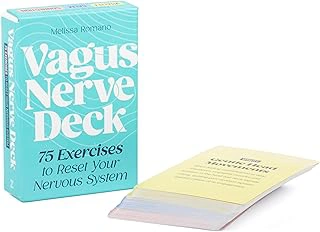
Vagus Nerve Deck: 75 Exercises to Reset Your Nervous System by Melissa Romano LGSW
Wearable biofeedback devices show you the numbers, but the Vagus Nerve Deck gives you the exercises to move them. This 75-card set by Melissa Romano, LGSW, pairs well with HRV tracking because you can perform a card's guided exercise - breathing patterns, humming techniques, cold exposure protocols - then check your wearable to see which practices produce a measurable shift in vagal tone.
Each card presents one exercise with clear instructions, making it easy to test different interventions and identify which methods work best for your nervous system. The structured format supports daily use: draw a card in the morning, complete the exercise, and log your HRV response. Over a few weeks, patterns emerge that show which vagus nerve stimulation techniques consistently improve your readings.
At $21.43 with a 4.7/5 rating, the deck offers a low-cost complement to high-end wearables. The card format works for quick sessions between meetings or longer reset routines, and the variety helps reduce the chance of the monotony that can make single-technique practice hard to sustain. Users who combine this deck with wearable data gain both the feedback loop and the toolkit to experiment methodically with nervous system regulation.
- ✅ 75 guided exercises provide variety for methodical testing with HRV wearables
- ✅ Card format supports quick daily practice and long-term habit formation
- ✅ Clear instructions make it easy to pair each technique with biofeedback tracking
- ✅ Affordable entry point at $21.43 for users already investing in wearables
- ⚠️ Requires consistent pairing with a wearable device to measure exercise effectiveness
- ⚠️ Physical card deck may be less convenient than app-based exercise libraries for travel
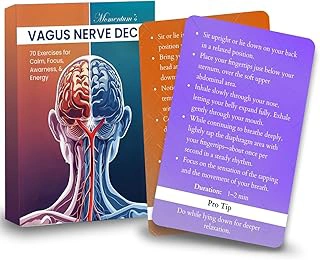
Momentum Boards Vagus Nerve Deck: 70 Exercise Cards for Reset & Stimulation
The Momentum Boards Vagus Nerve Deck offers 70 exercise cards focused on nervous system reset and vagal stimulation techniques, priced at $17.99 with a 4.7/5 customer rating. This deck presents a budget-friendly alternative to the Romano Vagal Tone Exercises deck, delivering similar exercise-focused content at a lower price point while including ten fewer cards in the set.
Both decks share the same emphasis on guided vagal exercises, but the Momentum Boards version costs roughly multipleess. The card count difference - 70 versus multiple - means slightly fewer exercise variations, though the core approach to vagal tone training remains comparable. For users tracking vagal tone metrics through wearable devices, this deck provides an accessible way to incorporate complementary exercises into your routine without a substantial financial commitment.
The portable format allows you to practice nervous system exercises between biofeedback sessions or while traveling. If you're building a vagal tone improvement routine around HRV data from your wearable, the Momentum Boards deck gives you structured exercise options at a lower entry cost, with the tradeoff being a smaller library of movements compared to higher-priced alternatives.
- ✅ Budget-friendly at $17.99
- ✅ 70 exercise cards for vagal stimulation techniques
- ✅ Portable format for use between biofeedback sessions
- ✅ 4.7/5 customer rating
- ⚠️ Ten fewer cards than the Romano deck
- ⚠️ Smaller exercise library compared to pricier options
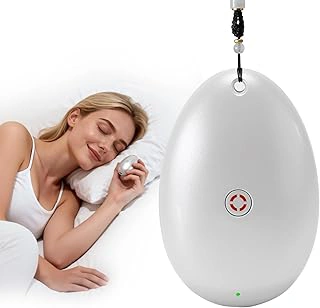
Portable White Noise Machine with Vagus Nerve Support for Sleep & Stress Relief
A stable sound environment during sleep creates conditions that may support parasympathetic activity, the branch of the nervous system governed by the vagus nerve. The Portable White Noise Machine with Vagus Nerve Support for Sleep & Stress Relief offers consistent auditory masking at $99.99, designed to reduce disruptions that can elevate heart rate and fragment rest. When paired with an HRV-tracking wearable, you can compare overnight heart-rate variability trends on nights with and without white noise to see whether the device correlates with higher morning HRV scores.
This machine is portable, so it travels easily for business trips or vacations where unfamiliar room sounds might otherwise interfere with sleep quality. Reliable sleep supports vagal tone over time because deep, uninterrupted rest allows the body to shift more fully into parasympathetic dominance. If your wearable shows lower HRV or higher resting heart rate on nights with frequent awakenings, adding consistent Portable White Noise Machine with Vagus Nerve Support for Sleep & Stress Relief sound may help stabilize those metrics.
The device sits on a nightstand without occupying much space and operates quietly enough that the white noise itself becomes the ambient baseline rather than competing with additional hum or fan noise. You will not find detailed technical specifications for sound frequency range or decibel output in the verified product facts, so expectations should remain grounded in general noise-masking utility rather than therapeutic claims. The 5.0 rating suggests early user satisfaction, though the sample size is not disclosed.
Use this machine as part of a broader sleep-hygiene routine: set a consistent bedtime, dim lights an hour before sleep, and check your wearable's overnight HRV report each morning. If scores improve over two to four weeks, the sound environment is likely contributing. If HRV remains flat or declines, other factors such as room temperature, caffeine timing, or stress load may need adjustment first.
- ✅ Portable design for travel and bedroom use
- ✅ Stable sound masking to reduce sleep disruptions
- ✅ Can pair with HRV wearables to track overnight trends
- ✅ Compact footprint for nightstand placement
- ⚠️ Limited technical specifications available for frequency or volume range
- ⚠️ Early rating with unclear review sample size
- ⚠️ No direct HRV measurement - requires separate wearable for tracking