We may earn a commission when you buy through links on this page, at no extra cost to you. How this works.
Micro Ingredients L-Theanine 400mg, 400 Softgels
Compare how L-theanine and caffeine affect focus and energy stability throughout your workday.
The afternoon energy crash is one of the most common productivity challenges, and both L-theanine and caffeine are frequently used to manage focus and alertness throughout the day. While caffeine is the world's most widely consumed stimulant, L-theanine - an amino acid found primarily in tea - offers a fundamentally different approach to sustaining mental clarity.
Understanding which compound better prevents afternoon crashes requires looking at how each affects your energy curve, what causes the crash in the first place, and how your own response patterns influence outcomes. Caffeine acts as an adenosine receptor antagonist, directly blocking the neurochemical signals that promote drowsiness. This creates a stimulant effect that peaks within 30 to 60 minutes and gradually declines over several hours. The afternoon crash often associated with caffeine use stems from adenosine buildup during the blockade period, combined with the natural dip in circadian alertness that occurs in early to mid-afternoon.
L-theanine takes a different path. It does not block adenosine or provide direct stimulation. Instead, it modulates neurotransmitter activity - particularly GABA, dopamine, and serotonin - promoting a state of calm focus without the arousal that leads to subsequent fatigue. Because it doesn't create the same peak-and-trough energy pattern, L-theanine tends to produce a more stable baseline, which may reduce the likelihood of a pronounced crash.
Your decision between these two compounds should be guided by four main factors: the mechanism by which each affects your nervous system, the typical crash pattern you experience, the timing of your dose relative to your natural energy rhythms, and how your individual physiology responds to stimulants versus calming agents. Some people metabolize caffeine quickly and experience sharper drops in energy, while others maintain stable levels for hours. Similarly, some individuals find L-theanine subtly supportive, while others notice significant improvements in sustained attention.
This comparison focuses on practical selection criteria: when caffeine's stimulant profile serves your workday needs, when L-theanine's steadier influence prevents the afternoon slump more effectively, and how timing, dose, and combination strategies can be adjusted to match your productivity goals and energy curve.
What Matters Most When Choosing Between Them
- Your baseline caffeine tolerance and current daily intake
- Time of day you need peak focus (morning boost vs afternoon sustain)
- Sensitivity to jitters, anxiety, or sleep disruption
- Need for immediate alertness versus calm, sustained concentration
- Existing stress levels and cortisol patterns
- Whether you experience caffeine tolerance or dependence
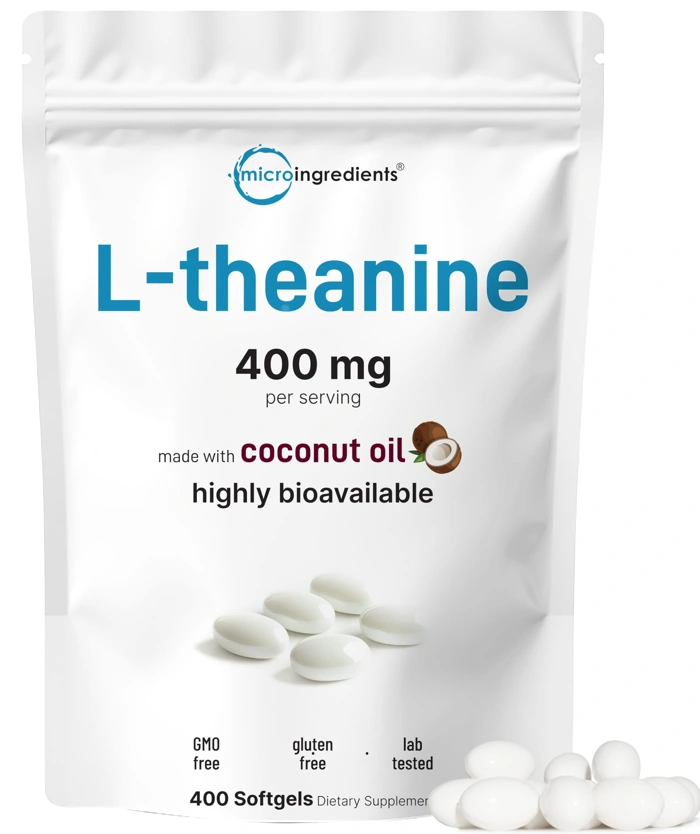
Micro Ingredients L-Theanine 400mg, 400 Softgels
The Micro Ingredients L-Theanine delivers 400mg per softgel across a 400-count bottle, offering a high-dose option for users seeking calm focus without caffeine stimulation. Each softgel contains double the typical dose, which provides flexibility: you can take a full 400mg serving or split the dose across morning and afternoon as needed.
With 400 softgels per bottle at $24.99, the cost per serving comes to approximately the listed amount, making this a value-oriented choice for daily use. The softgel format offers an alternative to powder or capsule forms, and the formulation contains no stimulants, which makes it suitable for afternoon or evening use without disrupting sleep patterns.
This product fits situations where you want to manage focus without introducing or adding to caffeine intake. The 400mg dose may support attention during work sessions while reducing the restless edge that some people experience with stimulants. If you're sensitive to caffeine or trying to reduce afternoon coffee intake, the higher L-theanine dose in this format offers a straightforward swap.
The main tradeoff is dosing flexibility: because each softgel contains 400mg, achieving a lower dose requires either splitting softgels or choosing a different product with smaller increments. For users accustomed to the listed dose servings, the 400mg format may be more than needed, though it can be alternated with caffeine-free days or split if the softgel design allows.
The 4.7/5 rating reflects consistent user feedback, and the 400-count supply supports extended use without frequent reordering. This option makes sense for individuals prioritizing calm, sustained focus over the quick alertness that caffeine provides, particularly during afternoon hours when crash risk is highest.
- ✅ 400mg per softgel allows flexible full or split dosing
- ✅ 400-count bottle provides approximately $0.06 per serving
- ✅ Stimulant-free formula suitable for afternoon and evening use
- ✅ Softgel format offers an alternative to powders and capsules
- ⚠️ 400mg dose may be higher than needed for some users
- ⚠️ Splitting softgels for lower doses may not be practical
- ⚠️ No built-in caffeine for those seeking combined effects
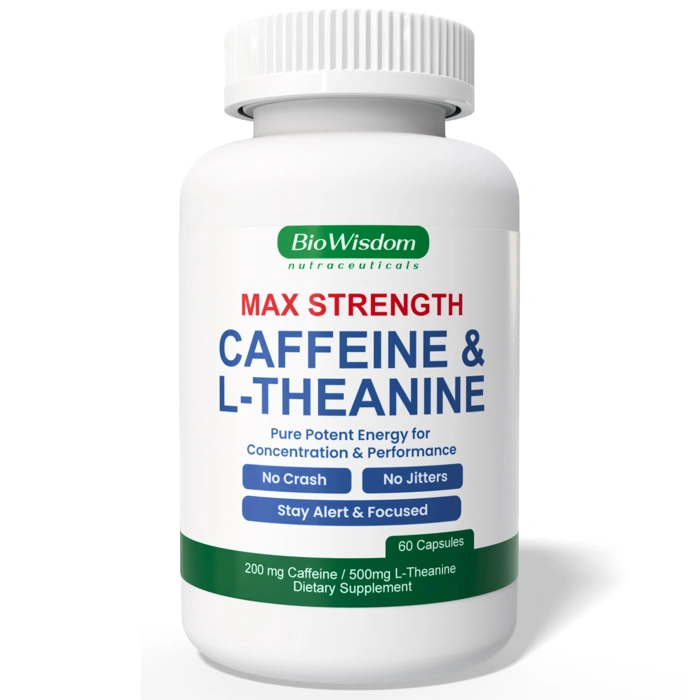
Caffeine L-Theanine Pills (200mg/500mg), 60 Count
This combination product delivers 200 mg caffeine and 500 mg L-theanine per serving, offering a multiple:multiple ratio that prioritizes the calming component. The 60-count bottle provides a month of twice-daily use or two months at one serving per day.
The pre-measured format removes the need to dose two separate supplements, which is useful if you want consistent intake without weighing powders or counting multiple capsules. The higher L-theanine ratio is designed to enhance the calming effect, which may help those who find standard 2:multiple or multiple:multiple combinations still produce noticeable jitters or restlessness.
Because each serving contains 200 mg caffeine - roughly equivalent to two cups of brewed coffee - timing matters. Taking this product in the late afternoon may interfere with sleep for caffeine-sensitive individuals. The larger L-theanine dose can smooth the stimulant edge, but it does not eliminate caffeine's half-life, which averages five to six hours.
This formulation suits users who already know they tolerate caffeine but want a more pronounced sense of calm focus. If you are new to the combination or prefer lower stimulant intake, starting with a half serving or choosing a product with less caffeine per capsule offers more flexibility. The fixed ratio means you cannot adjust L-theanine independently without also reducing caffeine.
At $24.90 for 60 servings, the per-dose cost is moderate compared to buying caffeine and L-theanine separately, especially if you consistently use this specific ratio. The 4.4/5 rating reflects general user satisfaction, though individual response to the multiple:multiple balance will vary based on personal sensitivity and prior caffeine habits.
- ✅ Pre-measured 2.5:1 ratio for consistent dosing
- ✅ Higher L-theanine content may reduce jitters
- ✅ Eliminates need to purchase two separate supplements
- ✅ 60-count bottle supports one to two months of use
- ⚠️ Fixed ratio limits independent adjustment of caffeine or L-theanine
- ⚠️ 200 mg caffeine per serving may be too high for sensitive users
- ⚠️ Late-day use may disrupt sleep despite added L-theanine
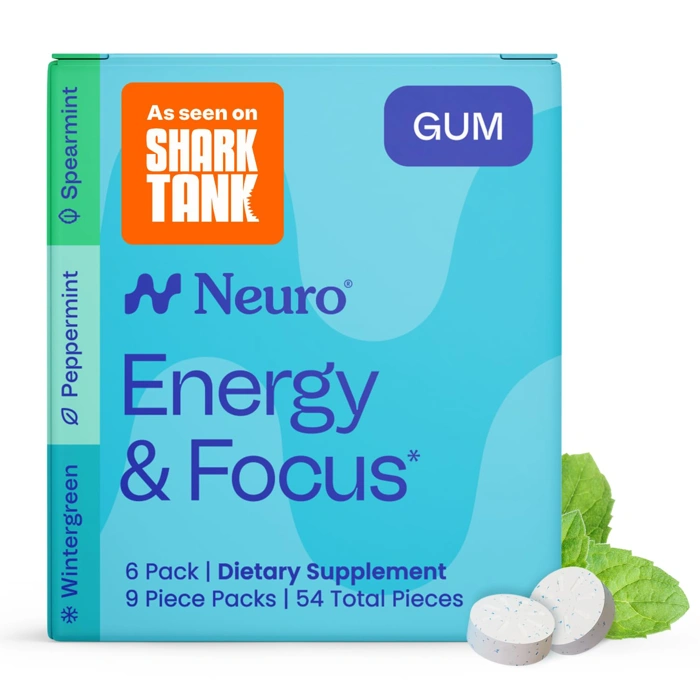
Neuro Variety Pack Energy & Focus Gum, 54 ct, 6 Pack
The Neuro Variety Pack Energy & Focus Gum offers a portable, non-pill delivery format for those who prefer chewing gum over capsules or tablets. This variety pack includes six different formulations across multiple items, allowing users to test different blends and identify which works best for their focus and energy needs. The gum format is designed for faster absorption through the oral mucosa, bypassing the digestive system for quicker onset compared to traditional supplements.
For on-the-go use, this format excels in convenience. The individually wrapped pieces fit easily into pockets, bags, or desk drawers, and chewing gum draws less attention than swallowing pills in meetings or shared spaces. The variety pack structure supports experimentation: users can rotate through formulations to match different tasks or times of day without committing to a single blend upfront.
The tradeoff is dosing precision. Gum delivery makes it harder to measure exact milligram intake compared to labeled capsules, and absorption can vary based on chewing duration and saliva production. Users who need consistent, repeatable dosing may find this format less predictable than pills. The variety pack approach adds flexibility but also requires self-monitoring to track which formulation delivered the desired focus without jitters or crashes.
This product suits individuals who value portability and dislike swallowing pills, or those curious about buccal absorption benefits. It's less ideal for users who prioritize exact dosing or prefer a single, proven formulation over rotating blends.
- ✅ Portable, individually wrapped pieces for on-the-go use
- ✅ Variety pack allows testing six different formulations
- ✅ Buccal absorption may offer faster onset than pills
- ✅ Discreet format for use in shared or public spaces
- ⚠️ Dosing precision harder to measure than labeled capsules
- ⚠️ Absorption varies with chewing duration and saliva
- ⚠️ Variety pack requires self-monitoring to identify best blend
NATURAL STACKS NeuroAlert 200mg Paraxanthine Supplement, 60 Capsules
Paraxanthine is the primary metabolite your liver produces when it breaks down caffeine, and it may be responsible for many of caffeine's focus benefits without some of the unwanted effects. NATURAL STACKS NeuroAlert delivers 200mg of paraxanthine per capsule, offering a third-path option for individuals who want caffeine-like focus enhancement but experience jitters or afternoon crashes with traditional caffeine sources.
Unlike caffeine, which converts into three different metabolites - paraxanthine, theobromine, and theophylline - paraxanthine acts more selectively on dopamine receptors while producing less adenosine blockade in ways that may contribute to the overstimulated feeling some people associate with coffee or energy drinks. Early research suggests paraxanthine may support alertness and concentration with a smoother experience, though the compound is still relatively new to the supplement market compared to caffeine or L-theanine.
Each bottle contains 60 capsules at $34.95, providing a 60-day supply at one capsule daily or multiple at the higher end of typical usage. The 200mg dose is roughly equivalent to the paraxanthine yield from a comparable caffeine dose, though individual conversion rates vary. This makes NeuroAlert a consideration for caffeine-sensitive individuals or those who metabolize caffeine poorly due to genetic differences in the CYP1A2 enzyme.
For focus without afternoon energy dips, paraxanthine's shorter half-life compared to caffeine may reduce the risk of late-day interference with sleep when taken in the morning or early afternoon. However, because paraxanthine supplementation is an emerging area, long-term data and head-to-head comparisons with caffeine or L-theanine combinations remain limited. The product is best suited for individuals already familiar with their response to stimulants and looking to fine-tune their focus strategy beyond the caffeine-L-theanine pairing.
Tradeoffs center on cost and familiarity: paraxanthine supplements are more expensive per dose than caffeine, and the effects profile is less established in everyday use. If you experience reliable focus and sustained energy from caffeine combined with L-theanine, paraxanthine may not offer a meaningful upgrade. But if you consistently struggle with mid-afternoon crashes, sleep disruption, or jitteriness even at low caffeine doses, NeuroAlert provides a targeted alternative that isolates the metabolite most associated with cognitive benefits.
- ✅ Delivers 200mg paraxanthine, the primary caffeine metabolite linked to focus benefits
- ✅ May reduce jitters and crash risk compared to traditional caffeine
- ✅ Shorter half-life supports better timing control for afternoon use
- ✅ 60-capsule supply offers flexible dosing options
- ⚠️ Higher cost per dose than caffeine or L-theanine supplements
- ⚠️ Emerging research means fewer long-term studies and user experiences
- ⚠️ Effects may not differ meaningfully for individuals who tolerate caffeine well
Who This Comparison Is For
This comparison is most useful for knowledge workers, students, and remote professionals who rely on sustained mental performance throughout the day. If you find yourself sharp in the morning but experience noticeable drops in focus or alertness between 2 and 4 p.m., understanding how L-theanine and caffeine each influence energy patterns can help you choose a more stable approach.
Caffeine is familiar to most people as a quick, reliable way to boost alertness. It works well when you need a clear increase in energy or have a specific window where focus is critical. However, caffeine's stimulation comes with a corresponding crash for many users, especially when taken in moderate to high doses or later in the day. If you are sensitive to jitters, heart palpitations, or anxiety from coffee or energy drinks, caffeine's downsides may outweigh its benefits during long work sessions.
L-theanine, by contrast, promotes calm focus without direct stimulation. It does not produce the same immediate energy lift, but it also does not trigger the rebound fatigue or irritability that often follows caffeine metabolism. This makes it a better fit for individuals who need steady concentration without the risk of a mid-afternoon energy drop, or for those who are sensitive to stimulants but still want cognitive support.
People optimizing work-from-home productivity may benefit from L-theanine's smoother profile, particularly if their schedule demands consistent output over many hours rather than short bursts of high intensity. On the other hand, shift workers, early risers, or anyone facing acute sleep debt may find caffeine more practical in the short term, accepting the tradeoff of a later crash.
Scenarios that favor caffeine include early mornings when alertness is low, pre-workout energy needs, or tasks requiring rapid reaction time. Scenarios that favor L-theanine include long writing or analysis sessions, video calls requiring calm presence, or any situation where you want to avoid stimulant side effects while maintaining a baseline level of focus.
If you have tried caffeine and experienced uncomfortably fast heart rate, shakiness, or difficulty sleeping even when consumed many hours before bed, L-theanine may offer a gentler path. If you have used L-theanine alone and felt it lacked enough activation, caffeine remains the more direct option, though combining the two is a separate strategy not covered in this section.
How L-Theanine and Caffeine Work Differently
Caffeine and L-theanine influence the brain through entirely different pathways, which explains why they produce distinct effects on focus and why their crash patterns diverge.
Caffeine works primarily as an adenosine receptor antagonist. Adenosine is a neurotransmitter that accumulates in the brain throughout the day, gradually promoting drowsiness. Caffeine blocks adenosine from binding to its receptors, preventing the signal for fatigue from getting through. This blockade creates the sensation of alertness and energy. Caffeine also triggers the release of dopamine and adrenaline, activating the sympathetic nervous system - the body's fight-or-flight response. Heart rate may increase, blood pressure rises slightly, and mental arousal intensifies. The effect is sharp and noticeable, typically peaking 30 to 60 minutes after consumption.
The catch: adenosine continues to build up while caffeine occupies the receptors. When caffeine is metabolized and clears from the system - usually after four to six hours - the accumulated adenosine floods the now-available receptors all at once. This sudden wave of fatigue signals is what creates the characteristic caffeine crash: irritability, mental fog, and a strong urge to sleep or consume more caffeine.
L-theanine operates through a calmer mechanism. It modulates the activity of neurotransmitters including GABA (gamma-aminobutyric acid), which has inhibitory effects that reduce neuronal excitability. L-theanine also influences dopamine and serotonin levels in a more gradual, balanced way. Rather than blocking fatigue signals or triggering an arousal response, L-theanine promotes a state often described as relaxed alertness. It does not create a surge of energy, but it supports sustained attention without the jittery edge.
Importantly, L-theanine encourages alpha brain wave activity, a pattern associated with wakeful relaxation and focus. This is the same brain state observed during meditation. Because L-theanine does not interfere with adenosine signaling or activate the sympathetic nervous system, there is no rebound crash. Energy levels remain steady as the compound is metabolized, and fatigue returns gradually rather than abruptly.
The contrasting mechanisms explain the different crash profiles. Caffeine borrows alertness from the future - creating a short-term spike by blocking natural fatigue cues, then paying the price when those cues catch up. L-theanine supports focus by modulating baseline brain activity without suppressing or deferring tiredness signals. One activates, the other stabilizes. Understanding this difference is essential for choosing the right compound based on your work pattern and tolerance for post-dose fatigue.
Crash Patterns: Why They Happen and How to Avoid Them
The afternoon crash isn't a universal experience - it's a direct result of how your body processes and responds to different compounds. Caffeine and L-theanine create distinctly different energy patterns, and understanding the mechanisms behind each can help you choose the right approach for sustained focus.
Caffeine works by blocking adenosine receptors in your brain. Adenosine is a neurotransmitter that accumulates throughout the day and signals drowsiness. When caffeine occupies those receptors, adenosine continues building up in the background. Once caffeine's effects wear off - typically after 3 to 5 hours, depending on your metabolism - the accumulated adenosine floods back into receptors all at once, creating the familiar crash: sudden fatigue, difficulty concentrating, and often irritability.
Caffeine's half-life is approximately 5 hours for most people, meaning half the dose remains active in your system at that point. But the crash often hits before full elimination because the adenosine rebound effect starts as soon as caffeine begins clearing from receptors. Regular caffeine use also leads to tolerance development, requiring higher doses over time to achieve the same alertness - which in turn can amplify the severity of crashes.
Another factor is cortisol. Caffeine stimulates cortisol release, especially when consumed during your body's natural cortisol peak in the morning. This can create a secondary dip later in the day as cortisol levels normalize, compounding the adenosine rebound effect and deepening the afternoon slump.
L-theanine operates through a completely different mechanism. It modulates neurotransmitters like GABA, dopamine, and serotonin without blocking receptors or creating buildup effects. Because it doesn't interfere with adenosine signaling, there's no rebound crash when it clears your system. The compound has a half-life of roughly 1 to 2 hours, but its calming and focus-supporting effects can persist longer through downstream neurotransmitter activity.
Tolerance to L-theanine is minimal compared to caffeine. Most people don't need to increase doses over time to maintain the same effect, and there's no withdrawal pattern when you stop using it. The trade-off is that L-theanine doesn't provide the immediate, sharp alertness that caffeine does - it supports focus through calm clarity rather than stimulation.
To minimize crashes with caffeine, timing is critical. Avoid consumption after 2 p.m. if you're sensitive to its half-life effects, and consider splitting your total intake into smaller doses throughout the morning rather than one large dose. Pairing caffeine with food can slow absorption and smooth the energy curve. Hydration also matters, as dehydration can worsen the perception of a crash.
If you're using caffeine regularly, schedule periodic breaks - even just a few days - to reduce tolerance buildup. This helps reset receptor sensitivity and can make smaller doses effective again, reducing the likelihood of severe crashes.
For L-theanine, crashes are rarely a concern, but timing still influences effectiveness. Taking it in the mid-morning or early afternoon can support sustained focus without interfering with evening relaxation. Because it doesn't create energy spikes, you won't experience a corresponding dip, but you also won't get the same immediate pick-me-up that caffeine provides when fatigue sets in suddenly.
Some people combine the two compounds specifically to blunt caffeine's crash while preserving its alertness benefits. A common approach is a 2:1 ratio of L-theanine to caffeine - for example, 200 mg of L-theanine with 100 mg of caffeine. The L-theanine can smooth out the jittery edges of caffeine and may reduce the severity of the adenosine rebound, though it doesn't eliminate it entirely.
Your individual response will depend on genetics, caffeine metabolism speed, baseline stress levels, and how regularly you use either compound. If you metabolize caffeine slowly, crashes may be more prolonged and severe. If you're already managing high stress, caffeine's cortisol impact may worsen afternoon fatigue, making L-theanine a better fit for sustained, calm energy.
The Case for Combining Both: L-Theanine + Caffeine
Rather than choosing one compound over the other, combining L-theanine and caffeine offers a third approach that addresses the limitations of caffeine alone while maintaining its alertness benefits.
Research on the combination shows that L-theanine can smooth the stimulant effects of caffeine without reducing its attention-enhancing properties. Users often report sustained focus with fewer jitters, reduced tension, and a more gradual energy curve compared to caffeine by itself.
The most commonly studied ratio is 2:1 L-theanine to caffeine - typically 200 mg L-theanine paired with 100 mg caffeine. This proportion appears in multiple studies examining attention, reaction time, and subjective feelings of alertness and calm. Some people adjust the ratio based on their sensitivity: those prone to caffeine jitters may prefer 2.5:1 or 3:1, while others comfortable with caffeine use closer to 1.5:1.
The pairing works because L-theanine modulates some of caffeine's more abrupt stimulant effects. Caffeine blocks adenosine receptors to promote wakefulness, while L-theanine influences alpha brain wave activity associated with relaxed alertness. Together, they provide focus without the sharp peak and subsequent drop that often characterizes caffeine use alone.
Timing matters when combining both. Taking them together - whether through a supplement stack, green tea (which naturally contains both), or separate capsules - allows the compounds to work in parallel. The smoother energy curve means less risk of a pronounced afternoon crash, though total duration will still depend on caffeine metabolism and dose size.
This combination is particularly useful for tasks requiring both concentration and composure: detailed work with tight deadlines, long meetings, or creative problem-solving where mental flexibility matters as much as alertness. It's less suitable for situations where deep relaxation is the goal, since caffeine's stimulant effects remain present.
For those concerned about afternoon crashes, the L-theanine + caffeine pairing offers a middle path: preserving the focus boost of caffeine while reducing the intensity of its decline. The result is a more stable energy trajectory, though not a complete elimination of the metabolic drop as caffeine clears.
Common Mistakes to Avoid
Even well-intentioned strategies can backfire when dosing or timing goes wrong. One frequent error is taking too much L-theanine - doses above 400 mg in a single serving may tip some people into drowsiness rather than calm focus, especially when used without caffeine. If you feel sluggish or mentally foggy an hour after taking L-theanine, the dose may be too high for your body weight or sensitivity.
On the caffeine side, consuming it after 2 p.m. is a common culprit behind poor sleep quality. Caffeine has a half-life of roughly five to six hours, meaning that an afternoon coffee can still interfere with the onset of deep sleep even if you fall asleep on time. Disrupted sleep then feeds into the next day's fatigue, creating a cycle that makes crashes worse rather than better.
Another mistake is expecting L-theanine to deliver the same immediate alertness that caffeine provides. L-theanine works gradually to modulate brain activity; many people notice the effect within 30 to 60 minutes, but the difference is subtle - a reduction in mental chatter rather than a surge in energy. If you switch from caffeine to L-theanine alone and feel disappointed by the lack of a kick, that mismatch in expectation is normal.
Caffeine tolerance buildup is often ignored. Regular consumers may increase their intake over weeks or months without realizing that the same dose no longer provides the same focus benefit, while the crash remains just as pronounced. Taking occasional breaks - such as limiting caffeine to every other day or cycling off for a few days each month - can help restore sensitivity.
Many people also fail to account for baseline caffeine intake from coffee, tea, or energy drinks when they add a supplement. A 200 mg caffeine capsule on top of two cups of coffee can push total intake past the point where jitteriness and rebound fatigue become likely. Always tally your total daily caffeine from all sources before supplementing.
Finally, combining caffeine with other stimulants - pre-workout formulas, certain medications, or high doses of B vitamins - without consideration can amplify side effects such as elevated heart rate, anxiety, or post-crash fatigue. If you use multiple products, read labels carefully and stagger timing to avoid unexpected interactions.
Practical Timing Strategies for Each Approach
Timing determines whether either compound supports focus or contributes to the afternoon slump you're trying to avoid. Each approach follows different rules for optimal effect.
Caffeine timing guidelines
Caffeine reaches peak blood concentration 30 to 60 minutes after ingestion, with effects lasting four to six hours in most people. To minimize afternoon crashes, stop caffeine intake by 2 p.m. - later doses can interfere with evening wind-down and the next day's energy baseline. Morning caffeine (6 a.m. to 10 a.m.) aligns with natural cortisol rhythms and leaves the system before evening. If you consume multiple servings, space them at least three hours apart to avoid tolerance buildup and sharper crashes when levels drop.
Taking caffeine on an empty stomach accelerates absorption but may increase jitteriness. Pairing it with a small snack containing fat or protein slows the spike and extends the focus window. Weekend caffeine breaks - skipping Saturday and Sunday - can reset receptor sensitivity and reduce Monday-morning dependence, though expect mild withdrawal headaches during the reset.
L-theanine timing flexibility
L-theanine does not trigger the same crash cycle, so afternoon use remains viable. A mid-afternoon dose (1 p.m. to 3 p.m.) can smooth residual caffeine from morning coffee or provide calm focus during the post-lunch dip without adding stimulation. Because L-theanine promotes relaxation without sedation, evening doses are also safe if you need focused calm for tasks like reading or planning.
L-theanine absorption is not strongly meal-dependent, so you can take it with or without food. Effects begin within 30 to 40 minutes and taper gently over two to three hours, making it predictable for scheduled work blocks or meetings.
Combination product timing
Products that pair L-theanine with caffeine in a 2:1 ratio are typically dosed mid-morning (9 a.m. to 11 a.m.) to capture peak focus hours while the L-theanine moderates the stimulant edge. This timing keeps the caffeine component early enough to clear before evening but late enough to support sustained productivity through lunch. Avoid combination products after 1 p.m. unless the caffeine dose is very low - the L-theanine will not prevent late-day caffeine from disrupting sleep onset.
Stacking with existing coffee habits
If you already drink coffee, adding standalone L-theanine (100 to 200 mg) at the same time as your morning cup converts a familiar routine into a smoother focus protocol. This approach avoids the complexity of switching to new products while preserving the ritual you already follow. For habitual afternoon coffee drinkers, replacing the second cup with L-theanine alone preserves the focus support while cutting the crash risk.
Adjusting for individual metabolism
Caffeine half-life varies by genetics, liver enzyme activity, and medication interactions - some people clear it in three hours, others take eight. If you feel wired past bedtime, move your cutoff earlier (noon instead of 2 p.m.). If you crash hard by 3 p.m., check total daily caffeine load and consider splitting doses or adding L-theanine to the morning serving. Track your response for one week before changing protocols again; consistency reveals patterns that single-day tests miss.
Final Takeaway: Matching Compound to Your Focus Needs
Choosing between L-theanine and caffeine depends on when you need support, what kind of focus you're after, and how your body handles stimulation and crashes.
Caffeine works best when you need a quick boost in alertness - mornings, early meetings, or tasks requiring immediate mental energy. Its stimulant effect appears within 15 to 45 minutes and peaks around the one-hour mark. The tradeoff is a higher likelihood of jitteriness, disrupted sleep if consumed late, and a noticeable energy dip as it wears off, typically three to five hours later. If you're prone to afternoon crashes after a midday coffee, caffeine's withdrawal curve may be working against you.
L-theanine suits calmer, sustained focus, especially in the afternoon when you want to avoid interfering with sleep. It promotes relaxation without sedation, helping you concentrate without the rush or crash. The effect builds more gradually and doesn't create the same spike-and-drop energy pattern. The limitation is that L-theanine alone won't wake you up or sharply reverse fatigue - it modulates attention rather than amplifying alertness.
The combination of L-theanine and caffeine balances both compounds' strengths. Caffeine delivers the initial energy lift, while L-theanine smooths out jitters and softens the crash. Typical ratios range from 1:1 to 2:1 L-theanine to caffeine. This pairing is useful when you need stimulation but want steadier performance and a gentler descent. It's a practical middle ground for extended work sessions or afternoon productivity windows.
Paraxanthine offers a newer option: the stimulant benefits of caffeine with potentially less crash intensity and lower sleep disruption. Early evidence suggests it clears the system faster and avoids some of caffeine's downstream metabolites. It may be worth exploring if caffeine consistently causes pronounced crashes or evening restlessness, though availability and individual response data remain more limited than for caffeine or L-theanine.
Your optimal approach will depend on trial and observation. Start with one compound, note timing, dosage, and how the effect changes across the day. Adjust based on when crashes occur, how well you sleep, and whether you feel overstimulated or under-energized. There is no universal best choice - only the strategy that aligns with your schedule, tolerance, and focus demands.