We may earn a commission when you buy through links on this page, at no extra cost to you. How this works.
SENSARTE 13-Piece Nonstick Ceramic Cookware Set
Four vetted cookware sets free from PFAS, PTFE, and hormone-disrupting chemicals.
Every time you heat a pan, compounds from its surface can migrate into your food and eventually into your bloodstream. Certain synthetic coatings and reactive metals release chemicals that mimic or block hormones, interfering with thyroid function, reproductive cycles, and metabolic signaling. Non-stick surfaces manufactured with per- and polyfluoroalkyl substances - often abbreviated as PFAS - are among the most persistent offenders, accumulating in tissue over years of exposure.
Choosing cookware that avoids these risks starts with understanding which materials are inert at cooking temperatures and which require coatings that degrade under heat. Stainless steel, cast iron, ceramic-coated aluminum, and 100% ceramic each present different tradeoffs in weight, heat conductivity, maintenance, and surface durability. No single material suits every cooking task, so a practical strategy evaluates your stove type, typical recipes, and willingness to season or hand-wash.
This guide compares four verified non-toxic cookware sets against specific safety this product: confirmed absence of PFAS, PTFE, PFOA, lead, and cadmium; third-party test reports or certifications where available; maximum safe operating temperature; and real-world usability factors such as handle stability and compatibility with metal utensils. Each recommendation includes detailed material composition and maintenance requirements, so you can match a set to your kitchen habits without relying on vague marketing language.
When a manufacturer states "non-toxic," ask what that claim excludes and whether an independent lab has verified it. Look for disclosure of all coating layers, not just the top finish. Understand that even safe materials require correct use - overheating any pan can degrade oils and create smoke, and acidic foods will leach trace metals from reactive surfaces. The goal is to minimize chronic low-level exposure by selecting inert materials and using them within their design limits.
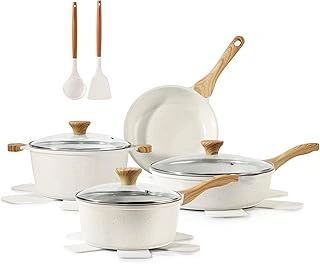
SENSARTE 13-Piece Nonstick Ceramic Cookware Set
The SENSARTE 13-Piece Nonstick Ceramic Cookware Set offers a PFOA- and PTFE-free ceramic coating at an entry-friendly price point of $65.99. This set includes a range of frying pans, saucepans, a stockpot, and a sauté pan, providing enough variety for most daily cooking tasks without requiring additional pieces. The ceramic surface releases eggs and vegetables without added fat, and cleanup typically requires only warm soapy water and a soft sponge.
Ceramic non-stick coatings deliver smooth food release initially, but they wear more quickly than harder surfaces like stainless steel or cast iron. To preserve the coating, avoid metal utensils, high heat above medium, and abrasive scrubbers. The set works on gas, electric, and induction cooktops, though rapid temperature changes and prolonged high heat can shorten the coating's lifespan. Handles stay cool during stovetop use, and the lighter weight makes maneuvering easier than with heavier materials.
At this price, expect to replace the set or individual pieces after one to three years of regular use, depending on how carefully you manage heat and cleaning. If you cook gently, use silicone or wood utensils, and hand-wash promptly, the ceramic surface will stay slick longer. This set suits budget-conscious cooks who want to avoid fluoropolymers and are comfortable with periodic replacement rather than lifelong durability.
- ✅ PFOA- and PTFE-free ceramic coating avoids fluoropolymer exposure
- ✅ 13-piece variety covers frying, sautéing, and saucepan tasks
- ✅ Priced at $65.99 for a complete set
- ✅ Compatible with gas, electric, and induction cooktops
- ✅ Lightweight construction and cool-touch handles for easier handling
- ⚠️ Ceramic coating wears faster than stainless steel or cast iron
- ⚠️ Requires low to medium heat and gentle utensils to extend lifespan
- ⚠️ Typical replacement cycle of one to three years with regular use
- ⚠️ Hand-washing and immediate cleaning recommended to prevent staining
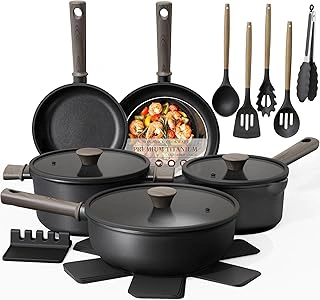
Astercook 19-Piece Nonstick Black Titanium Induction Cookware Set
The Astercook 19-piece set uses a ceramic coating infused with titanium particles to improve scratch resistance compared to standard ceramic nonstick surfaces. This coating avoids PFAS, PTFE, and PFOA, maintaining the same safety profile as other ceramic options while addressing one of ceramic's traditional weaknesses: the tendency to scratch or chip under metal utensils or abrasive cleaning.
The titanium infusion doesn't introduce new chemical concerns - it acts as a physical reinforcement layer that hardens the surface. Owners note the coating holds up better to everyday wear than earlier-generation ceramic pans, though it still requires silicone or wooden utensils for longest life. Heat distribution across the aluminum base works well on induction, gas, and electric ranges, with the heavier gauge reducing hot spots during medium-heat cooking.
At $79.99 for nineteen pieces, this set delivers strong value for households that cook frequently and want ceramic durability without moving to stainless steel or cast iron. The piece count includes multiple lids, spatulas, and smaller pans that suit varied meal prep. If you've avoided ceramic in the past due to coating lifespan concerns, the titanium reinforcement offers a middle ground between standard ceramic and heavier-duty materials, though it won't match the permanence of stainless or iron.
- ✅ Titanium-reinforced ceramic coating resists scratches better than standard ceramic
- ✅ PFAS-, PTFE-, and PFOA-free with no added hormone-disrupting chemicals
- ✅ Nineteen pieces at $79.99 provide strong value for frequent cooks
- ✅ Compatible with induction, gas, and electric cooktops
- ⚠️ Still requires silicone or wooden utensils to maximize coating life
- ⚠️ Heavier gauge may feel bulkier than lightweight ceramic sets
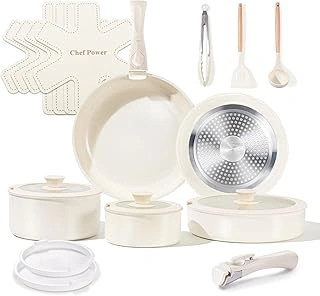
Chef Power 19-Piece Nonstick Ceramic Cookware Set with Detachable Handles, Cream White
Small kitchens and apartment dwellers need cookware that saves cabinet space without sacrificing performance. The Chef Power 19-Piece Nonstick Ceramic Cookware Set with Detachable Handles offers a modular approach: removable handles allow pots and pans to stack more compactly and move directly from stovetop to oven or table. At $65.99, this cream white set positions ceramic coating as a PFAS-free alternative while addressing storage constraints.
The detachable handle design reduces the footprint of each piece when stored. Instead of nested pans with fixed handles jutting out, you stack cookware flat and attach the included handles only when cooking. This layout works well in RVs, studio apartments, or any kitchen with limited shelf depth. The ceramic nonstick surface is marketed as free from PTFE and PFOA, aligning with the material safety profile discussed earlier - ceramic sol-gel coatings harden through high-temperature curing rather than chemical bonding with fluoropolymers.
Removable handles introduce a tradeoff in cooking control. Attaching and detaching hardware mid-cook can feel less intuitive than a permanently riveted handle, especially when you need to tilt or shake a pan quickly. Heat retention remains stable because the handle mechanism typically clamps onto the rim without penetrating the pan wall, but the extra step may slow multitasking for some cooks. If you value one-handed maneuvering or rapid stovetop adjustments, fixed-handle sets offer simpler ergonomics. If you prioritize oven versatility - baking, broiling, or finishing dishes under high heat - detachable handles remove temperature-limit concerns tied to phenolic or silicone grips.
The ceramic coating's durability depends on heat discipline and utensil choice. Avoid preheating empty pans above medium-high, use wood or silicone tools, and hand-wash when possible to extend the nonstick layer. No warranty details are verified for this set, so compare that absence against brands offering multi-year can help on coating integrity. The 4.5-star rating suggests general satisfaction, but coating longevity varies with use patterns. Induction compatibility is not confirmed in the available specs; verify magnetic base construction if your cooktop requires it.
This set suits minimalist setups where flexibility and compact storage outweigh the convenience of traditional handles. Pair the ceramic surface with low to medium heat, and the PFAS-free composition supports hormone-conscious cooking without the space penalty of bulkier collections.
- ✅ Detachable handles enable compact stacking and reduce cabinet footprint
- ✅ Ceramic coating avoids PFAS, PTFE, and PFOA
- ✅ Removable handles allow oven use without temperature-limit concerns
- ✅ Budget-friendly at $65.99 for a 19-piece set
- ⚠️ Attaching and detaching handles mid-cook slows rapid adjustments
- ⚠️ No verified warranty information on coating durability
- ⚠️ Induction compatibility not confirmed in available specs
- ⚠️ Ceramic nonstick longevity requires strict heat and utensil care
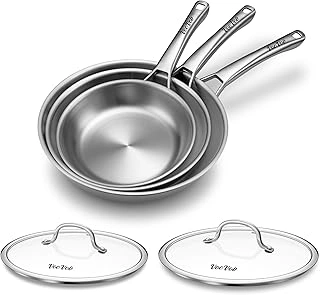
Stainless Steel Cookware Set with Lids, 8/10/12 Inch, Induction Compatible
Stainless steel cookware reduces every coating-related hormone concern because it uses no nonstick layer, no ceramic glaze, and no PTFE or PFAS chemistry. This three-piece set offers 8-, 10-, and 12-inch skillets with lids, all induction-compatible and built from material that won't degrade or leach synthetic compounds into food under any heat level.
The tradeoff is technique. Stainless steel requires preheating the pan over medium heat, adding adequate fat, and waiting for the surface to reach the right temperature before food goes in. Without those steps, sticking is common. Acidic ingredients - tomatoes, vinegar, wine - can react with stainless steel and pull trace metals into food, which some cooks prefer to avoid for long braises or sauces. For quick searing, sautéing, and browning, the reactivity is negligible.
Maintenance is straightforward: the set is dishwasher-safe, and stainless steel tolerates abrasive scrubbing and high-heat deglazing without damage. There's no coating to baby, no hand-wash requirement, and no performance drop over time. Expect this cookware to outlast ceramic alternatives by years, often decades, because the cooking surface is the metal itself.
At $59.99, durability per dollar is excellent. If you're willing to learn heat control and use enough fat, stainless steel offers the longest lifespan and zero exposure to coating chemicals.
- ✅ No nonstick coating, PTFE, PFAS, or ceramic glaze to degrade or leach
- ✅ Induction-compatible and safe at any oven temperature
- ✅ Dishwasher-safe with no hand-wash or gentle-care requirement
- ✅ Durable surface that won't chip, flake, or lose performance over time
- ⚠️ Requires preheating, adequate fat, and heat management to prevent sticking
- ⚠️ Acidic foods can react with the surface and pull trace metals into dishes
- ⚠️ Steeper learning curve compared to nonstick or ceramic options
Common Toxins in Cookware to Avoid
Certain cookware materials release chemicals when heated, and understanding which compounds pose risk helps you make safer choices for everyday cooking.
PTFE, the polymer behind Teflon and similar non-stick coatings, begins to break down at temperatures above 500°F. When PTFE degrades, it releases fluorinated particles and gases that can enter food and air. Research indicates these compounds may interfere with thyroid function and disrupt estrogen signaling pathways.
PFOA was the processing agent historically used to bond PTFE to metal surfaces. Although phased out in the United States by 2015, older non-stick pans may still carry residual PFOA. The compound persists in the body for years and has been linked to altered hormone levels in both animal studies and human biomonitoring data.
PFAS is the umbrella term for thousands of synthetic fluorinated chemicals, including PTFE and PFOA. Manufacturers replaced legacy PFOA with newer PFAS variants such as GenX and PFBS, but emerging evidence suggests these substitutes share similar endocrine-disrupting properties. All PFAS resist degradation in the environment and accumulate in blood and tissue over time.
Lead and cadmium appear in some ceramic glazes and enamel finishes, particularly in cookware manufactured outside regions with strict testing standards. Acidic foods - tomato sauce, vinegar-based marinades - can leach these heavy metals into meals. Both lead and cadmium disrupt the hypothalamic-pituitary axis, reducing reproductive hormone synthesis and impairing metabolic regulation.
Aluminum cookware without an anodized or clad barrier can release aluminum ions when cooking acidic or salty dishes. While the body excretes most dietary aluminum, chronic low-level exposure may interfere with parathyroid hormone balance and bone mineralization, especially when combined with other endocrine stressors.
Non-stick coatings typically degrade faster under high heat, metal utensils, and abrasive scrubbing, accelerating chemical release. Cookware that remains stable across a wide temperature range and resists scratching limits your exposure to these compounds during daily use.
The Safest Materials for Non-Toxic Cooking
Ceramic coatings without PFAS or PTFE offer a non-stick surface that works well for moderate-heat cooking and resists chipping when the coating is applied through modern sol-gel processes. Most ceramic-coated pans lose their non-stick properties after six to eighteen months of daily use, and you should avoid metal utensils to preserve the coating. Acidic foods like tomato sauce will not react with properly cured ceramic, but the surface can become less effective if heated above 500°F or subjected to thermal shock from cold water on a hot pan.
18/10 stainless steel - containing 18 percent chromium and 10 percent nickel - delivers excellent durability and heat tolerance without leaching chemicals into food under normal cooking conditions. Stainless steel requires fat or liquid to prevent sticking, and you may notice slight discoloration over time that does not affect safety. This material handles high heat, dishwashers, and acidic ingredients without degrading, making it a reliable choice for searing, sautéing, and simmering.
Cast iron and carbon steel develop a natural non-stick patina through seasoning, a layer of polymerized oil that builds with repeated use. Both materials conduct heat evenly and tolerate temperatures well above 500°F, but they require regular oiling to prevent rust and should not soak in water or go through the dishwasher. Acidic foods can strip the seasoning and introduce a metallic taste if the pan is not well-maintained, though this does not pose a hormone-disruption risk.
Glass cookware is inert, non-reactive, and transparent, which helps you monitor cooking progress without lifting a lid. It cannot withstand stovetop burners in most cases and works best in the oven for baking or reheating. Glass does not release chemicals at any cooking temperature and cleans easily, but it is prone to shattering if dropped or exposed to sudden temperature changes.
The term 'non-stick' describes a surface property, not a single material, and not all non-stick coatings contain PFAS or PTFE. Look for labels that specify PFOA-free, PFAS-free, or PTFE-free to confirm the coating meets current safety standards. Some newer ceramic-titanium hybrids bond titanium particles to a ceramic base to improve scratch resistance and longevity, though these coatings still require lower to medium heat and gentle utensils to maintain performance.
Choosing among these materials depends on your cooking habits, heat preferences, and willingness to season or maintain the surface. Stainless steel and cast iron last decades with proper care, while ceramic coatings offer convenience at the cost of shorter functional life.
How to Properly Care for Your Non-Toxic Cookware
Proper maintenance extends the lifespan of non-toxic cookware and keeps it safe to use. Even the most carefully manufactured ceramic or stainless steel pan will degrade faster if exposed to high heat, abrasive cleaners, or metal utensils that scratch the surface.
Hand-washing is the safest approach for ceramic and enameled cast iron. Dishwasher detergents can be harsh enough to dull ceramic coatings over time, and the high heat inside a dishwasher may accelerate wear. Use a soft sponge with warm, soapy water and dry thoroughly to prevent water spots on stainless steel or discoloration on ceramic.
Choose wood, silicone, or nylon utensils to protect cooking surfaces. Metal spatulas and whisks can scratch ceramic coatings and create rough patches where food sticks or the coating begins to flake. For stainless steel, metal utensils are generally fine, but gentler tools reduce the chance of visible scratching.
Keep heat settings at low to medium for ceramic-coated pans. High heat can cause the coating to break down, lose its nonstick properties, and develop a discolored or uneven surface. Stainless steel handles higher temperatures, but preheating with a small amount of oil helps distribute heat evenly and prevents sticking.
Store pans with care to avoid surface damage. Stacking cookware without protection can scratch coatings or chip enamel. Use pan protectors, dish towels, or hang pieces individually if cabinet space allows.
Monitor your cookware for signs of wear. Chips, cracks, discoloration, or areas where the coating has peeled away mean it's time to replace the piece. Even non-toxic materials should not be used once the surface integrity is compromised, because exposed base layers may react differently with food or heat.
Conclusion: Investing in Your Health Starts in the Kitchen
The cookware you use every day can either support balanced hormone function or quietly introduce chemicals that interfere with it. Choosing pans free from PFAS, PTFE, lead, and cadmium is one of the most practical steps you can take to reduce endocrine disruptor exposure in your home.
Ceramic-coated options offer straightforward nonstick performance and easy cleanup, making them accessible for everyday use. Stainless steel delivers unmatched durability and works well for searing and deglazing, though it requires a bit more oil or butter to prevent sticking. Hybrid coatings attempt to balance release with heat tolerance, appealing to cooks who want versatility without the maintenance learning curve of bare stainless.
When comparing sets, prioritize third-party certifications that confirm the absence of specific toxins rather than vague marketing promises. Pay attention to real-world maintenance requirements - some nonstick surfaces need gentler care and lower heat to remain effective, while stainless steel can handle higher temperatures and metal utensils. Understand the tradeoffs: ease of use, longevity, heat response, and how much effort you're willing to invest in upkeep.
If you're unsure which material fits your cooking habits, refer back to the checklist earlier in this guide. It walks through the key questions that help narrow your choice based on how you actually cook, not just what sounds appealing. Your kitchen is where daily decisions add up over months and years, and the right cookware supports that long game.
Key Factors to Consider When Buying Non-Toxic Cookware
- Verify PFOA, PTFE, and PFAS-free certifications from third-party labs, not just brand claims
- Check whether ceramic coatings use sol-gel or spray methods (sol-gel is more durable)
- Confirm compatibility with your cooktop type: gas, electric coil, glass-top, or induction
- Assess handle material and attachment method for oven-safe temperature limits
- Review warranty length and coverage for coating degradation or chipping
- Consider piece count versus actual daily use: avoid redundant sizes